Palestine Cry

The Truth of God and Our Lord Jesus Christ

Special Palestine Cry Blog articles: The Catholic Creed: The meaning of the Pasch of Christians.

JESUS CHRIST IS THE ONLY WAY AND TRUTH AND LIFE - NO ONE COMES TO THE FATHER EXCEPT BY HIM.

For as it was not possible that the man who had once for all been conquered, and who had been destroyed through disobedience, could reform himself, and obtain the prize of victory; and as it was also impossible that he could attain to salvation who had fallen under the power of sin,-the Son effected both these things, being the Word of God, descending from the Father, becoming incarnate, stooping low, even to death, and consummating the arranged plan of our salvation, upon whom [Paul], exhorting us unhesitatingly to believe, again says, "Who shall ascend into heaven? that is, to bring down Christ; or who shall descend into the deep? that is, to liberate Christ again from the dead." Then he continues, "If thou shall confess with thy mouth the Lord Jesus, and shalt believe in thine heart that God hath raised Him from the dead, thou shall be saved." And he renders the reason why the Son of God did these things, saying, "For to this end Christ both lived, and died, and revived, that He might rule over the living and the dead." And again, writing to the Corinthians, he declares, "But we preach Christ Jesus crucified; "and adds, "The cup of blessing which we bless, is it not the communion of the blood of Christ? " - St. Irenaeus, Against Heresies, Book III, Chapter XVIII, Section 2.

The Crucifixion of the Lord Jesus Christ, Mary and John and the women at the foot of the Cross

Matthew 27:45 Now from the sixth hour, there was darkness over all the earth, until the ninth hour.

Origen tell us this darkness was only in Palestine, and the neighbouring countries: for as to the words, over the whole earth, or over the whole land, we find one kingdom or empire, by a common way of speaking, called the whole earth, or the whole world. As to the cause of the obscuration of the sun; and secondly, as to the extent of its darkness. Origen tells us that the darkness was partial, and confined to Judea and the neighbouring countries, as the darkness of Egypt was only perceived in that country, and not in Gessen, where the children of Israel were. Saint Jerome tells us that the obscurity was caused by the rays of the sun being suddenly withdrawn by divine power, as was the case in Egypt. The darkness in Egypt during the Passover of Moses was due to God's protection withdrawn from that land at that time. The darkness when Christ was Crucified for us is the judgement of God upon His Son Jesus Christ, in our place. For Jesus Christ knew NO sin. He never sinned, nor could He ever.

The meaning of the Pasch of Christians.

The Book of Wisdom, Chapter 17, describes the devils and demons thrown back upon the Egyptians when the Israelites under Moses were brought out of Egypt by God for God’s purposes (to prepare a place for the Crucifixion of Our Lord for the Redemption of the whole world of those who are saved). In the same way the same false gods and goddesses that the Egyptians served and which in so doing were the reason the Egyptians sacrificed their sons and daughters to the devils and demons behind the false gods/goddesses were the spirits that killed the Egyptian children that perished when the Israelites were brought out of Egypt. God does not murder children, period. The angel of death which destroyed in Egypt was one of the fallen spirits. God did not cause any of the fallen spirits to hurt anyone. God allowed the fallen spirits to do what it is their nature do to when He brought the Israelites out of the gates of hell which was Egypt. The children below the age of reason that died went to be with God for eternity, they will be resurrected with the just at the Second Coming of Christ. This principle of God allowing the innocent to be afflicted along with guilty finds its ultimate fulfillment in Christ’s singular and only salvific Kenosis. Jesus Christ committed no sin, not ever nor could He, and was and is and only could be utterly and absolutely and completely innocent of any and all wrongdoing and sin by His very nature as the Holy and True God. The guiltless sacrificed by His own will for the guilty. Even when the innocent are afflicted by the actions and evils instigated by the fallen spirits in the world, the innocent are not possessed by those fallen spirits. The principle of all being afflicted by the evil set loose upon the world for its unrepentant sin will occur when the universal plagues are let loose upon the world. See Apocalypse 16

The principle of our always, for our part, protecting children is given us by Our Lord and Saviour Jesus Christ in the Gospel of Matthew, Chapter 18

1 At *that hour the disciples came to Jesus, saying: Who, thinkest thou, is the greater in the kingdom of heaven?

2 *And Jesus calling unto him a little child, set him in the midst of them,

3 And said: Amen I say unto you, *unless you be converted, and become as little children, you shall not enter into the kingdom of heaven.

4 Whosoever therefore shall humble himself as this little child, he is the greater in the kingdom of heaven.

5 And he that shall receive one such little child in my name, receiveth me.

10 Take heed that you despise not one of these little ones: for I say to you, *that their angels in heaven always see the face of my Father who is in heaven.

The principle of our ONLY worshipping the True God, the Father and the Son Jesus Christ and the Holy Spirit is given first in the historical truth of the Garden of Eden when Christ, who is the Tree of Life commands the first man and his wife, Adam and Eve to not have anything to do with the tree of the knowledge of good and evil which is Satan, the first fallen angel, nor with any of the fallen angels with Satan. Assisi of Babylon/Vatican/Rome is absolute and complete violation of that principle and is the Great Apostasy in full blown Satanic evil. Have nothing to do with the Vatican or suffer its eternal damnation in hell with it. The devil and demon worshipping pagans and the perfidious deicidal Jews are not ever any part of the Salvific action of Christ upon Golgotha/Calvary. Individual pagans and Jews if they repent of their not confessing Jesus Christ as the Immortal Son of God become flesh for our sake and sacrificed for our salvation and who confess publicly their sin of devil and demon worshipping and perfidy and deicide and who beg the Lord of all, the Lord God, the Father and the Son Jesus Christ and the Holy Spirit for forgiveness of their horrid and abominable sins, can and will be forgiven if they do so now in this life and will enter into the only path of salvation there is as dictated by God Himself. The Church, all the faithful – there is no other meaning acceptable to God for the word Church, is commanded by God to not have anything to do with the Apostasy.

Book of Wisdom, Chapter 17

1 For thy judgments, O Lord, are great, and thy words cannot be expressed: therefore undisciplined souls have erred.

2 For while the wicked thought to be able to have dominion over the holy nation, they themselves being fettered with the bonds of darkness, and a long night, shut up in their houses, lay there exiled from the eternal providence.

3 And while they thought to lie hid in their obscure sins, they were scattered under a dark veil of forgetfulness, being horribly afraid and troubled with exceeding great astonishment.

4 For neither did the den that held them, keep them from fear: for noises coming down troubled them, and sad visions appearing to them, affrighted them.

5 And no power of fire could give them light, neither could the bright flames of the stars enlighten that horrible night.

6 But there appeared to them a sudden fire, very dreadful: and being struck with the fear of that face, which was not seen, they thought the things which they saw to be worse:

7 And the delusions of their magic art were put down, and their boasting of wisdom was reproachfully rebuked.

8 For they who promised to drive away fears and troubles from a sick soul, were sick themselves of a fear worthy to be laughed at.

9 For though no terrible thing disturbed them: yet being scared with the passing by of beasts, and hissing of serpents, they died for fear: and denying that they saw the air, which could by no means be avoided.

10 For whereas wickedness is fearful, it beareth witness of its condemnation: for a troubled conscience always forecasteth grievous things.

11 For fear is nothing else but a yielding up of the succours from thought.

12 And while there is less expectation from within, the greater doth it count the ignorance of that cause which bringeth the torment.

13 But they that during that night, in which nothing could be done, and which came upon them from the lowest and deepest hell, slept the same sleep.

14 Were sometimes molested with the fear of monsters, sometimes fainted away, their soul failing them: for a sudden and unlooked for fear was come upon them.

15 Moreover if any of them had fallen down, he was kept shut up in prison without irons.

16 For if any one were a husbandman, or a shepherd, or a labourer in the field, and was suddenly overtaken, he endured a necessity from which he could not fly.

17 For they were all bound together with one chain of darkness. Whether it were a whistling wind, or the melodious voice of birds, among the spreading branches of trees, or a fall of water running down with violence,

18 Or the mighty noise of stones tumbling down, or the running that could not be seen of beasts playing together, or the roaring voice of wild beasts, or a rebounding echo from the highest mountains: these things made them to swoon for fear.

19 For the whole world was enlightened with a clear light, and none were hindered in their labours.

20 But over them only was spread a heavy night, an image of that darkness which was to come upon them. But they were to themselves more grievous than the darkness.

The Catholic Creed: The Final Trial: Traditional Catholic Prayers: Baptism

Showing posts with label UNODC. Show all posts

Tuesday, April 8, 2014

Europa & Palestine News « Europa & Middle East News

Europa & Palestine News « Europa & Middle East News

Two Foreign UN Workers Were Killed At Galkayo Airport

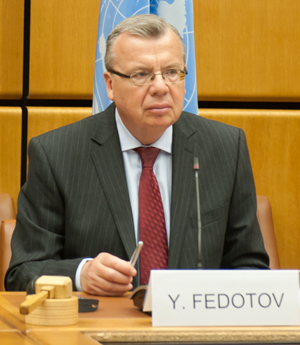
Yury Fedotov jpgTwo foreign UN workers were shot dead at Galkayo airport in Puntland, Somalia. They were one Briton and one French working for the United Nations Office on Drugs and Crime (UNODC) based in Kenya but had regular visit to Somalia.
A soldier serving as the security guard at Galkayo main Airport shot and killed the two men as they entered the airport and landed from their plane from Nairobi, Kenya today around 11:40 am (local time), according to Colonel Ali Yusuf who is head of the security of the Galkayo Airport.
The Executive Director of the UN Office on Drugs and Crime in Vienna, Yury Fedotov condemned the murder of the two UN consultants.
He said: “I condemn in the strongest possible terms the killing of two of my colleagues in a cruel and senseless attack. I hope the relevant authorities in Somalia will undertake every effort to ensure that their killers are swiftly apprehended and brought to justice. I would also like to offer my most profound condolences to the family, loved ones, friends and colleagues of these two individuals, who were so committed and dedicated to UNODC’s work.”
The Special Representative of the Secretary-General for Somalia, Nicholas Kay, said there could be no justification for what he called “a callous attack.”

Thursday, June 27, 2013

Europa & Palestine News « Europa & Middle East News


Europa & Palestine News « Europa & Middle East News


2013 UN World Drug Report: Alarming Rise in New Drugs

World Drug Report
The Commission on Narcotic Drugs (CND), the United Nations office on drugs and crime (UNODC) today launched for the first time in Vienna the 2013 World Drug Report. The event marks the first step on the road to the 2014 high-level review by the Commission on Narcotic Drugs of the Political Declaration and Plan of Action which will be followed, in 2016, by the UN General Assembly Special Session on the issue. The 2013 World Drug Report (WDR) pointed to stability in the use of traditional drugs and
During a press conference held today at the United Nations headquarters in Vienna, the attending journalists expressed concern about the lack of effectiveness and feasibility of the actions taken by UNODC to reduce the global marketing of drugs, demanding from the Office on Drugs and Crime to why the measures taken by the UNODC are not reducing the marketing of drugs. Journalists also asked how the UNODC deals with cases when UN member States are themselves involved in drug trafficking or do not control and monitor the drug market, or are legalizing drugs in their jurisdiction.
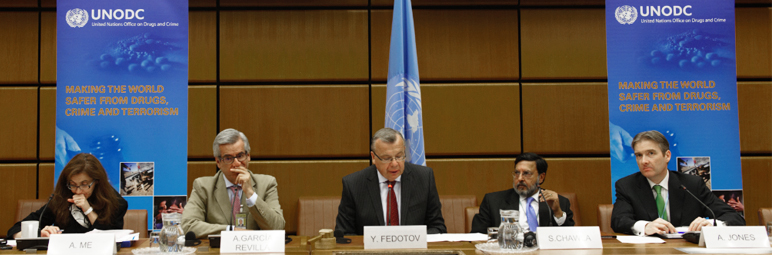
UNODC executive director Yury Fedotov said: “We have agreed on a path for our ongoing discussion. I hope it will lead to an affirmation of the importance of the international drug control conventions, as well as an acknowledgement that the conventions are humane, human-rights centred and flexible. There must also be a firm emphasis on health and we must support and promote alternative sustainable livelihoods. It is also essential that we recognize the important role played by criminal justice systems in countering the world drug problem and the need for enhanced work against precursor chemicals.”
The (WDR) report highlighted the new psychoactive substances:
While new harmful substances have been emerging with unfailing regularity on the drug scene, the international drug control system is floundering, for the first time, under the speed and creativity of the phenomenon known as new psychoactive substances (NPS).
The number of NPS reported by Member States to UNODC rose from 166 at the end of 2009 to 251 by mid-2012, an increase of more than 50 per cent. For the first time, the number of NPS actually exceeded the total number of substances under international control (234).
NPS are substances of abuse, either in a pure form or a preparation, that are not controlled by international drug conventions, but which may pose a public health threat.
In this context, the term “new” does not necessarily refer to new inventions but to substances that have newly become available in specific markets. In general, NPS is an umbrella term for unregulated (new) psychoactive sub-stances or products intended to mimic the effects of controlled drugs.
Member States have responded to this challenge using a variety of methods within their legislative frameworks, by attempting to put single substances or their analogues under control.
It has generally been observed that, when a NPS is con-trolled or scheduled, its use declines shortly thereafter, which has a positive impact on health-related consequences and deaths related to the substance, although the “substitution effect” has inhibited any in-depth research on the long-term impact of NPS scheduling. There are of course, instances when scheduling or controlling a NPS has had little or no impact. Generally, the following kinds of impacts have been observed after the scheduling of a NPS:
(a) The substance remains on the market, but its use declines immediately. Examples include mephedrone in the United Kingdom of Great Britain and Northern Ireland, BZP in New Zealand, “legal highs” in Poland, mephedrone in Australia and MDPV in the United States of America;
(b Use of the substance declines after a longer interval, maybe a year or more (e.g. ketamine in the United States);
(c) Scheduling has little or no immediate impact on the use of the substance, e.g. 3,4-methylenedioxy- Nmethylamphetamine (MDMA), commonly known as “ecstasy”, in the United States and other countries.
To read the Secretary General’s statement on International Day against Drug Abuse and Illicit Trafficking, click here. 
To read the UNODC Executive Director’s statement on International Day against Drug Abuse and Illicit Trafficking, Click here.
To read the World Drug Report, Click here.

Tuesday, October 19, 2010

Organized Crime has Ballooned to Global Proportions

Organized Crime has Ballooned to Global Proportions

[use Open Image in New Window to see pictures in full enlarged]

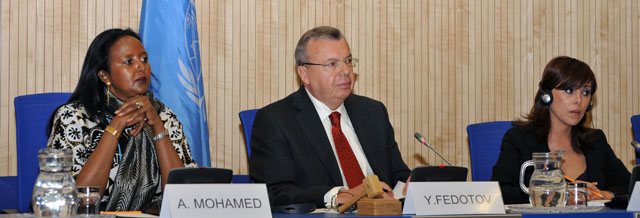
From the Left: Amina Mahmoud, Kenya, the chair of the press conference, Yury Fedotov, Executive Director of the United Nations office on drugs and crime (UNODC), and J. Sandage

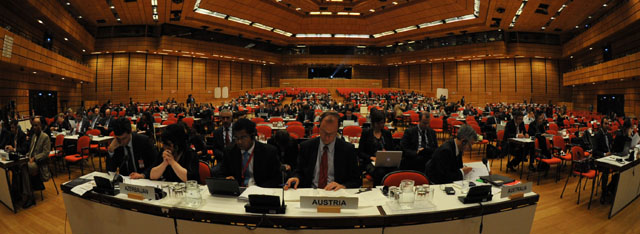
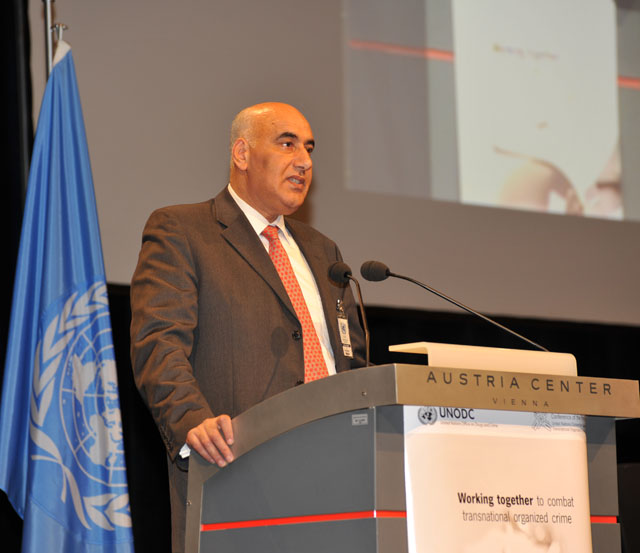
The organized crime has “ballooned to global proportions” said today Yury Fedotov, the Executive Director of the United Nations Office on Drugs and Crime (UNODC) at the opening session of the 5th Conference of the Parties to the United Nations Convention against transnational organized crime. A decade after the adoption of the Palermo Convention as it is also known, states parties are meeting in Vienna from 18 to 22 October to review global progress in fighting this scourge. He stated that the convention was a powerful but underutilized tool. 157 States have ratified the instrument, which forms the global basis for extradition and mutual legal assistance. Mr. Fedotov remarked that more awareness was needed of how states could make more effective use of the convention and realize its potential for cooperation.

The convention provides new possibilities and frameworks for law enforcement agencies to coordinate their efforts, including trans-border intelligence sharing and joint investigations.

It is highly adaptable in providing effective responses since its definition of transnational organized crime is broad enough to encompass new and emerging forms of crime. With its detailed measures to combat money-laundering, go after plundered assets and to end banking secrecy, UNTOC can be used to hit criminals where it hurts – by helping cut off their cash lifeblood.

During a press conference held at the UN office in Vienna, Yury Fedotov stated that the drug trafficking continues to be the most lucrative line of business for criminals. As UNODC reported in its 2010 transnational organized crime threat assessment, Cocaine trafficked from the Andean region to North America and Europe is worth $72 billion annually, and Heroin trafficked from Afghanistan to Europe has a street value of $33 billion.

Combined, these figures exceed $100 billion, money diverted from the United Nations development goals and which are invested in criminal businesses or used to fuel terrorism. Or, to put it another way: cocaine and heroin traffickers are earning almost $280 million every day, almost $12 million every hour, and almost $200,000 every minute.

Spontaneously Mr. Fedotov looked at the watch he wore on his hand and said that “during the 20 minutes since we started this conference, the smugglers of drugs have earned four million dollars”. Underscoring the need for robust regional responses to stem illicit activity, Mr. Fedotov concluded “we also need a comprehensive, system-wide response that strengthens resistance to organized crime at its points of origin, along trafficking routes, and at the final destinations for its illicit goods”.

During the press conference the speakers stated that they coordinate their effort with the Interpol Police organization to decrease transnational organized crime.

The historical heritage of Palestine is destroyed in Jerusalem

Click here to read Palestine speech in Arabic.

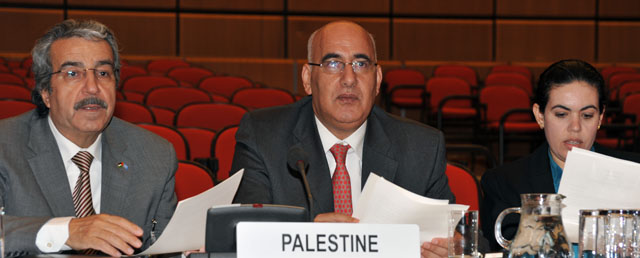
Dr. Ali Khashan, the Palestinian minister of justice, appealed to the conference participants, the states Dr. Ali Khashan, Palestinian minister of Justice.parties meeting in Vienna and all international organizations during a speech delivered at the noon session. He said: “we put together a draft of the law of cultural heritage in Palestine and we call on you to stand by the Palestinian people to preserve our historical and humanitarian heritage, which is being systematically targeted and destroyed, including even the historic graveyard which has existed for more than a thousand years. We need your strong support to maintain the cultural property in Palestine, especially in the occupied city of Jerusalem”. (Click on the picture to make it bigger).

He added: “I would also like to call your attention to the significant threat posed by the settlements in the occupied Palestinian territories and what the colonist squatters carry out by uprooting the Palestinian trees and destroying their plants, including the historical olive trees. I also want to call your attention to the wall erected by Israel in the West Bank and particularly in the city of Jerusalem and its negative and destructive effects on life and the environment in Palestine.

Dr. Ali Khashan stated that the new Palestinian penal code, which will enter into implementation after signature by the President emphasized the fight against the organized crime and illicit trafficking, including trafficking in organs and humans as well as smuggling in all its forms and manifestations. The Palestinian National Authority issued a money laundering law which fights against money-laundering crimes and “offenses”.

Dr. Khashan said: “in this context, we wish to emphasize our support for the recommendations and resolutions adopted by the meeting of 19 of the Commission on Crime Prevention and Criminal Justice relating to the prevention of trafficking and protection of cultural property and international cooperation to combat such crimes in all the world, including the disputed areas, especially in the occupied Palestinian territories”.

He pointed out that a Palestinian penal code draft has the protection of women and the abolition of the discriminations that were affecting women, especially the so-called honor crimes, and that the Palestinians work with all their efforts to support and empower women not only in Palestine but in the bilateral relations and regional framework. He stated that no society can advance without justice for women and the lifting of all restrictions that hinder legislative progress in this regard.

Dr. Khashan emphasized the recommendations and decisions of the 19th meeting of the Commission on Crime Prevention and Criminal Justice, particularly the resolution on the strengthening of measures taken in the field of crime prevention and criminal justice to address violence against women, especially in conflict zones, including the occupied Palestinian territories. He confirmed that the Palestinians were one of the initiators and signatories to all agreements made in the framework of the League of Arab States, as well as judicial and legal regional cooperation agreements which fight against crime, and we are in Palestine are ready to sign on all the international conventions that fight crime and prevent criminal trafficking in all its forms and manifestations.


Possibly related posts (automatically generated):

  1. Call for creation of UN War Crimes Commission The International Progress Organization, headed by Dr. Hans Koechler, sent me the statement below War on Gaza: Call for creation...
  2. A message from within – signed by Israeli citizens I received the message sent to EU Embassies signed by 510 Israelis and supported by about 1800 internationals, which I...
  3. Petitions Ban Israel from the London 2012 Olympics. Sign a petition of Gaza and Palestine. View Signatures. I received the message...
  4. Honor Killings In Palestine Last Saturday 16 May 2009, Halimeh Ahmad Al-Sheikh from Qalqilyah was found dead near the Atara checkpoint north of Ramallah....
  5. Readers From: Charles To: kawther_salam [at] yahoo [dot] com Sent: Fri, October 9, 2009 8:47:25 PM Subject: Courage Kawther, The west...

Wednesday, February 24, 2010

Women and Date-Rape Drugs

Women and Date-Rape Drugs

See more pictures here

  • Do you think that open borders between the European countries have contributed in one way or other to the marketing of drugs and the free movement of drug dealers?
  • During the years of your work in the field of drug control, have you been able to find out who are the people or groups behind the drug trade?
  • Is the drug trade is a political and economic problem, or is it an indication of the deterioration of the political and economical conditions in countries where drug trade is most active?
[click on pictures to see enlarged in full]
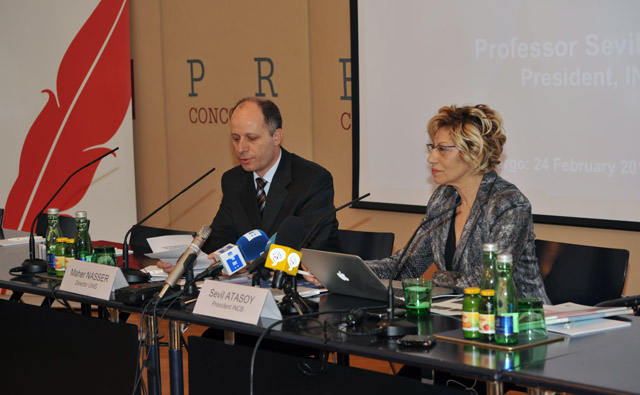
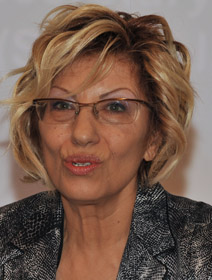
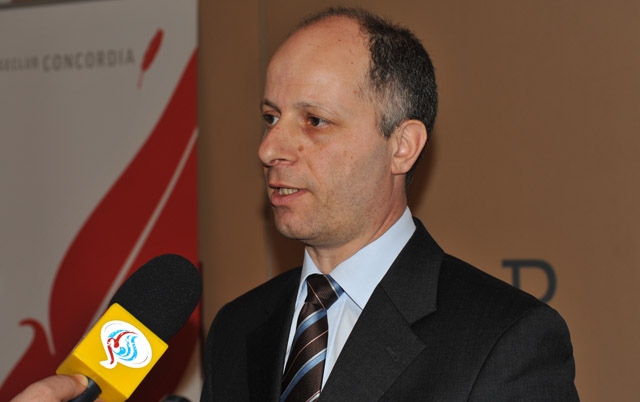
I asked these questions during the presentation of the “International Narcotics Control Board 2009 Annual Report” held at Presseclub Concordia in Vienna on 24 February 2010. The conference was organized by the UNIS Information Service in a number of major cities around the world. In Vienna, many journalists attended the Press conference. Prof. Sevil Atasoy, President of the International Narcotics Control Board (INCB) presented the report. Maher Nasser, director of UNIS, briefed the attendants shortly while opening the session.

Prof. Atasoy answered my question saying that the root of the drug problem is that the human beings sometimes need a tool to confront the problems of life. “Human beings have always been using something, for example a plant to chew. The issue is that we must reduce this demand. Therefore we must say that it’s enough to reduce this need for drugs. We can’t say that drugs are an economic problem. We can’t say that it is a problem of open borders. Everywhere, persons can have access to some of this material, and we must teach the people how to cope with stress and life without using drugs. The NGOs should teach people how to cope with life”.
Prof. Atasoy warned during her presentation that the use of so called “date-rape drugs” is on the rise. The INCB report raises the alarm about new psychoactive substances which are easier to obtain and under less stringent international controls.

The UNIS office released a statement by the executive director of the United Nations Office on Drugs and Crime (UNODC), Antonio Maria Costa, who said during a debate in the Security Council on global threats against international peace and security: “We must break the vicious circle between insecurity and under-development”. Costa also stated that “instability attracts crime, and crime deepens instability”, and he added “in a chain reaction, humanitarian crises follow, development is stalled, and peacekeepers are deployed”.

The report of UNIS in which they summarize the INCB annual report and the UNODC warnings is below.

INCB Warns of an Increase in the Use of Date-Rape Drugs

VIENNA, 24 February UNIS – The “date-rape drug” phenomenon is evolving rapidly, as sexual abusers attempt to circumvent more rigorous drug controls by using substances not restricted by the international drug conventions. Stricter control measures by governments, in close cooperation with the pharmaceutical industry, have been effective as reports about the misuse of Flunitrazepam have become rare. This benzodiazepine sold under the brand name Rohypnol was once so commonly misused for sexual assault that it was called the “date-rape drug”. In its Report, INCB calls on all governments to implement the pertinent Resolution 52/8 from March 2009 of the Commission on Narcotic Drugs to combat the misuse of pharmaceutical products to commit sexual assault as soon as possible and to be vigilant about the worrying increase in “date-rape drug” abuse.

Prevention of Drug Abuse

Society has to give urgent attention to preventing drug abuse, the Vienna-based International Narcotics Control Board said, underlining the need for more actions and commitment. Measures to prevent and reduce drug abuse by people who are either not using or not seriously involved with drugs – so-called primary prevention – are the focus of the first chapter of the Report.
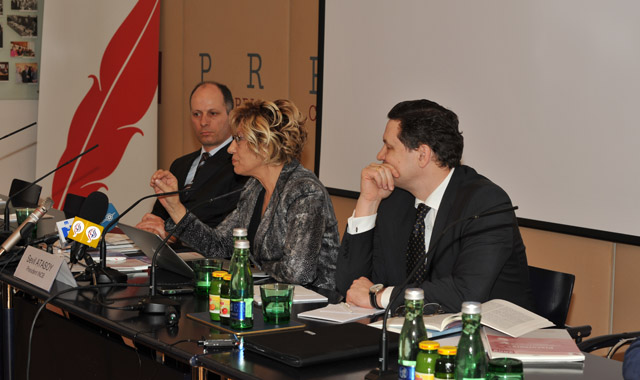
“Preventing drug abuse is a crucial area of demand reduction. Primary prevention encompasses measures taken to prevent and reduce drug use in populations that are either not using or not seriously involved with drugs,” said INCB President, Professor Sevil Atasoy. “There is good reason for society to give concerted attention to preventing drug abuse. Even a single early drug using experience can result in serious consequences, such as unintentional injury, overdose or arrest.”

The Report calls on governments to re-establish the place of primary prevention alongside secondary prevention as well as on policy makers to establish a clear focal point for primary prevention. As primary prevention by governments alone will not suffice, there needs to be collaboration with non-governmental organizations (NGOs) and others.

INCB President Atasoy says: “Partnerships with civil society need to be forged at all levels, locally, nationally and internationally to ensure scarce resources are applied as efficiently as possible and to increase effectiveness in reducing the prevalence of drug use.” With limited resources, governments should pay attention to both young people who are not using or occasionally using drugs and to those using drugs frequently, underlines the Report.

Growing Problem of Prescription Drug Abuse

The Report says that abuse of prescription drugs has become a major concern in some countries. A greater number of people are abusing such drugs, even than those abusing heroin, cocaine and MDMA (“ecstasy”) put together in some countries. High profile celebrity deaths have shed light on the dangers of prescription drug abuse in 2009. Abuse of such drugs has been spreading over the world in recent years and INCB is calling for more awareness of this ‘hidden’ problem.

Prescription drug abuse needs to be tackled urgently in order to stop its further spreading and to prevent more fatal incidents amongst celebrities and others. The INCB recommends governments to either prohibit or closely control the sales of internationally controlled substances by Internet pharmacies and telephone call centers, in order to close down the illicit supply channels.

New Processes, Routes and Substances Used by Criminal Networks to Manufacture Drugs

Highly organized and powerful criminal networks are using new processes, routes and substances to keep drug manufacturing operations alive, warns the INCB. In the face of stricter controls of chemicals, traffickers are finding new ways to fuel their illegal exploits and are still able to obtain the chemicals they need from legal trade channels.

The demand for methamphetamine precursors has had serious repercussions throughout the Americas, where some governments are making major efforts to free their countries from the grip of powerful criminal organizations. As the Report indicates, the power of such networks is linked to the vast wealth generated by illicit drug manufacture, particularly of methamphetamine.

INCB is helping governments to efficiently exchange data on trade, diversions and seizures. Together with the INCB online system for pre-export notifications, the international collaborative initiatives and operations have resulted in more effective monitoring of suspicious transactions and the identification of trafficking trends and networks. Improved exchange of intelligence information has yielded significant results in targeting the diversion of chemicals.

Hundred Years of Drug Control, Major Landmark in International Cooperation

The year 2009 marked a century of multilateral drug control efforts which started when the International Opium Commission was convened in Shanghai, China, in February 1909. International drug control has evolved considerably over hundred years. A series of multilateral drug control agreements were concluded, leading up to the adoption of the three international drug control treaties that are the current framework for action in international drug control. To pay tribute to the achievements in international drug control, a special section of the Annual Report of the INCB is devoted to the commemoration of the convening of the International Opium Commission, which was held on 26 and 27 February 2009 in Shanghai, China.
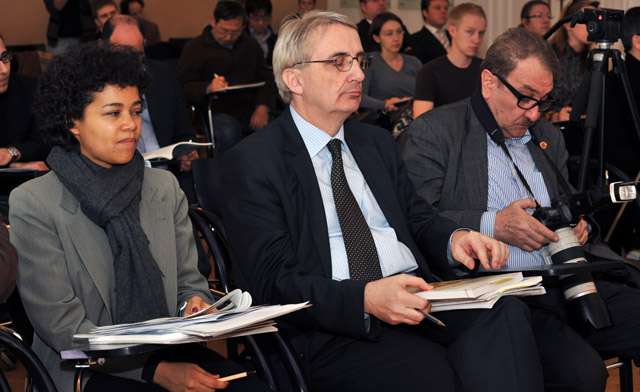
At this landmark event, Professor Hamid Ghodse, then INCB President, recalled the spirit of the original Shanghai Conference, which met when the opium trade was very lucrative, generating millions of dollars in revenues. The challenges that the international community faces were important such as the under-utilization of narcotic drugs for medical purposes, Professor Ghodse said, adding that “Governments and the international community as a whole have to find a way to tackle them, bearing in mind the principles of shared responsibility, the sovereignty of nations, the territorial integrity of States and the need to address the world drug problem in a balanced and integrated manner.”

Regional Highlights

The Report highlights major trends in drug abuse and trafficking, region by region, around the globe. After years of increasing cocaine trafficking from South America through West Africa to Europe and to a lesser extent to North America, there was a decline in seizures of cocaine since 2008 and no large seizure in 2009 at all. However, smuggling remains a serious problem and contributes to increasing drug abuse in West Africa.

Drug trafficking has become a major security threat in Central America and the Caribbean and has an impact on the increasing drug abuse and homicides linked to organized crime. While measures taken by the Mexican Government, including the deployment of military troops, have resulted in the disruption of drug trafficking operations throughout North America, organized criminal groups have expanded their control over drug trafficking operations throughout the continent. Mexican drug cartels have expanded their control to cover the entire supply chain for illicit drugs, from shipment from South America to distribution in the United States. In South America, the total potential manufacture of cocaine of the region decreased and constitutes the lowest output since 2003, due to a significant decrease in Colombia.

After tremendous progress in East and South-East Asia in the past, countries in the region faced setbacks in reducing illicit opium poppy cultivation in 2008. Trafficking in methamphetamine and illicit manufacture of MDMA (“ecstasy”) also increased. Seizures of amphetamine-type stimulants in South Asia show that trafficking in the substances may be increasing in the region. India has emerged as one of the main sources of drugs sold through illegal Internet pharmacies, where orders placed abroad are dispatched to buyers using courier and postal services, which have became a common means of smuggling drugs abroad. After peaking in 2007, illicit cultivation of opium poppy and the illicit production of opium in West Asia decreased in 2008 and 2009.
A decline in the abuse of cannabis and cocaine has been observed in the United Kingdom and Spain. The abuse of cocaine is stable or declining in Austria, Germany and Switzerland, but increasing in France and Ireland. Likewise, the abuse of amphetamines and MDMA (“ecstasy”) is stabilizing or decreasing in Europe. In Denmark, Spain and, to a limited extent in the United Kingdom, drug users are replacing those drugs with cocaine. Europe remains the largest market for cannabis resin. Spain accounts for the largest total amount of global seizures of cannabis resin.

The demand for MDMA (“ecstasy”) in Australia has increased in recent years. The smuggling of pharmaceutical preparations containing pseudoephedrine into New Zealand has been rising significantly. In spite of closer regional cooperation to address drug control issues, the low rate of accession by States in Oceania to the international drug control treaties and the geographical proximity of the region to illicit drug manufacturing in South-East Asia make the region more vulnerable to drug trafficking.

Organized Crime Deepens Humanitarian Crises, Warns UNODC

VIENNA, 24 February (UN Information Service) – “We must break the vicious circle between insecurity and under development,” said the Executive Director of the United Nations Office on Drugs and Crime (UNODC), Antonio Maria Costa, at a debate in the Security Council today on global threats against international peace and security. “Instability attracts crime, and crime deepens instability,” said Mr. Costa. “In a chain reaction, humanitarian crises follow, development is stalled, and peacekeepers are deployed,” said Mr. Costa. To illustrate the problem, UNODC issued a report on Crime and Instability: case studies of transnational threats. The report focuses in particular on the impact of drug flows (cocaine and heroin), as well as piracy around the Horn of Africa, and minerals smuggling in Central Africa.

To reduce vulnerability to trans-national threats, Mr. Costa underlined the need for development and security: “But we cannot just throw money or troops at this problem, we also need law enforcement.” He underlined the need for States to make more effective use of the United Nations Convention against Transnational Organized Crime which was adopted a decade ago. Parties to the treaty, also known as the Palermo Convention, will meet this October in Vienna to review implementation.

Mr. Costa called for more intelligence-sharing and vigilance to fill the “black holes” where criminals operate with impunity: “There are many blank spots on our radar screens and our ignorance about what goes on has deadly consequences,” he warned. He highlighted the recent discovery of a fleet of cargo planes bringing cocaine into West Africa and the Sahel. “What is shocking is that most major discoveries of illicit activity are being made by accident,” said Mr. Costa.

Mr. Costa said that a change in attitude is essential in order to tackle transnational threats. “It is time to regard intelligence-sharing as a way of strengthening sovereignty, not surrendering it,” said the head of UNODC. “When police stop at borders while criminals cross them freely, sovereignty is already breached – it is surrendered to those who break the law,” he said. He therefore called for regional networks to monitor flows, share intelligence and carry out joint operations.

Since criminals are motivated by money, the way to increase their risks and reduce their benefits is to go after their assets. Mr. Costa therefore urged Member States to strengthen measures against corruption and money-laundering. To illustrate the massive profits made by crime he said: “One line of cocaine snorted in Europe kills one square metre of Andean rain forest, and buys 100 rounds of AK-47 ammunition in West Africa. Multiply this by 850 tons of cocaine per year and you see that is a bigger mismatch than David versus Goliath.”

Because of the cross-cutting nature of organized crime, Mr. Costa called for a system-wide response, like putting criminal justice into the mainstream of all relevant UN operations, and holding periodic debates on the threat posed by organized crime to stability.

A Presidential statement issued during the debate made a number of recommendations on how to strengthen the response of Member States and the United Nations to transnational threats.


Possibly related posts (automatically generated):

  1. The TIPH and Israeli Crimes in Hebron On December 8, 2007 I wrote to Karl-Henrik Sjursen, head of the TIPH Mission, to his Secretary, his Deputy, to...
  2. Call for creation of UN War Crimes Commission The International Progress Organization, headed by Dr. Hans Koechler, sent me the statement below War on Gaza: Call for creation...
  3. Honor Killings In Palestine Last Saturday 16 May 2009, Halimeh Ahmad Al-Sheikh from Qalqilyah was found dead near the Atara checkpoint north of Ramallah....
  4. UN Employees Disrespect UN Resolutions Boycott Ahava Dead Sea Cosmetics Today I received the latest news sent to me by the women in black in...
  5. The UN Must End Israel War Crimes Following the activities of the “Annual Observance of the International Day of Solidarity with the Palestinian People” which was held...