Palestine Cry

The Truth of God and Our Lord Jesus Christ

Special Palestine Cry Blog articles: The Catholic Creed: The meaning of the Pasch of Christians.

JESUS CHRIST IS THE ONLY WAY AND TRUTH AND LIFE - NO ONE COMES TO THE FATHER EXCEPT BY HIM.

For as it was not possible that the man who had once for all been conquered, and who had been destroyed through disobedience, could reform himself, and obtain the prize of victory; and as it was also impossible that he could attain to salvation who had fallen under the power of sin,-the Son effected both these things, being the Word of God, descending from the Father, becoming incarnate, stooping low, even to death, and consummating the arranged plan of our salvation, upon whom [Paul], exhorting us unhesitatingly to believe, again says, "Who shall ascend into heaven? that is, to bring down Christ; or who shall descend into the deep? that is, to liberate Christ again from the dead." Then he continues, "If thou shall confess with thy mouth the Lord Jesus, and shalt believe in thine heart that God hath raised Him from the dead, thou shall be saved." And he renders the reason why the Son of God did these things, saying, "For to this end Christ both lived, and died, and revived, that He might rule over the living and the dead." And again, writing to the Corinthians, he declares, "But we preach Christ Jesus crucified; "and adds, "The cup of blessing which we bless, is it not the communion of the blood of Christ? " - St. Irenaeus, Against Heresies, Book III, Chapter XVIII, Section 2.

The Crucifixion of the Lord Jesus Christ, Mary and John and the women at the foot of the Cross

Matthew 27:45 Now from the sixth hour, there was darkness over all the earth, until the ninth hour.

Origen tell us this darkness was only in Palestine, and the neighbouring countries: for as to the words, over the whole earth, or over the whole land, we find one kingdom or empire, by a common way of speaking, called the whole earth, or the whole world. As to the cause of the obscuration of the sun; and secondly, as to the extent of its darkness. Origen tells us that the darkness was partial, and confined to Judea and the neighbouring countries, as the darkness of Egypt was only perceived in that country, and not in Gessen, where the children of Israel were. Saint Jerome tells us that the obscurity was caused by the rays of the sun being suddenly withdrawn by divine power, as was the case in Egypt. The darkness in Egypt during the Passover of Moses was due to God's protection withdrawn from that land at that time. The darkness when Christ was Crucified for us is the judgement of God upon His Son Jesus Christ, in our place. For Jesus Christ knew NO sin. He never sinned, nor could He ever.

The meaning of the Pasch of Christians.

The Book of Wisdom, Chapter 17, describes the devils and demons thrown back upon the Egyptians when the Israelites under Moses were brought out of Egypt by God for God’s purposes (to prepare a place for the Crucifixion of Our Lord for the Redemption of the whole world of those who are saved). In the same way the same false gods and goddesses that the Egyptians served and which in so doing were the reason the Egyptians sacrificed their sons and daughters to the devils and demons behind the false gods/goddesses were the spirits that killed the Egyptian children that perished when the Israelites were brought out of Egypt. God does not murder children, period. The angel of death which destroyed in Egypt was one of the fallen spirits. God did not cause any of the fallen spirits to hurt anyone. God allowed the fallen spirits to do what it is their nature do to when He brought the Israelites out of the gates of hell which was Egypt. The children below the age of reason that died went to be with God for eternity, they will be resurrected with the just at the Second Coming of Christ. This principle of God allowing the innocent to be afflicted along with guilty finds its ultimate fulfillment in Christ’s singular and only salvific Kenosis. Jesus Christ committed no sin, not ever nor could He, and was and is and only could be utterly and absolutely and completely innocent of any and all wrongdoing and sin by His very nature as the Holy and True God. The guiltless sacrificed by His own will for the guilty. Even when the innocent are afflicted by the actions and evils instigated by the fallen spirits in the world, the innocent are not possessed by those fallen spirits. The principle of all being afflicted by the evil set loose upon the world for its unrepentant sin will occur when the universal plagues are let loose upon the world. See Apocalypse 16 –

The principle of our always, for our part, protecting children is given us by Our Lord and Saviour Jesus Christ in the Gospel of Matthew, Chapter 18

1 At *that hour the disciples came to Jesus, saying: Who, thinkest thou, is the greater in the kingdom of heaven?

2 *And Jesus calling unto him a little child, set him in the midst of them,

3 And said: Amen I say unto you, *unless you be converted, and become as little children, you shall not enter into the kingdom of heaven.

4 Whosoever therefore shall humble himself as this little child, he is the greater in the kingdom of heaven.

5 And he that shall receive one such little child in my name, receiveth me.

10 Take heed that you despise not one of these little ones: for I say to you, *that their angels in heaven always see the face of my Father who is in heaven.

The principle of our ONLY worshipping the True God, the Father and the Son Jesus Christ and the Holy Spirit is given first in the historical truth of the Garden of Eden when Christ, who is the Tree of Life commands the first man and his wife, Adam and Eve to not have anything to do with the tree of the knowledge of good and evil which is Satan, the first fallen angel, nor with any of the fallen angels with Satan. Assisi of Babylon/Vatican/Rome is absolute and complete violation of that principle and is the Great Apostasy in full blown Satanic evil. Have nothing to do with the Vatican or suffer its eternal damnation in hell with it. The devil and demon worshipping pagans and the perfidious deicidal Jews are not ever any part of the Salvific action of Christ upon Golgotha/Calvary. Individual pagans and Jews if they repent of their not confessing Jesus Christ as the Immortal Son of God become flesh for our sake and sacrificed for our salvation and who confess publicly their sin of devil and demon worshipping and perfidy and deicide and who beg the Lord of all, the Lord God, the Father and the Son Jesus Christ and the Holy Spirit for forgiveness of their horrid and abominable sins, can and will be forgiven if they do so now in this life and will enter into the only path of salvation there is as dictated by God Himself. The Church, all the faithful – there is no other meaning acceptable to God for the word Church, is commanded by God to not have anything to do with the Apostasy.

Book of Wisdom, Chapter 17

1 For thy judgments, O Lord, are great, and thy words cannot be expressed: therefore undisciplined souls have erred.

2 For while the wicked thought to be able to have dominion over the holy nation, they themselves being fettered with the bonds of darkness, and a long night, shut up in their houses, lay there exiled from the eternal providence.

3 And while they thought to lie hid in their obscure sins, they were scattered under a dark veil of forgetfulness, being horribly afraid and troubled with exceeding great astonishment.

4 For neither did the den that held them, keep them from fear: for noises coming down troubled them, and sad visions appearing to them, affrighted them.

5 And no power of fire could give them light, neither could the bright flames of the stars enlighten that horrible night.

6 But there appeared to them a sudden fire, very dreadful: and being struck with the fear of that face, which was not seen, they thought the things which they saw to be worse:

7 And the delusions of their magic art were put down, and their boasting of wisdom was reproachfully rebuked.

8 For they who promised to drive away fears and troubles from a sick soul, were sick themselves of a fear worthy to be laughed at.

9 For though no terrible thing disturbed them: yet being scared with the passing by of beasts, and hissing of serpents, they died for fear: and denying that they saw the air, which could by no means be avoided.

10 For whereas wickedness is fearful, it beareth witness of its condemnation: for a troubled conscience always forecasteth grievous things.

11 For fear is nothing else but a yielding up of the succours from thought.

12 And while there is less expectation from within, the greater doth it count the ignorance of that cause which bringeth the torment.

13 But they that during that night, in which nothing could be done, and which came upon them from the lowest and deepest hell, slept the same sleep.

14 Were sometimes molested with the fear of monsters, sometimes fainted away, their soul failing them: for a sudden and unlooked for fear was come upon them.

15 Moreover if any of them had fallen down, he was kept shut up in prison without irons.

16 For if any one were a husbandman, or a shepherd, or a labourer in the field, and was suddenly overtaken, he endured a necessity from which he could not fly.

17 For they were all bound together with one chain of darkness. Whether it were a whistling wind, or the melodious voice of birds, among the spreading branches of trees, or a fall of water running down with violence,

18 Or the mighty noise of stones tumbling down, or the running that could not be seen of beasts playing together, or the roaring voice of wild beasts, or a rebounding echo from the highest mountains: these things made them to swoon for fear.

19 For the whole world was enlightened with a clear light, and none were hindered in their labours.

20 But over them only was spread a heavy night, an image of that darkness which was to come upon them. But they were to themselves more grievous than the darkness.

The Catholic Creed: The Final Trial: Traditional Catholic Prayers: Baptism

Showing posts with label Antonio Maria Costa. Show all posts

Monday, March 8, 2010

Tackling the Threat of Drugs

Tackling the Threat of Drugs

See more photos

At the United Nations, M-Building, Room M2 at Vienna International Centre (VIC) there were three big blue posters suspended with a sign of UNODC “Making the world suffer from drugs, crime, and terrorism”. A press conference about “Tackling the threat of drugs” was held on Monday 8 March 2010. The conference was attended by a group of journalists; among them were some Arab journalists. Mr. Antonio Maria Costa, director of the UNODC and the Iranian Ambassador Ali Asghar Soltanieh, Chairman of Commission on Narcotic Drugs, were the speakers during the conference and Mr. Maher Nasser, Director of UNIS in Vienna was the moderator of the session.

[use Open Image in New Window to see pictures enlarged in full]

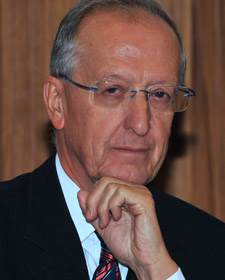
From right to left Mr. Maher Nasser, UNIS director, Mr. Antonio Maria Costa, UNODC director, Ambassador Ali Asghar Soltanieh.

“Drugs are a threat to health, development and international security” were the issues which Mr. Costa and Ambassador Soltanieh briefed shortly during the press conference. The same issues will be discussed between 8 -12 March at the 53rd session of the Commission on Narcotic Drugs (CND) meeting in Vienna. The 53rd session will also focus on effective ways of raising awareness about the risks of abusing drugs, including cannabis; improving the understanding of drug addiction as a chronic health disorder; and the importance of research and data collection for raising awareness of the world drug problem.

Mr. Antonio Maria Costa, UNODC director.

Mr. Costa warned that failure to control drugs will unleash a health disaster in the developing world, and he warned of the growing security threat posed by drugs. He said “the stakes are high: few issues have received as much attention as drug trafficking in the Security Council over the past few months”. He added that “it seems to be forgotten by people in rich countries calling for loosening of drug controls. Why condemn the third world, already ravaged by so many tragedies, to the neo-colonialism of drug dependence?”

Ambassador Ali Asghar Soltanieh.

Both of Mr. Costa and Ambassador Soltanieh answered the questions of the journalists. It was clear that most of journalists who attended the conference were interested in asking the Ambassador Soltanieh questions not related to the issue of drugs. He cleverly avoided answering these questions, saying that his participation in the press conference was as the chairman of commission on Narcotic Drugs. He demanded that the journalists ask questions related to the drugs issue.

At the end of the press conference, the UNIS team distributed the press release, which is quoted below.


8 March 2010
UNODC Warns of Drug “Health Disaster” in the Developing World

VIENNA, 8 March (UN Information Service) – In his address to the 53rd session of the Commission on Narcotic Drugs (CND), which takes place this week in Vienna, the Executive Director of the United Nations Office on Drugs and Crime, Antonio Maria Costa, warned that failure to control drugs will unleash a health disaster in the developing world.

“The developing world lacks the treatment facilities and law enforcement to control drugs,” said the head of UNODC. “This seems to have been forgotten by people in rich countries calling for loosening of drug controls. Why condemn the Third World, already ravaged by so many tragedies, to the neo-colonialism of drug dependence?” said the head of UNODC. He identified a number of warning signs: increasing use of heroin in East Africa, cocaine in West Africa, and synthetic drugs in the Middle East and South East Asia.

Referring to health as “the first principle of drug control”, Mr. Costa said that drug addiction is a treatable condition, but warned that inequality within and between states marginalizes poor people who lack access to treatment. “While rich addicts go to posh clinics, poor addicts are being pushed into the gutters or to jail,” he said. UNODC is working with the World Health Organization to achieve universal access to drug treatment, and with UNAIDS to prevent the spread of HIV among injecting addicts.

The UN’s drug control chief said: “We must not only stop the harm caused by drugs: let’s unleash the capacity of drugs to do good.” He reminded the Commission that this seemingly radical idea goes back to the roots of drug control: the preamble of the Single Convention (1961) recognizes that “the medical use of narcotic drugs continues to be indispensible for the relief of pain and suffering”. He appealed to Member States to overcome cultural and socio-economic factors “that deny a Nigerian suffering from AIDS or a Mexican cancer patient the morphine offered to Italian or American counterparts”.

He also appealed for greater respect for human rights. “Around the world, millions of people (including children) caught taking drugs are sent to jail, not to treatment. In some countries, drug treatment amounts to cruel, degrading punishment – the equivalent of torture. People are sentenced to death for drug-related offences, or gunned down by extra-judicial squads,” said Mr. Costa. “As human beings, as well as members of the community of civilized nations, we have a shared responsibility to put an end to this. People who use drugs, or are behind bars, have not lost their humanity or their human rights.”

The head of UNODC warned of the growing security threat posed by drugs. “The stakes are high: few issues have received as much attention as drug trafficking in the Security Council over the past few months,” said Mr. Costa. “Unless Member States deal effectively with the menace posed by organized crime, their security – even their sovereignty – will be under threat, and there will be renewed calls to dump the UN drug conventions that critics claim are the cause of the crime problem,” he said. He stressed the need for greater attention to security, justice and development in vulnerable regions – a process which UNODC is supporting in the Balkans, Central and West Asia, Mesoamerica, and East and West Africa.

In this, his eighth and final Session of the CND, Mr. Costa spoke with pride about how UNODC “has assisted Member States to make drug policy more responsive to the needs of those most seriously affected, along the whole chain of the drug industry: from poor farmers that cultivate it, to desperate addicts who consume it, as well as those caught in the cross-fire.” He said: “In the process, we have helped make the debate less dogmatic, gathered evidence to enrich policy, and provided assistance to reduce vulnerability. We have persistently struggled to quash the sterile debate between those who dream of a world free of drugs, and those who aspire to a world of free drugs.”

However, he warned about complacency, and lack of resources, both for drug control and for UNODC. He described the Office’s current funding level as “untenable”.

For more information on the CND and the complete text of Mr. Costa’s speech, visit the UNODC website at www.unodc.org.


Possibly related posts (automatically generated):

  1. UNRWA: 60 Anniversary of the Palestinian Misery During a press conference held Wednesday, July 1 2009 at the office of OPEC in Vienna, the Director-General of the...
  2. OPEC Press Conference Update & Correction 12/2009: I had opportunity to speak with Dr. Suleiman Al-Herbish personally about the contents of this article....
  3. How Do the PA Ambassadors Represent Palestine? How does the Palestinian National Authority explain the tragic conditions and the administrative corruption of it’s embassy in Austria? Which...
  4. Women and Date-Rape Drugs See more pictures here Do you think that open borders between the European countries have contributed in one way...

Wednesday, February 24, 2010

Women and Date-Rape Drugs

Women and Date-Rape Drugs

See more pictures here

  • Do you think that open borders between the European countries have contributed in one way or other to the marketing of drugs and the free movement of drug dealers?
  • During the years of your work in the field of drug control, have you been able to find out who are the people or groups behind the drug trade?
  • Is the drug trade is a political and economic problem, or is it an indication of the deterioration of the political and economical conditions in countries where drug trade is most active?
[click on pictures to see enlarged in full]

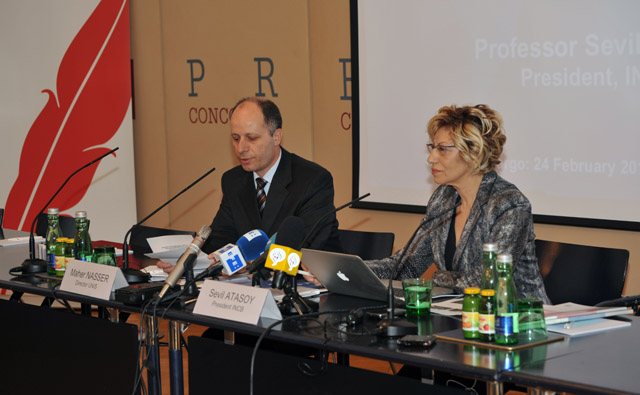
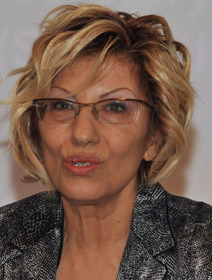
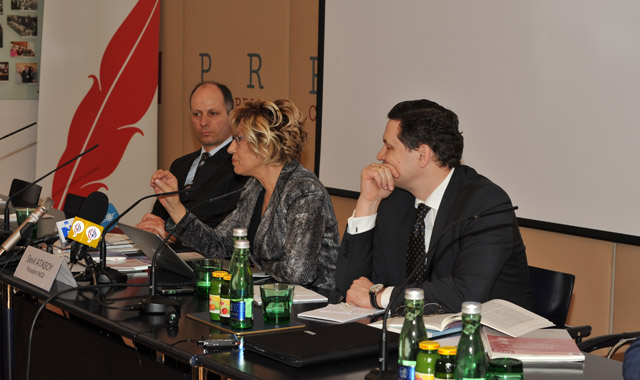
I asked these questions during the presentation of the “International Narcotics Control Board 2009 Annual Report” held at Presseclub Concordia in Vienna on 24 February 2010. The conference was organized by the UNIS Information Service in a number of major cities around the world. In Vienna, many journalists attended the Press conference. Prof. Sevil Atasoy, President of the International Narcotics Control Board (INCB) presented the report. Maher Nasser, director of UNIS, briefed the attendants shortly while opening the session.

Prof. Atasoy answered my question saying that the root of the drug problem is that the human beings sometimes need a tool to confront the problems of life. “Human beings have always been using something, for example a plant to chew. The issue is that we must reduce this demand. Therefore we must say that it’s enough to reduce this need for drugs. We can’t say that drugs are an economic problem. We can’t say that it is a problem of open borders. Everywhere, persons can have access to some of this material, and we must teach the people how to cope with stress and life without using drugs. The NGOs should teach people how to cope with life”.
Prof. Atasoy warned during her presentation that the use of so called “date-rape drugs” is on the rise. The INCB report raises the alarm about new psychoactive substances which are easier to obtain and under less stringent international controls.

The UNIS office released a statement by the executive director of the United Nations Office on Drugs and Crime (UNODC), Antonio Maria Costa, who said during a debate in the Security Council on global threats against international peace and security: “We must break the vicious circle between insecurity and under-development”. Costa also stated that “instability attracts crime, and crime deepens instability”, and he added “in a chain reaction, humanitarian crises follow, development is stalled, and peacekeepers are deployed”.

The report of UNIS in which they summarize the INCB annual report and the UNODC warnings is below.

INCB Warns of an Increase in the Use of “Date-Rape Drugs“

VIENNA, 24 February UNIS – The “date-rape drug” phenomenon is evolving rapidly, as sexual abusers attempt to circumvent more rigorous drug controls by using substances not restricted by the international drug conventions. Stricter control measures by governments, in close cooperation with the pharmaceutical industry, have been effective as reports about the misuse of Flunitrazepam have become rare. This benzodiazepine sold under the brand name Rohypnol was once so commonly misused for sexual assault that it was called the “date-rape drug”. In its Report, INCB calls on all governments to implement the pertinent Resolution 52/8 from March 2009 of the Commission on Narcotic Drugs to combat the misuse of pharmaceutical products to commit sexual assault as soon as possible and to be vigilant about the worrying increase in “date-rape drug” abuse.

Prevention of Drug Abuse

Society has to give urgent attention to preventing drug abuse, the Vienna-based International Narcotics Control Board said, underlining the need for more actions and commitment. Measures to prevent and reduce drug abuse by people who are either not using or not seriously involved with drugs – so-called primary prevention – are the focus of the first chapter of the Report.

“Preventing drug abuse is a crucial area of demand reduction. Primary prevention encompasses measures taken to prevent and reduce drug use in populations that are either not using or not seriously involved with drugs,” said INCB President, Professor Sevil Atasoy. “There is good reason for society to give concerted attention to preventing drug abuse. Even a single early drug using experience can result in serious consequences, such as unintentional injury, overdose or arrest.”

The Report calls on governments to re-establish the place of primary prevention alongside secondary prevention as well as on policy makers to establish a clear focal point for primary prevention. As primary prevention by governments alone will not suffice, there needs to be collaboration with non-governmental organizations (NGOs) and others.

INCB President Atasoy says: “Partnerships with civil society need to be forged at all levels, locally, nationally and internationally to ensure scarce resources are applied as efficiently as possible and to increase effectiveness in reducing the prevalence of drug use.” With limited resources, governments should pay attention to both young people who are not using or occasionally using drugs and to those using drugs frequently, underlines the Report.

Growing Problem of Prescription Drug Abuse

The Report says that abuse of prescription drugs has become a major concern in some countries. A greater number of people are abusing such drugs, even than those abusing heroin, cocaine and MDMA (“ecstasy”) put together in some countries. High profile celebrity deaths have shed light on the dangers of prescription drug abuse in 2009. Abuse of such drugs has been spreading over the world in recent years and INCB is calling for more awareness of this ‘hidden’ problem.

Prescription drug abuse needs to be tackled urgently in order to stop its further spreading and to prevent more fatal incidents amongst celebrities and others. The INCB recommends governments to either prohibit or closely control the sales of internationally controlled substances by Internet pharmacies and telephone call centers, in order to close down the illicit supply channels.

New Processes, Routes and Substances Used by Criminal Networks to Manufacture Drugs

Highly organized and powerful criminal networks are using new processes, routes and substances to keep drug manufacturing operations alive, warns the INCB. In the face of stricter controls of chemicals, traffickers are finding new ways to fuel their illegal exploits and are still able to obtain the chemicals they need from legal trade channels.

The demand for methamphetamine precursors has had serious repercussions throughout the Americas, where some governments are making major efforts to free their countries from the grip of powerful criminal organizations. As the Report indicates, the power of such networks is linked to the vast wealth generated by illicit drug manufacture, particularly of methamphetamine.

INCB is helping governments to efficiently exchange data on trade, diversions and seizures. Together with the INCB online system for pre-export notifications, the international collaborative initiatives and operations have resulted in more effective monitoring of suspicious transactions and the identification of trafficking trends and networks. Improved exchange of intelligence information has yielded significant results in targeting the diversion of chemicals.

Hundred Years of Drug Control, Major Landmark in International Cooperation

The year 2009 marked a century of multilateral drug control efforts which started when the International Opium Commission was convened in Shanghai, China, in February 1909. International drug control has evolved considerably over hundred years. A series of multilateral drug control agreements were concluded, leading up to the adoption of the three international drug control treaties that are the current framework for action in international drug control. To pay tribute to the achievements in international drug control, a special section of the Annual Report of the INCB is devoted to the commemoration of the convening of the International Opium Commission, which was held on 26 and 27 February 2009 in Shanghai, China.

At this landmark event, Professor Hamid Ghodse, then INCB President, recalled the spirit of the original Shanghai Conference, which met when the opium trade was very lucrative, generating millions of dollars in revenues. The challenges that the international community faces were important such as the under-utilization of narcotic drugs for medical purposes, Professor Ghodse said, adding that “Governments and the international community as a whole have to find a way to tackle them, bearing in mind the principles of shared responsibility, the sovereignty of nations, the territorial integrity of States and the need to address the world drug problem in a balanced and integrated manner.”

Regional Highlights

The Report highlights major trends in drug abuse and trafficking, region by region, around the globe. After years of increasing cocaine trafficking from South America through West Africa to Europe and to a lesser extent to North America, there was a decline in seizures of cocaine since 2008 and no large seizure in 2009 at all. However, smuggling remains a serious problem and contributes to increasing drug abuse in West Africa.


Drug trafficking has become a major security threat in Central America and the Caribbean and has an impact on the increasing drug abuse and homicides linked to organized crime. While measures taken by the Mexican Government, including the deployment of military troops, have resulted in the disruption of drug trafficking operations throughout North America, organized criminal groups have expanded their control over drug trafficking operations throughout the continent. Mexican drug cartels have expanded their control to cover the entire supply chain for illicit drugs, from shipment from South America to distribution in the United States. In South America, the total potential manufacture of cocaine of the region decreased and constitutes the lowest output since 2003, due to a significant decrease in Colombia.

After tremendous progress in East and South-East Asia in the past, countries in the region faced setbacks in reducing illicit opium poppy cultivation in 2008. Trafficking in methamphetamine and illicit manufacture of MDMA (“ecstasy”) also increased. Seizures of amphetamine-type stimulants in South Asia show that trafficking in the substances may be increasing in the region. India has emerged as one of the main sources of drugs sold through illegal Internet pharmacies, where orders placed abroad are dispatched to buyers using courier and postal services, which have became a common means of smuggling drugs abroad. After peaking in 2007, illicit cultivation of opium poppy and the illicit production of opium in West Asia decreased in 2008 and 2009.

A decline in the abuse of cannabis and cocaine has been observed in the United Kingdom and Spain. The abuse of cocaine is stable or declining in Austria, Germany and Switzerland, but increasing in France and Ireland. Likewise, the abuse of amphetamines and MDMA (“ecstasy”) is stabilizing or decreasing in Europe. In Denmark, Spain and, to a limited extent in the United Kingdom, drug users are replacing those drugs with cocaine. Europe remains the largest market for cannabis resin. Spain accounts for the largest total amount of global seizures of cannabis resin.

The demand for MDMA (“ecstasy”) in Australia has increased in recent years. The smuggling of pharmaceutical preparations containing pseudoephedrine into New Zealand has been rising significantly. In spite of closer regional cooperation to address drug control issues, the low rate of accession by States in Oceania to the international drug control treaties and the geographical proximity of the region to illicit drug manufacturing in South-East Asia make the region more vulnerable to drug trafficking.

Organized Crime Deepens Humanitarian Crises, Warns UNODC

VIENNA, 24 February (UN Information Service) – “We must break the vicious circle between insecurity and under development,” said the Executive Director of the United Nations Office on Drugs and Crime (UNODC), Antonio Maria Costa, at a debate in the Security Council today on global threats against international peace and security. “Instability attracts crime, and crime deepens instability,” said Mr. Costa. “In a chain reaction, humanitarian crises follow, development is stalled, and peacekeepers are deployed,” said Mr. Costa. To illustrate the problem, UNODC issued a report on Crime and Instability: case studies of transnational threats. The report focuses in particular on the impact of drug flows (cocaine and heroin), as well as piracy around the Horn of Africa, and minerals smuggling in Central Africa.

To reduce vulnerability to trans-national threats, Mr. Costa underlined the need for development and security: “But we cannot just throw money or troops at this problem, we also need law enforcement.” He underlined the need for States to make more effective use of the United Nations Convention against Transnational Organized Crime which was adopted a decade ago. Parties to the treaty, also known as the Palermo Convention, will meet this October in Vienna to review implementation.

Mr. Costa called for more intelligence-sharing and vigilance to fill the “black holes” where criminals operate with impunity: “There are many blank spots on our radar screens and our ignorance about what goes on has deadly consequences,” he warned. He highlighted the recent discovery of a fleet of cargo planes bringing cocaine into West Africa and the Sahel. “What is shocking is that most major discoveries of illicit activity are being made by accident,” said Mr. Costa.

Mr. Costa said that a change in attitude is essential in order to tackle transnational threats. “It is time to regard intelligence-sharing as a way of strengthening sovereignty, not surrendering it,” said the head of UNODC. “When police stop at borders while criminals cross them freely, sovereignty is already breached – it is surrendered to those who break the law,” he said. He therefore called for regional networks to monitor flows, share intelligence and carry out joint operations.

Since criminals are motivated by money, the way to increase their risks and reduce their benefits is to go after their assets. Mr. Costa therefore urged Member States to strengthen measures against corruption and money-laundering. To illustrate the massive profits made by crime he said: “One line of cocaine snorted in Europe kills one square metre of Andean rain forest, and buys 100 rounds of AK-47 ammunition in West Africa. Multiply this by 850 tons of cocaine per year and you see that is a bigger mismatch than David versus Goliath.”

Because of the cross-cutting nature of organized crime, Mr. Costa called for a system-wide response, like putting criminal justice into the mainstream of all relevant UN operations, and holding periodic debates on the threat posed by organized crime to stability.

A Presidential statement issued during the debate made a number of recommendations on how to strengthen the response of Member States and the United Nations to transnational threats.


Possibly related posts (automatically generated):

  1. The TIPH and Israeli Crimes in Hebron On December 8, 2007 I wrote to Karl-Henrik Sjursen, head of the TIPH Mission, to his Secretary, his Deputy, to...
  2. Call for creation of UN War Crimes Commission The International Progress Organization, headed by Dr. Hans Koechler, sent me the statement below War on Gaza: Call for creation...
  3. Honor Killings In Palestine Last Saturday 16 May 2009, Halimeh Ahmad Al-Sheikh from Qalqilyah was found dead near the Atara checkpoint north of Ramallah....
  4. UN Employees Disrespect UN Resolutions Boycott Ahava Dead Sea Cosmetics Today I received the latest news sent to me by the women in black in...
  5. The UN Must End Israel War Crimes Following the activities of the “Annual Observance of the International Day of Solidarity with the Palestinian People” which was held...

Friday, December 4, 2009

UN Denigrates Solidarity With Palestine


UN Denigrates Solidarity With Palestine

Ban Ki-moons Concern and 62 Years of Nakba,

Israel Criticized Sharply at the UN in Vienna

Journalists rarely write about what is goes on in the offices of the United Nations in BanKiMoonNew York and elsewhere in the world. Rarely are the United Nations affairs discussed in public. This giant and luxurious bureaucracy surrounds itself with a veil of mystery. This Institution remains unknown to the public, and it continues to keep a veil of privacy over what goes on in their offices. A list of prohibitions control its staff. Nobody is allowed to talk, or to give any information about this institution. The United Nations press office teams, operate under these prohibitions and protocols, which are similar to the military censorship laws which I experienced in the office of the military occupation censorship in Beit Agron in Israel.

[click on larger pictures to see them whole]

000_8547

When I attended a training course in the practice of journalism at the UN Press Office in New York, under former Secretary General Kofi Annan, doing useless journalistic work and receiving a high salary from them, I understood what it means to be a journalist working at the luxurious UN offices. With this and that, I am not against the UN, but I would like to ask some questions related to the UN solidarity events with Palestinian people which I attended in Vienna on December 1 2009. “Click on pictures to make them bigger”.

* Why did the United Nations office in New York ban the President of the International Progress Organization (IPO) from participating in the “Annual Observance of the International Day of Solidarity with the Palestinian People” in Vienna after this NGO had been participating in the event with a representative for the last 29 years here in Vienna?

* Are there logical reasons behind the dismissal of IPO? Is it due to the 000_8274aconflict between the NGOs, or is it because the representative of this NGO used references to international laws and treaties in his speech of last year, in which he denounced the war crimes of Israel, and its continuous violations of human rights and the international laws and accords?

* Are zionists and other pro-Israel conspirators inside the UN controlling which politicians are allowed to give speeches and forcing or censoring the contents of their presentations during the United Nations solidarity events and sessions of solidarity with the Palestinian People?

* Is the solidarity with the Palestinians at the UN a meaningless political show?

000_8471a* How does the United Nations explain the withdrawal of Antonio Maria Costa, the UNOV General-Director, minutes after the start of the solidarity event with the Palestinian people, even before listening to representatives of Palestine, the League of Arab States, the Non-Aligned Movement, and others during this supposed solidarity event with us Palestinians? * Is this a new joke of solidarity or is it a deliberate show of disregard to the event and the attendance, or is it part of the farce taking place in the offices of the United Nations in the absence of press and journalists?

000_8478

On December 1 2009, I participated in the “Annual Observance of the International Day of Solidarity with the Palestinian People”, an event which was held at the office of United Nations in Vienna. I went to the UN event with a good will as a Palestinian and a journalist who had been forced to leave her homeland by the zionists occupation in August 2002. Since I arrived in the hall where the event was held, the small number of participants in the event called my attention. Last year there had been a larger number of representatives taking part. I saw many empty places, with the names of Arab and other countries, and many empty places without names. There were no journalists representing the media in the hall. The presence of NGO’s could be counted with the fingers of one hand!!

What is wrong? I asked myself, then prepared my camera and took my right place.

The event was lead by H.E Mr. Mohd Arshad Bin Manzoor Hussain, Permanent 000_8535Representative of Malaysia to the United Nations, who opened this official part of the solidarity event. A statement of UN Secretary-General Ban Ki Moon was read by Mr. Antonio Maria Costa, Director-General of the United Nations office in Vienna, and then H. E. Dr. Friedrich Stift, representative of Austria as the host country, read a brief. Mr. Costa left the event immediately after this brief, before the representatives of Palestine, Arab countries or NGOs could deliver their statements.

Signs of resentment and discontent were clear on the faces of participants in the event. The statement of the Non-Aligned Movement was read by Ms. Norma Goicochea Estenoz, permanent representative of Cuba, on behalf of the permanent representative of Egypt and the representative of the Chairman of NAM. I saw signs of discontent seemed clear on the face of the Cuban ambassador with the departure of Ambassador Antonio Costa, and his not listening to the speech.

25 feb 1079a

The departure of Mr. Antonio Maria Costa from the solidarity event, immediately after reading the speech of Ban Ki-moon, was a clear gesture of disregard towards all the attendees, speakers, the event, and the solidarity with the Palestinian people.

The act of Mr. Antonio Maria Costa was not acceptable to the attendants. The issue of Palestine, and this solidarity event, are not a show in the theater, or a crooked press release from the press office of the UN.

I think that Mr. Antonio Maria Costa would have stayed a whole day and night without a murmur if the solidarity event had been with the “State of Israel”, this zionist institution which has obviously subverted and occupied the offices of the United Nations in the same way as they are occupying Palestine.

The issue of Palestine does not deserve the disdain and disregard ostentatiously put to display by Mr. Costa, and which is shown by all United Nations organizations, whose representatives obviously could not care less about the continued and grave violation of many Security Council and General Assembly resolutions, the continuous violation of the international law, of international humanitarian laws and accords, by the zionist Israeli occupation.

000_8538

Yesterday, Prof. Dr. Hans Koechler, President of the International Progress Organization (IPO), an international NGO associated with the United Nations Department of Public Information, sent me an e-mail in which he said that it is the responsibility of the Arab member states of the United Nations to find out why the UN administration has decided not to inform or invite the media as well as international non-governmental organizations. The E-mail of Mr. Koechler is quoted below.


Vienna, 3 December 2009
P/RE/22012

Dear Ms. Salam,

We have received your news releases re. this year’s event on the occasion of the International Day of Solidarity with the Palestinian People.

It is worthy to note that this year, for the first time since the year 1980 25 feb 1329(!), the United Nations Office did not send either an invitation or notification about the event. We actually thought that the event had been cancelled or that the tradition of Palestine Day commemoration might have been discontinued by the UN.

It is the responsibility of the Arab member states of the United Nations to find out why the UN administration has decided not to inform or invite the media as well as international non-governmental organizations.

Since 1980, the International Progress Organization has delivered the speech on behalf of international NGOs accredited at the United Nations at least half a dozen times, at the New York headquarters as well as in Vienna. It requires an explanation why the UN administration suddenly has fallen silent and has cut co-operation with NGOs in this matter.

With best regards

Prof. Dr. Hans Koechler
President
International Progress Organization
Kohlmarkt 4, A-1010 Vienna, AUSTRIA
Tel. +43-1-5332877
Fax +43-1-5332962
http://i-p-o.org

pres [at] i-p-o [dot] org


In reply to Prof. Dr. Hans Kochler, it should be noted that I called Mr. Lothar 000_8576Mikulla, an associate information officer at United Nations Information Service (UNIS) on17 November 2009, about quarter to 12, to ask him why he did not answer to my e-mail about the “Annual Observance of the International Day of Solidarity with the Palestinian People” dated November 15, 2009 which I sent to his office on that day at 2:34:50 PM. I told Mr. Lothar that many readers asked about this event, the date, and how they could take part in the event of solidarity with Palestinians. I asked him why the United Nations had not posted this information on their website as usual, in 2008 and the years before. In 2008, the UNIS published an invitation to this event on their website. The invitation was seen and read at the UN web on November 6 2008.

un 2008

I asked Mr. Mikulla if the United Nations solidarity event with the Palestinian unnuPeople had been turned into a secret in this year 2009. I asked him if the United Nations forbids the Palestinians themselves, pro-Palestinian persons, interested people and NGOs in Vienna from the participation in this solidarity event with the Palestinian people, and whether their activities take place only between the UN team and specific politicians who are not in any way linked to Palestine and to the Palestinian cause.

I also told him that I would report about their “solidarity” event and post my reports to the UN headquarter in New York. Mr. Mikulla was not happy to hear my questions. He was polite and a bit more friendly after I told him that I am a journalist, but he had no specific answers. Readers-Statistic (2)He stated that the exact day of the event was delayed from Nov. 29 2009 to Dec. 1 2009 and that the Embassy of Palestine is in charge of distributing the invitations to the solidarity event of this year. Mr. Mikulla did not answer my questions, and he stayed evasive throughout the conversation. He said that he didn’t have answers and that he would answer to my e-mail when “the persons who are in charge of the event in the United Nations” gave him further information about that. I have received nothing from him or anybody else until today.

I called the Palestinian Ambassador, Dr. Zuheir Elwazer, and I asked him more questions. He stated that the event had been delayed until Dec. 1 2009, because 29 December was on a weekend, and 28 December is Eid Al-Adha. He said that the Palestinian Embassy had distributed 350 invitation, but that the NGOs were to be invited by the United Nations.

Dr. Elwazer stated that the participation of IPO had been excluded by 000_8488the UN office in New York, who intervened via phone so that the speech for the NGOs should be held by Mr. Fritz Edlinger instead. He added: “according to what Mr. Fritz Edlinger said, the NGO office at the UN in New York called and invited him the give the speech of the NGOs at the solidarity event for Palestine. Mr. Edlinger himself received his invitation very late from the UN office in Vienna. We were obliged to call the UN office to remind them to send Mr. Edlinger the invitation, we left them a message on the answering machine. Mr. Edlinger received the invitation only 24 hours before the event”.

Other people also said that they received the invitation to the solidarity event from the Palestinian Embassy very late. Among them was somebody who expressed his anger, he said “the Embassy should know that we are not jobless so that we can participate in the event without organizing our appointments. At least we should receive the invitation two weeks before the event”.

During the Palestine solidarity event itself, Mr. Fritz Edlinger gave an a wonderful interesting and emotional speech based on the facts on the ground in Palestine. His speech moved everybody. Edlinger is well known among the Palestinian and Arab communities in Vienna, he is seen as very pro-Palestine and he does more than the Palestinian themselves for the Palestinian cause. Note: I will publish the speech of Mr. Edlinger as soon as possible.

000_8588

Prof. Dr. Hans Koechler is also an excellent speaker on the Palestine issue. He understands the international laws, accords and treaties, furthermore he knows what is going on in the kitchen of UN, in the EU, and with other political groups related to Palestine. The speeches and opinions of Prof. Dr. Koechler are very special and based on international laws. He exposed the scandalous violations of the international laws and double standards of the European politicians and the UN with their silence about the violations of Israel of all laws and peace agreements which have been signed under the observance of the international community, which continue supporting the genocide and the crimes of Israel in Palestine.

During the previous UN solidarity event with Palestinians held on Nov. 27 2008, Prof. Dr. Koechler gave an excellent speech, which made the representatives of 25 feb 1360some countries unhappy, especially those who support Israel and who participated in the solidarity event to whine that the Palestinian resistance uses stones and describes them as “terrorists”. The strong speech of Prof. Dr. Koechler, in which he exposed the western politicians and the Israeli war crimes in Gaza and the West Bank, shocked the puppets of Israel present at the event and made them very angry. This must be the reason behind banning Prof. Dr. Koechler from the solidarity event of this year. The friends of Israel in the headquarter of the UN have influence over everybody. Read the speech of Prof. Dr. Hans Koechler, which ended his participation at the UN solidarity event with Palestinians.

The approaches of Mr. Koechler and Mr. Edlinger to the Palestinian issue are very different. While Mr. Edlinger has an emotional and personal approach to the issue, Mr. Koechler sees it more from the point of view of laws and treaties, of the framework of international law. Both approaches to our issue are valid and must be recognized and respected, and we Palestinians are certainly grateful to all persons and organizations of all religions and nationalities who have selflessly engaged in our defense.

000_8806

That the UN would exclude the IPO from the Palestine Solidarity event of this year, apparently because of the protest of the zionists, can only be qualified as unacceptable behavior.

How can the UN, which supposedly has a peace mission, engage in discrimination between supporters of a just peace for Palestinians?

The UN has already done enough damage through its irresponsible handling of the issue over decades, and the exclusion of an NGO from a UN event just because perpetrators do not like to be reminded of laws sanctioning their crimes is certainly not what one would expect from an organization which supposedly serves as a forum for all nations and supposedly holds up certain laws and treaties regarding how nations are supposed to behave.

Gabriela ShalevFollowing the Issue of “Annual Observance of the International Day of Solidarity with the Palestinian People” of 2008 at the UN in Vienna, I found that Gabriela Shalev, who received her post as Israel ambassador to the UN on 3 September 2008, sent a protest against the speeches of the participants and the Petition for Palestine which I directed to the UN Secretary General and handed at that time to Mr. Costa and other diplomats who participated in the event last year of 2008 in Vienna.


Possibly related posts (automatically generated):

  1. Petition for Palestine Directed to the UN Secretary General Today I went to the United Nations in Vienna, to take part in an event with occasion of the “Annual...
  2. Call for creation of UN War Crimes Commission The International Progress Organization, headed by Dr. Hans Koechler, sent me the statement below War on Gaza: Call for creation...
  3. Petition for Israel War Crimes Tribunal A petition forwarded to me by Dr. Tammam Kelani, the president of Arab-Austrian Federation of Doctors and Pharmacists, follows below....
  4. A Museum for Documenting the Israeli Crimes in Gaza On last 28 March 2009 I went to a charity event in solidarity with the Palestinian victims in Gaza and...
  5. Israel Criticized Sharply at the UN in Vienna Note: I will publish the other speeches given during the event in follow-up articles. See more photos Tuesday, 1 December...

Thursday, December 3, 2009

Ban Ki-moons Concern and 62 Years of Nakba

Ban Ki-moons Concern and 62 Years of Nakba

[click on banner and large pictures to see them in full]

unrwa

QUESTION Mark: Why has the UN not posted any information about the event “Annual 000_8491Observance of the International Day of Solidarity with the Palestinian People” in Vienna on it’s own home page, like they did last year?

Why did the UN not invite journalists to this important occasion? Why the Director General of UNIV leave the session of solidarity before hearing the various statements on the Palestinian issue?

Why did the press office of the UN in Vienna not post, either fully or in part, the messages of the various speaker, among them Ban Ki-moon and the ambassadors of several countries, on their website?

I wonder, if the meeting had been about “solidarity with Israel”, would the director general of the UNOVm Mr. Antonio Maria Costa have dared to leave the meeting before hearing the unending wailing and whining of Israel and their friends?

Do the United Nations fear the wrath of somebody or some country if they did that? Who are the countries or groups or persons who they fear?

“2009 Must Be the Year in which the Preparations Bear Fruit“, said the BanKiMoonUnited Nations Secretary-General Ban Ki-moon in his message, read on his behalf by Mr. Antonio Maria Costa on the International Day of Solidarity with the Palestinian People which was held last year in November. The year 2009 has nearly ended. Today is December 1 2009, but the Palestinians did not reap the fruits mentioned by Mr. Ban Ki-moon in his speech last year.

The only fruits which the Palestinians reaped were a whole series of war crimes, genocide and crimes against humanity in the Gaza Strip in addition, to the further genocide in the West Bank, the expansion of squatter colonies everywhere in occupied Jerusalem and in all the Palestinian towns and cities, continuous violations of human rights, the building the Apartheid Wall which has swallowed almost half of the Palestinian agricultural lands and turned their life into a catastrophe.

000_8547

Furthermore, the zionist invaders and their entity have reneged from all peace agreements signed with the Palestinian National Authority. This is the reality of the zionist “state” of Israel, which pollutes the international community and its forum, the UN, while everybody believes their false promises, their blatant lies.

A NEW message from Mr. Ban Ki-moon was read yesterday by Mr. Antonio Maria Costa on the same occasion of “Annual Day of Observance of the International Day of Solidarity with the Palestinian People”.

His UN message was bland, showing that he obviously had no full understanding or respect for either the rights of the Palestinian people, or the responsibility of the UN as an institution, for the crimes of Israel. The contents and the language of his UN message which I heard yesterday is not the same language of the UN which is delivered when another country violates its resolutions or commits war crimes, genocide and crimes against humanity.

We Palestinians are all frustrated with evasive language and the double 000_8488standards of the UN Security Council in dealing with their own resolutions 181, 242, 383 related to the Israeli occupation and peace in the Middle East. The bland and servile words of the SG will not put an end to the cancer which is the Israeli occupation for the Palestinian territories and the Palestinian nation in the 62 years of “Nakba”, since 1948.

Mr. Ban Ki Moon “calls” and “is concerned” and uses other bland and obsequious words towards the zionist criminals, what only shows how the UN and their “Security Council” are powerless to end the Israeli occupation and their daily crimes on all levels. The most important conclusion of the speech read on behalf of Mr. Ban Ki Moon is the increasing meaninglessness of the UN as a forum of the nations of the world, as a fair instance to solve conflicts and to make international law respected.

Here are Some Paragraphs From the Speech of UN Secretary General Ban Ki-moon as delivered on December 1 2009 at the UN in Vienna, read on his behalf by the Mr. Antonio Maria Costa.

Ladies and Gentlemen,

The question is as fundamental today as it was sixty-two years ago, when the General Assembly, in resolution 181, put forth a vision of two States. Today, the State of Israel exists, but the State of Palestine does not. The Palestinian people continue to struggle for their inalienable right of self-determination – a fundamental, universal human right enjoyed by so many others across the world.

000_8526

The international community continues to assist and protect the Palestinian people, including through the work of the UN agencies, UNRWA foremost among them. However, our interventions must not be limited to managing the humanitarian dimension of this conflict. What is urgently needed is a political solution that addresses the root of the conflict.

It is vital that a sovereign State of Palestine is achieved. This should be on the basis of the 1967 Lines with agreed land swaps and a just and agreed solution to the refugee issue, a state lives side-by-side in peace with Israel within secure and recognized borders, as envisaged in the resolutions of the Security Council. I welcome the commitment of Prime Minister Netanyahu and President Abbas to a two State solution.

At the same time, I am deeply concerned that talks between Israel and the Palestine Liberation Organization have been suspended for almost a year.


A comment: I think that President Abass stated in his speech that, after all these presidentyears of negotiations with Israel, the Palestinians have not seen results. So why is Mr. Ban Ki Moon “concerned about losing time in useless negotiations while the only solution is to implement the UN security council resolution 181″. (He breaks my heart with his sobful “concern”). I would appreciate if Mr. Ban Ki Moon stops regretting about that and uses his power to end the 62 years of Nakba. Or does Mr. Secretary General want us to wait for other 62 years of “negotiations” with the fraud which is the “State of Israel”?

It would be better if Mr. Ban ki Moon abandon this lachrimose declamatory style and checks up to the international laws which the very institution he heads are supposed to keep up, in regards to that criminal monstrosity which the UN created with Resolution 181. I doubt very much that Mr. Secretary General would find much reason to continue accepting Israel as a member of his institution, or even to recognize it as a state.

All the contrived “concerns” of Mr. Banki Moon will not give one cent DSC_0105cto my brother who is without income since 4 years because of the Israeli economic strangulation of the West Bank, and will not allow my ageing mother to go to the Queen Augusta Victoria hospital in Jerusalem. All the “concerns” and “calls” and crocodile tears of Mr. Banki Moon will not take away the pain of my seven years (and counting) of exile, and they will certainly not help me to return to my home in Hebron, they will not help me and hundreds of thousands of fellow Palestinians get damage payments from the jews, they will not help to get the Israeli criminals into jail.

As things stand, the UN is more and more reducing itself to a politically meaningless institution which offers the world no utility at all in return for the inflated salaries of its employees, while its officials, from Mr. Banki Moon downwards, more and more look like people wearing clothes three sizes bigger than they are, as their performance simply does not match what is expected from them.

Sadly, everybody is waiting for Mr. Ban Ki Moon to show some strength and act according to the UN Charter and other relevant international laws and treaties, instead of by the criminal agenda of the corruptionists from the US and Israel. I hope that he finds some strength before everybody wakes up to disillusion about the reality which he is creating with his lackadaisical “concern”.


I support the clear commitment and continuing efforts of the United States to bring about a resumption of meaningful negotiations on all final status issues, including the security of Israelis and Palestinians, borders, refugees and Jerusalem. The biggest challenge to this shared agenda is to the conditions in which the parties have the trust and confidence to return to genuine and substantive talk.

000_8499

On the Palestinian side, the Palestinian Authority has made significant progress in meeting its Roadmap obligations in the West Bank, and in building institutions to serve the Palestinian people. I call on all Palestinians to fight violent extremism and to refrain institutions. These efforts have resulted in economic and security improvements, which should be sustained and extended. I welcome initials steps taken by Israel to contribute to these positive trends, and call on Israel authorities to expand these measures so that change can become truly transformative.

I am deeply concerned that, in East Jerusalem and the remainder 000_8619of the West Bank, illegal settlement construction continues. I have noted Prime Minister Netanyahu’s recent announcement of settlement restraint. While this is a step beyond earlier positions, it falls short of Israel’s obligations under the Roadmap, particularly given the exclusion of East Jerusalem. I repeat my call on Israel to meet in full its Roadmap commitments to freeze all settlement activity, including “natural growth:, and to dismantle outposts erected since March 2001.

In addition, the barrier continues to restrict Palestinian access to key social services, agricultural land and East Jerusalem, As you will recall, the International Court of Justice has stated that the barrier’s deviation from the 1967 line into occupied Palestinian territory is contrary to International law.

I am also concerned about the situation in Jerusalem, Actions such as the evictions of Palestinians and house demolitions, as well as the continued closure of Palestinian institutions in occupied East Jerusalem, run contrary to Israel’s Roadmap obligations. I call on Israel to cease such actions in East Jerusalem, which stoke tensions, cause suffering and further undermine trust, and to reopen Palestinian institutions.

jer

I reiterate my belief that Jerusalem remains a final status issue to be negotiated between the parties. As the Quartet has previously stated, unilateral actions cannot prejudge the outcome of negotiations, and will not be recognized by the International community. Jerusalem should emerge as the capital of two States, with arrangements for the holy sites acceptable to all. We should all want to see Jerusalem as a s symbol of harmony, tolerance and peace.

The crises in Gaza is also in urgent need of resolution. With the arrival of inclement winter weather, the humanitarian situation remains very troubling. The closure of Gaza should be lifted, consistent with Security Council resolution 1860, to allow for the unimpeded flow of humanitarian aid, commercial goods and people. Consistent with this same resolution, efforts must also be made to address Israel’s legitimate security concern. This should include mechanisms to prevent the smuggling of weapons into Gaza and an end to Palestinian rocket fire at Israeli civilians.

Ten months after the end of hostilities in Gaza and southern Israel, the issue of 000_8683accountability for violations of International humanitarian and human rights law has not been adequately addressed. I call on both Israel and the relevant Palestinian authorities to conduct, without delay, credible domestic investigations into the many reported allegations of serious human rights violations. The reunification of Gaza and the West Bank is also essential. There can be no two State solution without a unified Palestinian territory. I support Egypt’s efforts in this regard, grounded in Arab League resolutions and supported by Security Council resolution 1860.


Here is the Speech of UN Secretary General Ban Ki-moon as delivered on Nov. 29 2008 at the UN in Vienna, read on his behalf by the Mr. Antonio Maria Costa.

United Nations Secretary-General Ban Ki-moon: “2009 Must Be the Year That the Preparations Bear Fruit”

Message on the International Day of Solidarity with the Palestinian People, 29 November 2008

25-feb-1123IENNA, 29 November (UN Information Service) – The Palestinians have been deprived of their inalienable rights, including the right to self-determination and statehood, for more than 60 years. Israelis live with an ever-present sense of insecurity. There is only one way to address such legitimate rights and fears: a peace agreement that results in an end of occupation, an end of conflict, and the creation of a State of Palestine living side-by-side in peace with the State of Israel.

The Israeli and Palestinian leaders re-launched bilateral negotiations a year ago at Annapolis. They agreed to try to reach a peace treaty by the end of 2008. I regret that this goal appears unlikely to be achieved. However, the parties have succeeded in creating trust and a framework where none existed only two years ago. We must not diminish that achievement. I commend the commitment made by President Abbas and Foreign Minister Livni at Sharm el-Sheikh earlier this month to continue talks into next year, and to seek a full and final settlement. This process must resolve the 25-feb-13101permanent status issues of Jerusalem, settlements, borders, refugees, security and water.

My biggest concern in the immediate period ahead is the situation on the ground. I strongly call on Israel to cease settlement activity, remove outposts, open Palestinian institutions in East Jerusalem, and refrain from unilateral actions in Jerusalem, such as demolitions and evictions, which alter the status quo. I recognize Israel’s security concerns. But the improved environment of security cooperation must lead to an easing of closure in the West Bank, in order to increase stability and to bring about a much-needed boost to the Palestinian economy.

The situation in the Gaza Strip also remains of major concern. I call for immediate 25-feb-1313measures to ease the near-blanket closure of Gaza, which leads to worrying deprivations of basic supplies and undermines human dignity. And I unreservedly condemn rocket fire. The way forward is for all parties to respect the calm brokered by Egypt. I call on Israel to allow sufficient and predictable supplies to reach the population, to ensure access for humanitarian workers, and to facilitate stalled UN projects. I also call on Hamas and, indeed, all Palestinian factions to work urgently to reunify the Gaza Strip and the West Bank within the framework of the legitimate Palestinian Authority.

We have seen many difficulties in the past year. But it has been a crucial time in setting the stage for peace. Two thousand nine must be the year that these preparations bear fruit. Let us all work constructively, tirelessly and consistently for a just, lasting, comprehensive, and urgent settlement of the question of Palestine.


Possibly related posts (automatically generated):

  1. Correction to the Speech in Favor of Israel by Ban Ki-moon During the event commemorating the International Day of Solidarity with the Palestinians, which I attended at the UN in Vienna,...
  2. Viennese Tax Payers on the Beach of Tel Aviv Me: Here is my Press Card, can I pass from here? The Austrian Police: No The Israeli security: if you...
  3. The Double Standards of Europe In this photo you can see the Israeli Knesset member Michael Ben Ari (right) of the radical Israeli National Union...
  4. Decision of Collaborators Furthers Palestinian Genocide Addameer, Al Haq, Al Mezan, Badil, Civic Coalition for Jerusalem, DCI- Palestine. NSAN Centre, Independent Commission for Human Rights, Jerusalem...
  5. Israel Criticized Sharply at the UN in Vienna Note: I will publish the other speeches given during the event in follow-up articles. See more photos Tuesday, 1 December...