Palestine Cry

The Truth of God and Our Lord Jesus Christ

Special Palestine Cry Blog articles: The Catholic Creed: The meaning of the Pasch of Christians.

JESUS CHRIST IS THE ONLY WAY AND TRUTH AND LIFE - NO ONE COMES TO THE FATHER EXCEPT BY HIM.

For as it was not possible that the man who had once for all been conquered, and who had been destroyed through disobedience, could reform himself, and obtain the prize of victory; and as it was also impossible that he could attain to salvation who had fallen under the power of sin,-the Son effected both these things, being the Word of God, descending from the Father, becoming incarnate, stooping low, even to death, and consummating the arranged plan of our salvation, upon whom [Paul], exhorting us unhesitatingly to believe, again says, "Who shall ascend into heaven? that is, to bring down Christ; or who shall descend into the deep? that is, to liberate Christ again from the dead." Then he continues, "If thou shall confess with thy mouth the Lord Jesus, and shalt believe in thine heart that God hath raised Him from the dead, thou shall be saved." And he renders the reason why the Son of God did these things, saying, "For to this end Christ both lived, and died, and revived, that He might rule over the living and the dead." And again, writing to the Corinthians, he declares, "But we preach Christ Jesus crucified; "and adds, "The cup of blessing which we bless, is it not the communion of the blood of Christ? " - St. Irenaeus, Against Heresies, Book III, Chapter XVIII, Section 2.

The Crucifixion of the Lord Jesus Christ, Mary and John and the women at the foot of the Cross

Matthew 27:45 Now from the sixth hour, there was darkness over all the earth, until the ninth hour.

Origen tell us this darkness was only in Palestine, and the neighbouring countries: for as to the words, over the whole earth, or over the whole land, we find one kingdom or empire, by a common way of speaking, called the whole earth, or the whole world. As to the cause of the obscuration of the sun; and secondly, as to the extent of its darkness. Origen tells us that the darkness was partial, and confined to Judea and the neighbouring countries, as the darkness of Egypt was only perceived in that country, and not in Gessen, where the children of Israel were. Saint Jerome tells us that the obscurity was caused by the rays of the sun being suddenly withdrawn by divine power, as was the case in Egypt. The darkness in Egypt during the Passover of Moses was due to God's protection withdrawn from that land at that time. The darkness when Christ was Crucified for us is the judgement of God upon His Son Jesus Christ, in our place. For Jesus Christ knew NO sin. He never sinned, nor could He ever.

The meaning of the Pasch of Christians.

The Book of Wisdom, Chapter 17, describes the devils and demons thrown back upon the Egyptians when the Israelites under Moses were brought out of Egypt by God for God’s purposes (to prepare a place for the Crucifixion of Our Lord for the Redemption of the whole world of those who are saved). In the same way the same false gods and goddesses that the Egyptians served and which in so doing were the reason the Egyptians sacrificed their sons and daughters to the devils and demons behind the false gods/goddesses were the spirits that killed the Egyptian children that perished when the Israelites were brought out of Egypt. God does not murder children, period. The angel of death which destroyed in Egypt was one of the fallen spirits. God did not cause any of the fallen spirits to hurt anyone. God allowed the fallen spirits to do what it is their nature do to when He brought the Israelites out of the gates of hell which was Egypt. The children below the age of reason that died went to be with God for eternity, they will be resurrected with the just at the Second Coming of Christ. This principle of God allowing the innocent to be afflicted along with guilty finds its ultimate fulfillment in Christ’s singular and only salvific Kenosis. Jesus Christ committed no sin, not ever nor could He, and was and is and only could be utterly and absolutely and completely innocent of any and all wrongdoing and sin by His very nature as the Holy and True God. The guiltless sacrificed by His own will for the guilty. Even when the innocent are afflicted by the actions and evils instigated by the fallen spirits in the world, the innocent are not possessed by those fallen spirits. The principle of all being afflicted by the evil set loose upon the world for its unrepentant sin will occur when the universal plagues are let loose upon the world. See Apocalypse 16 –

The principle of our always, for our part, protecting children is given us by Our Lord and Saviour Jesus Christ in the Gospel of Matthew, Chapter 18

1 At *that hour the disciples came to Jesus, saying: Who, thinkest thou, is the greater in the kingdom of heaven?

2 *And Jesus calling unto him a little child, set him in the midst of them,

3 And said: Amen I say unto you, *unless you be converted, and become as little children, you shall not enter into the kingdom of heaven.

4 Whosoever therefore shall humble himself as this little child, he is the greater in the kingdom of heaven.

5 And he that shall receive one such little child in my name, receiveth me.

10 Take heed that you despise not one of these little ones: for I say to you, *that their angels in heaven always see the face of my Father who is in heaven.

The principle of our ONLY worshipping the True God, the Father and the Son Jesus Christ and the Holy Spirit is given first in the historical truth of the Garden of Eden when Christ, who is the Tree of Life commands the first man and his wife, Adam and Eve to not have anything to do with the tree of the knowledge of good and evil which is Satan, the first fallen angel, nor with any of the fallen angels with Satan. Assisi of Babylon/Vatican/Rome is absolute and complete violation of that principle and is the Great Apostasy in full blown Satanic evil. Have nothing to do with the Vatican or suffer its eternal damnation in hell with it. The devil and demon worshipping pagans and the perfidious deicidal Jews are not ever any part of the Salvific action of Christ upon Golgotha/Calvary. Individual pagans and Jews if they repent of their not confessing Jesus Christ as the Immortal Son of God become flesh for our sake and sacrificed for our salvation and who confess publicly their sin of devil and demon worshipping and perfidy and deicide and who beg the Lord of all, the Lord God, the Father and the Son Jesus Christ and the Holy Spirit for forgiveness of their horrid and abominable sins, can and will be forgiven if they do so now in this life and will enter into the only path of salvation there is as dictated by God Himself. The Church, all the faithful – there is no other meaning acceptable to God for the word Church, is commanded by God to not have anything to do with the Apostasy.

Book of Wisdom, Chapter 17

1 For thy judgments, O Lord, are great, and thy words cannot be expressed: therefore undisciplined souls have erred.

2 For while the wicked thought to be able to have dominion over the holy nation, they themselves being fettered with the bonds of darkness, and a long night, shut up in their houses, lay there exiled from the eternal providence.

3 And while they thought to lie hid in their obscure sins, they were scattered under a dark veil of forgetfulness, being horribly afraid and troubled with exceeding great astonishment.

4 For neither did the den that held them, keep them from fear: for noises coming down troubled them, and sad visions appearing to them, affrighted them.

5 And no power of fire could give them light, neither could the bright flames of the stars enlighten that horrible night.

6 But there appeared to them a sudden fire, very dreadful: and being struck with the fear of that face, which was not seen, they thought the things which they saw to be worse:

7 And the delusions of their magic art were put down, and their boasting of wisdom was reproachfully rebuked.

8 For they who promised to drive away fears and troubles from a sick soul, were sick themselves of a fear worthy to be laughed at.

9 For though no terrible thing disturbed them: yet being scared with the passing by of beasts, and hissing of serpents, they died for fear: and denying that they saw the air, which could by no means be avoided.

10 For whereas wickedness is fearful, it beareth witness of its condemnation: for a troubled conscience always forecasteth grievous things.

11 For fear is nothing else but a yielding up of the succours from thought.

12 And while there is less expectation from within, the greater doth it count the ignorance of that cause which bringeth the torment.

13 But they that during that night, in which nothing could be done, and which came upon them from the lowest and deepest hell, slept the same sleep.

14 Were sometimes molested with the fear of monsters, sometimes fainted away, their soul failing them: for a sudden and unlooked for fear was come upon them.

15 Moreover if any of them had fallen down, he was kept shut up in prison without irons.

16 For if any one were a husbandman, or a shepherd, or a labourer in the field, and was suddenly overtaken, he endured a necessity from which he could not fly.

17 For they were all bound together with one chain of darkness. Whether it were a whistling wind, or the melodious voice of birds, among the spreading branches of trees, or a fall of water running down with violence,

18 Or the mighty noise of stones tumbling down, or the running that could not be seen of beasts playing together, or the roaring voice of wild beasts, or a rebounding echo from the highest mountains: these things made them to swoon for fear.

19 For the whole world was enlightened with a clear light, and none were hindered in their labours.

20 But over them only was spread a heavy night, an image of that darkness which was to come upon them. But they were to themselves more grievous than the darkness.

The Catholic Creed: The Final Trial: Traditional Catholic Prayers: Baptism

Showing posts with label UNIS. Show all posts

Thursday, September 16, 2010

Voices Against Poverty

Voices Against Poverty

The Palestinians under blockade in Gaza are calling upon the international community to intervene to end the blockade and collective punishment which is imposed on one million and a half persons since 2006 by israel. The Blockade is against international laws, treaties and accords. The Palestinians in Gaza are reminding the UN Secretary General Ban Ki-moon and the United Nations anti-poverty campaign that they must act to end the inhuman blockade of Gaza, and this not only in order to open the borders for humanitarian aid deliveries, but also to allow all Palestinians to live their life as human beings, what is being denied them by the criminal Israeli occupation and siege, and the silent complicity in this abject crime against humanity by the international community.

[use Open Image in New Window to see in full enlarged]

Citizens’ Voices Against Poverty will be Heard Around the World

From 17 to 19 September, people across the globe will turn up the volume on their call for Heads of State gathering at the United Nations on 20-22 September to demonstrate leadership in order to achieve the Millennium Development Goals (MDGs) .The United Nation information service in Vienna (UNISV) released that citizens will gather at events across continents to amplify their support for the eight MDGs, a set of targets to eradicate extreme poverty and its root causes by 2015 that marks its tenth anniversary this week. They will be singing, chanting, blowing whistles, playing drums, blowing vuvuzelas, banging pots and pans and setting off alarm clocks. The sounds of these noises emanating from villages, towns and cities around the world as part of the three day mobilization “Stand Up, Take Action, Make Noise for the MDGs” will make citizens’ commitments to track and support their countries’ achievement of the Goals visible, vocal and impossible to ignore.

At a Teachers Forum hosted by UNIS Vienna in cooperation with the Vienna School Board and the Bratislava Region earlier this week, close to 60 teachers from Austria and Slovakia came together to prepare Stand Up events at their schools. The events that are being planned at schools in Vienna and the Bratislava region range from a primary school action art project, essays, graphic design and posters, to synchronized mobile phone ringing as well as an MDG march by the students. Providing for a learning experience on the MDGs for the participating school children and an exchange between them were important considerations besides contributing to the larger event.

“Stand Up” events being organized across the globe include the following:

  • The Austrian non-governmental organization and platform for development and humanitarian aid “Global Responsibility” will organize a concert and jam session at the Vienna Museumsquartier on 17 September, featuring SambAttac and Oficina Art Vienna.
  • Slovenia will have an International Model United Nations conference (SIMUN), where university students simulate the discussions on the MDGs in the United Nations. The programme includes a cultural and musical evening on 15 September, a bazaar on 16 September and a charity concert on 18 September as well as presentations by NGOs working in the fields of the MDGs. A round table on “Realization of the Millennium Development Goals: Between Fairy Tale And Reality”, organized by NGOs at the University of Ljubljana on 17 September will also be held as a Stand Up Against Poverty event.
  • In Budapest/Hungary an event at the central plaza (Erzsébet tér) on 17 September at 5 pm will feature a reggae concert as well as a joint standing up and release of balloons.
  • Manifold events are planned in the Bratislava region in Slovakia, among them an MDG march, awareness campaign by the graphic design school including posters and banners, T-shirt and sticker designs, flash mobs using the simultaneous ringing of cell phones, jingling of keys and screaming of the campaign claim will be in the city of Bratislava.
  • Concerts across Bangladesh, Cambodia, Colombia, Ghana, India, Indonesia, Nepal, Papua New Guinea, the Philippines, the Republic of Korea, Rwanda, Senegal and Zimbabwe, where local artists will sing their support of the MDGs.
  • In Jordan, 40,000 children are expected to simultaneously blow whistles in support of the MDGs, in an attempt to set a new world record.
  • In India, “Stand Up” will kick off with a film festival on 17 September.
  • In New York City, Lincoln Plaza will be the hub of Stand Up activity on 19 September, with exhibitions on promises and progress to end poverty as well as speakers and performers.
  • In Paris, French citizens and civil society organizations are organizing a flash mob and Stand Up moment in front of the Eiffel Tower on 18 September.
  • In Washington, DC, citizens will come together with local musicians, drummers and bands just two blocks from the White House, to amplify their voices in support of the MDGs.
  • “The Secretary General’s recent report on the Millennium Development Goals has made it clear that with only five years until the deadline by which world leaders have promised to eradicate extreme poverty and its root causes, the active partnership of citizens and governments is more important than ever,” said Corinne Woods, Director of the UN Millennium Campaign.

Last year, more than 173 million people participated in “Stand Up,” setting a new Guinness World Record. “Stand Up and Take Action” is organized globally by the United Nations Millennium Campaign, in collaboration with a wide range of partners, including the Global Call to Action against Poverty (GCAP).

“The Secretary General’s recent report on the Millennium Development Goals has made it clear that with only five years until the deadline by which world leaders have promised to eradicate extreme poverty and its root causes, the active partnership of citizens and governments is more important than ever,” said Corinne Woods, Director of the UN Millennium Campaign. Last year, more than 173 million people participated in “Stand Up,” setting a new Guinness World Record. “Stand Up and Take Action” is organized globally by the United Nations Millennium Campaign, in collaboration with a wide range of partners, including the Global Call to Action against Poverty (GCAP


Possibly related posts (automatically generated):

  1. Call for creation of UN War Crimes Commission The International Progress Organization, headed by Dr. Hans Koechler, sent me the statement below War on Gaza: Call for creation...
  2. Petitions Ban Israel from the London 2012 Olympics. Sign a petition of Gaza and Palestine. View Signatures. I received the message...
  3. A Museum for Documenting the Israeli Crimes in Gaza On last 28 March 2009 I went to a charity event in solidarity with the Palestinian victims in Gaza and...
  4. Frauen von Vereinten Nationen Im namen aller Kinder, denen Ihre Spends zugute kommet, danken wir Ihnen für Ihre grosszügige Unterstützun UNWG Wohltätikeitsveranstaltung. Der...
  5. OFID Dr. Suleiman J. Al-Herbish, Director-General of the OPEC Fund for International Development (OFID) OFID The OPEC Fund for International...

Sunday, May 30, 2010

Environmental and Human Well-Being

Environmental and Human Well-Being

See more pictures.

28 May 2010 – Vienna – Kawther Salam – At the Vienna International Center (VIC), a group of experts on biodiversity and about 300 participants met to share and to discuss their experiences and analyses on the value of the diversity, “the value of biodiversity for tourism, farming, nature conservation and economy”, and to discuss practical solutions to beware and integrate diversity into every days life and into their work. The event was held to mark the World Environment Day and the 2010 International Year of Biodiversity. It was organized by the Austrian NGO “Die Umweltberatung” (Eco Counseling Austria) in co-operation with the United Nations Office at Vienna (UNOV), the United Nations Environment Programme (UNEP) and the United Nations Information Service (UNIS) Vienna.

The event included two sessions, a morning session where all the experts and participants met, and the afternoon session in which the experts and the attendants were divided into three different workshops to share their experiences and discuss practical solutions. (Click of pictures to see them bigger).

The morning session was opened by Chairman Christian Mokricky from Eco Counseling Austria, who welcomed the diversity of partners ranging from businesses and environmental organizations to scientists and politicians, all joining forces to contribute and mark the World Environment Day. He explained that the Environment Day Talks were founded on World-Environment Day, 5 June 2009.

Achim Steiner, executive director of the united nations environment programme “UNEP” sent a video-message from Ruanda, and highlighted the fact that the loss of biodiversity does not only constitute an ecological but also an increasing economical risk, “Protection of the environment is also economic policy, and economic policy has to also be protection of the environment in the year 2010”. He added, particularly the combination of ecological wealth and its newly developed, groundbreaking environmental policy were reasons for selecting Ruanda as host country for this year’s global celebration of the World Environment Day. Steiner said: the slogan for this day is ‘Many Species, one Planet and one Future”. People should be sensibilized for the value of species and ecosystem. We as a community of people, nations and societies have the responsibility to preserve biodiversity and work together on this issue as a community of nations.

In a video message to the symposium the British primatologist, ethnologist, anthropologist, and UN Messenger of Peace, Jane Goodall, well-known for her 45-year study of chimpanzee social and family interactions in Gombe Stream National Park “Tanzania”, called for action to stop biodiversity loss and prevent ecological systems from moving closer to a tipping point.

Keynote speaker Hans Friederich, IUCN Regional Director PAN/ EUROPE, referred to the interconnectedness of economy, environment and human well-being: “The world is grappling with economic and climatic uncertainty, and the consequences this may have for food and water security. Healthy biodiversity and ecosystems underpin the long term resilience of social and economic development. We can no longer ignore the fundamental role of biodiversity as a foundation of human well-being,” he said.

Andreas Beckmann, director of the Danube-Carpathian Programme of (WWF), pointed out the fact that biodiversity is the essential basis for our lives, our health and well-being, and last but not least, the bedrock of our economy. He warned the audience about the costs of loosing diversity. By 2050, ongoing losses in flora and fauna in Europe could cost us upwards of 1.1 trillion Euro per year. 2010 was supposed to be the year when the loss of biodiversity was halted; but its erosion continues relatively unabated.

Beckmann said “there is plenty of reason to care about biodiversity. It is our critical life support system, the essential basis for our lives, our health and well-being, and not least the bedrock of our economies. Besides essential products like food or medicine, biodiversity provides a variety of life support systems and ecosystem services, such as topsoil production, flood defenses and water regulation, but also cultural services such as recreation or aesthetic pleasure.”

Kristina Jahn, Manager for Sustainable Business Solutions at PricewaterhouseCoopers stated that the value of biodiversity in monetary terms and the global impact of biodiversity loss on the business sector in particular was examined by “The consequences of biodiversity loss and ecosystem degradation will not just affect primary industries with a direct reliance on natural resources such as extractives, forestry, farming and fishing but they will also affect the supply chains and growth objectives of the consumer goods industry and most of the other sectors in the developed and developing world,”.

She added: when it comes to integrating measures for the protection of biodiversity into the management systems of different industries and their decision making processes, the financial industry could play a key role. For example, banks could consider integrating biodiversity principles into their lending and investment policies”.

Professor Franz Wuketits from the University of Vienna’s Institute of Philosophy of Science posed the question about moral value of biodiversity. “It is not only biologists who are interested in the diversity of life on earth; this diversity is also a moral challenge …humans rely on the diversity of species. Therefore, species preservation actually has to be seen as preservation of humankind. This requires an ethics that critically reflects human actions with regard to other living beings. However, any moral system consisting of mere imperatives will not meet the requirements of a comprehensive ecological ethics. Of crucial importance is the recognition of other living beings as a moral duty for humans.

In the afternoon participants explored the issue of biodiversity at three parallel discussion forums on “Biodiversity and Economics”, “Biodiversity and Spatial Planning” and “Biodiversity and Tourism”. The results of the separate debates were shared in a closing panel discussion, outlining ideas to encourage efforts to reduce biodiversity loss. The participants were able to bring their own ideas, share their experiences and search for practical solutions.

Edgar Edrukaitis, coordinator of the business and Biodiversity Initiative, pointed out the fact that 60% of all ecosystems in the world, 21% of the mammals and 30% of the amphibians are endangered. He emphasized the value of “self-evident” natural service: Honey bees are important for honey production and pollination of ornamental plants and agricultural crops, this creats a value of 150 billions of US-$ per year. At the moment, there is a drop of honey bee-populations all over the world, 85% in USA, 30% in Japan and Switzerland. In this way, the global costs for the death of honey bees are hard to imagine!

Edrukaitis talked about the Initiative businesses take on leadership, he said: “under the auspices of the German CBD presidency and with the ‘Biodiversity in Good Company’ Initiative founded in Bonn in 2008, the international community has for the first time an initiative from the private sector dedicated to biodiversity. As of yet, more than 40 companies from Germany, Japan, Brazil, Switzerland and South Africa have signed the Leadership Declaration. Companies have voluntarily joined the initiative, and in so doing agreed to integrate biodiversity protection and conservation into their business plans and management systems. What is more, their actions are leading to supplier sensitization about the topic of biodiversity and the publication of best practice examples”.

[use Open in New Window to see pictures enlarged in full]

Participants at the ENVIRONMENT DAY Talks 10 - Value of the DIVERSITY of Values - 28 May 2010, Vienna International Centre. Pic. Credit: Kawther Salam

Florian Nehm from Axel Springer AG told that his company procures about 350.000 rolls of recovered paper and fresh fibre from 50 different paper factories in about 15 countries a year. The corporate group wants to take care for the origin and recycling of papers furthermore and raise the involvement of stakeholders connected to wood, paper and recycling chain.

Biodiversity and Spatial Planning” was the issue of the workshop with Marianne Darbi and Ulrich Walz from Keibniz Institute of Ecological and Regional Development. They emphasized the importance of different types of landscapes and habitats for the survival of plants and animals, spatial planning has to give place and save biotope networks, habitat corridors and “hot spots” of high diversity to give a chance to the species. Human beings can profit with high-value areas for recreation for instance.

Ruth Moser, Coordinator of the Biosphere Reserve Großes Walsertal and Michael Getzner, Associate Professor of the Department of Economics the University of Klagenfurt analyzed the value of biodiversity for tourism. Sustainable tourism is not a threat to diversity; it can develop a better understanding for the value of nature and can create sustainable forms of business and new jobs. Some species seems to have a “great charisma” to a lot of people and are “flagship-species” for special landscapes like the Capricorn for Austrians Alps. Other species like Alectoris sp, a special type of chicken, are living in same habitat but seems to be less “sympathic” to most people. To know and to use these correlations is a challenge and a chance at the same time.

The event was ended by a joint session in which all experts, organizers and participants met again and ended their discussions. The session was moderated by Corinna Milborn, a journalist, author and presenter.
Milborn invited the heads of each workshop and asked them to summarize the results of their workshops and then opened the questions and comments session for the participants. Only three questions were raised before she asked for applause for the organizers of the event.


Possibly related posts (automatically generated):

  1. Stop the Embargo, Gaza Must Live ! On 17. May 2008, the efforts of all the trouble makers who tried to hinder the activity to Stop the...
  2. Call for creation of UN War Crimes Commission The International Progress Organization, headed by Dr. Hans Koechler, sent me the statement below War on Gaza: Call for creation...
  3. Tackling the Threat of Drugs See more photos At the United Nations, M-Building, Room M2 at Vienna International Centre (VIC) there were three big blue...
  4. The Civil Society and The Palestinian Authority During the final closing on the Seminar on Assistance to the Palestinian People, Riyad Mansour, Permanent Observer of Palestine to...
  5. Energy and Climate Changes See more photos here. “The United Nations system has responded to the challenges and to the opportunities in the energy...

Wednesday, February 24, 2010

Women and Date-Rape Drugs

Women and Date-Rape Drugs

See more pictures here

  • Do you think that open borders between the European countries have contributed in one way or other to the marketing of drugs and the free movement of drug dealers?
  • During the years of your work in the field of drug control, have you been able to find out who are the people or groups behind the drug trade?
  • Is the drug trade is a political and economic problem, or is it an indication of the deterioration of the political and economical conditions in countries where drug trade is most active?
[click on pictures to see enlarged in full]

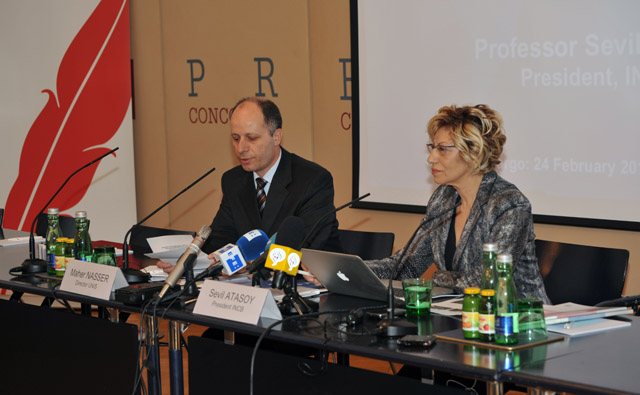
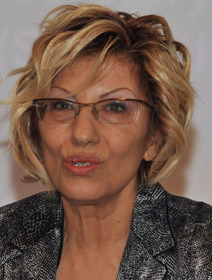
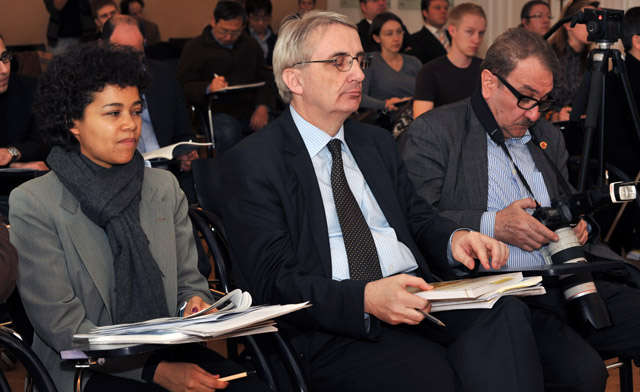
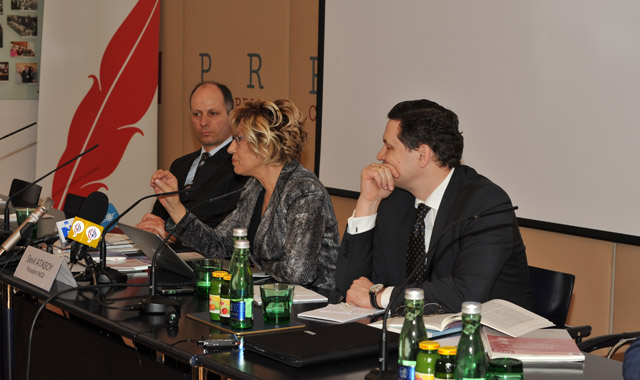
I asked these questions during the presentation of the “International Narcotics Control Board 2009 Annual Report” held at Presseclub Concordia in Vienna on 24 February 2010. The conference was organized by the UNIS Information Service in a number of major cities around the world. In Vienna, many journalists attended the Press conference. Prof. Sevil Atasoy, President of the International Narcotics Control Board (INCB) presented the report. Maher Nasser, director of UNIS, briefed the attendants shortly while opening the session.

Prof. Atasoy answered my question saying that the root of the drug problem is that the human beings sometimes need a tool to confront the problems of life. “Human beings have always been using something, for example a plant to chew. The issue is that we must reduce this demand. Therefore we must say that it’s enough to reduce this need for drugs. We can’t say that drugs are an economic problem. We can’t say that it is a problem of open borders. Everywhere, persons can have access to some of this material, and we must teach the people how to cope with stress and life without using drugs. The NGOs should teach people how to cope with life”.
Prof. Atasoy warned during her presentation that the use of so called “date-rape drugs” is on the rise. The INCB report raises the alarm about new psychoactive substances which are easier to obtain and under less stringent international controls.

The UNIS office released a statement by the executive director of the United Nations Office on Drugs and Crime (UNODC), Antonio Maria Costa, who said during a debate in the Security Council on global threats against international peace and security: “We must break the vicious circle between insecurity and under-development”. Costa also stated that “instability attracts crime, and crime deepens instability”, and he added “in a chain reaction, humanitarian crises follow, development is stalled, and peacekeepers are deployed”.

The report of UNIS in which they summarize the INCB annual report and the UNODC warnings is below.

INCB Warns of an Increase in the Use of “Date-Rape Drugs“

VIENNA, 24 February UNIS – The “date-rape drug” phenomenon is evolving rapidly, as sexual abusers attempt to circumvent more rigorous drug controls by using substances not restricted by the international drug conventions. Stricter control measures by governments, in close cooperation with the pharmaceutical industry, have been effective as reports about the misuse of Flunitrazepam have become rare. This benzodiazepine sold under the brand name Rohypnol was once so commonly misused for sexual assault that it was called the “date-rape drug”. In its Report, INCB calls on all governments to implement the pertinent Resolution 52/8 from March 2009 of the Commission on Narcotic Drugs to combat the misuse of pharmaceutical products to commit sexual assault as soon as possible and to be vigilant about the worrying increase in “date-rape drug” abuse.

Prevention of Drug Abuse

Society has to give urgent attention to preventing drug abuse, the Vienna-based International Narcotics Control Board said, underlining the need for more actions and commitment. Measures to prevent and reduce drug abuse by people who are either not using or not seriously involved with drugs – so-called primary prevention – are the focus of the first chapter of the Report.

“Preventing drug abuse is a crucial area of demand reduction. Primary prevention encompasses measures taken to prevent and reduce drug use in populations that are either not using or not seriously involved with drugs,” said INCB President, Professor Sevil Atasoy. “There is good reason for society to give concerted attention to preventing drug abuse. Even a single early drug using experience can result in serious consequences, such as unintentional injury, overdose or arrest.”

The Report calls on governments to re-establish the place of primary prevention alongside secondary prevention as well as on policy makers to establish a clear focal point for primary prevention. As primary prevention by governments alone will not suffice, there needs to be collaboration with non-governmental organizations (NGOs) and others.

INCB President Atasoy says: “Partnerships with civil society need to be forged at all levels, locally, nationally and internationally to ensure scarce resources are applied as efficiently as possible and to increase effectiveness in reducing the prevalence of drug use.” With limited resources, governments should pay attention to both young people who are not using or occasionally using drugs and to those using drugs frequently, underlines the Report.

Growing Problem of Prescription Drug Abuse

The Report says that abuse of prescription drugs has become a major concern in some countries. A greater number of people are abusing such drugs, even than those abusing heroin, cocaine and MDMA (“ecstasy”) put together in some countries. High profile celebrity deaths have shed light on the dangers of prescription drug abuse in 2009. Abuse of such drugs has been spreading over the world in recent years and INCB is calling for more awareness of this ‘hidden’ problem.

Prescription drug abuse needs to be tackled urgently in order to stop its further spreading and to prevent more fatal incidents amongst celebrities and others. The INCB recommends governments to either prohibit or closely control the sales of internationally controlled substances by Internet pharmacies and telephone call centers, in order to close down the illicit supply channels.

New Processes, Routes and Substances Used by Criminal Networks to Manufacture Drugs

Highly organized and powerful criminal networks are using new processes, routes and substances to keep drug manufacturing operations alive, warns the INCB. In the face of stricter controls of chemicals, traffickers are finding new ways to fuel their illegal exploits and are still able to obtain the chemicals they need from legal trade channels.

The demand for methamphetamine precursors has had serious repercussions throughout the Americas, where some governments are making major efforts to free their countries from the grip of powerful criminal organizations. As the Report indicates, the power of such networks is linked to the vast wealth generated by illicit drug manufacture, particularly of methamphetamine.

INCB is helping governments to efficiently exchange data on trade, diversions and seizures. Together with the INCB online system for pre-export notifications, the international collaborative initiatives and operations have resulted in more effective monitoring of suspicious transactions and the identification of trafficking trends and networks. Improved exchange of intelligence information has yielded significant results in targeting the diversion of chemicals.

Hundred Years of Drug Control, Major Landmark in International Cooperation

The year 2009 marked a century of multilateral drug control efforts which started when the International Opium Commission was convened in Shanghai, China, in February 1909. International drug control has evolved considerably over hundred years. A series of multilateral drug control agreements were concluded, leading up to the adoption of the three international drug control treaties that are the current framework for action in international drug control. To pay tribute to the achievements in international drug control, a special section of the Annual Report of the INCB is devoted to the commemoration of the convening of the International Opium Commission, which was held on 26 and 27 February 2009 in Shanghai, China.

At this landmark event, Professor Hamid Ghodse, then INCB President, recalled the spirit of the original Shanghai Conference, which met when the opium trade was very lucrative, generating millions of dollars in revenues. The challenges that the international community faces were important such as the under-utilization of narcotic drugs for medical purposes, Professor Ghodse said, adding that “Governments and the international community as a whole have to find a way to tackle them, bearing in mind the principles of shared responsibility, the sovereignty of nations, the territorial integrity of States and the need to address the world drug problem in a balanced and integrated manner.”

Regional Highlights

The Report highlights major trends in drug abuse and trafficking, region by region, around the globe. After years of increasing cocaine trafficking from South America through West Africa to Europe and to a lesser extent to North America, there was a decline in seizures of cocaine since 2008 and no large seizure in 2009 at all. However, smuggling remains a serious problem and contributes to increasing drug abuse in West Africa.


Drug trafficking has become a major security threat in Central America and the Caribbean and has an impact on the increasing drug abuse and homicides linked to organized crime. While measures taken by the Mexican Government, including the deployment of military troops, have resulted in the disruption of drug trafficking operations throughout North America, organized criminal groups have expanded their control over drug trafficking operations throughout the continent. Mexican drug cartels have expanded their control to cover the entire supply chain for illicit drugs, from shipment from South America to distribution in the United States. In South America, the total potential manufacture of cocaine of the region decreased and constitutes the lowest output since 2003, due to a significant decrease in Colombia.

After tremendous progress in East and South-East Asia in the past, countries in the region faced setbacks in reducing illicit opium poppy cultivation in 2008. Trafficking in methamphetamine and illicit manufacture of MDMA (“ecstasy”) also increased. Seizures of amphetamine-type stimulants in South Asia show that trafficking in the substances may be increasing in the region. India has emerged as one of the main sources of drugs sold through illegal Internet pharmacies, where orders placed abroad are dispatched to buyers using courier and postal services, which have became a common means of smuggling drugs abroad. After peaking in 2007, illicit cultivation of opium poppy and the illicit production of opium in West Asia decreased in 2008 and 2009.

A decline in the abuse of cannabis and cocaine has been observed in the United Kingdom and Spain. The abuse of cocaine is stable or declining in Austria, Germany and Switzerland, but increasing in France and Ireland. Likewise, the abuse of amphetamines and MDMA (“ecstasy”) is stabilizing or decreasing in Europe. In Denmark, Spain and, to a limited extent in the United Kingdom, drug users are replacing those drugs with cocaine. Europe remains the largest market for cannabis resin. Spain accounts for the largest total amount of global seizures of cannabis resin.

The demand for MDMA (“ecstasy”) in Australia has increased in recent years. The smuggling of pharmaceutical preparations containing pseudoephedrine into New Zealand has been rising significantly. In spite of closer regional cooperation to address drug control issues, the low rate of accession by States in Oceania to the international drug control treaties and the geographical proximity of the region to illicit drug manufacturing in South-East Asia make the region more vulnerable to drug trafficking.

Organized Crime Deepens Humanitarian Crises, Warns UNODC

VIENNA, 24 February (UN Information Service) – “We must break the vicious circle between insecurity and under development,” said the Executive Director of the United Nations Office on Drugs and Crime (UNODC), Antonio Maria Costa, at a debate in the Security Council today on global threats against international peace and security. “Instability attracts crime, and crime deepens instability,” said Mr. Costa. “In a chain reaction, humanitarian crises follow, development is stalled, and peacekeepers are deployed,” said Mr. Costa. To illustrate the problem, UNODC issued a report on Crime and Instability: case studies of transnational threats. The report focuses in particular on the impact of drug flows (cocaine and heroin), as well as piracy around the Horn of Africa, and minerals smuggling in Central Africa.

To reduce vulnerability to trans-national threats, Mr. Costa underlined the need for development and security: “But we cannot just throw money or troops at this problem, we also need law enforcement.” He underlined the need for States to make more effective use of the United Nations Convention against Transnational Organized Crime which was adopted a decade ago. Parties to the treaty, also known as the Palermo Convention, will meet this October in Vienna to review implementation.

Mr. Costa called for more intelligence-sharing and vigilance to fill the “black holes” where criminals operate with impunity: “There are many blank spots on our radar screens and our ignorance about what goes on has deadly consequences,” he warned. He highlighted the recent discovery of a fleet of cargo planes bringing cocaine into West Africa and the Sahel. “What is shocking is that most major discoveries of illicit activity are being made by accident,” said Mr. Costa.

Mr. Costa said that a change in attitude is essential in order to tackle transnational threats. “It is time to regard intelligence-sharing as a way of strengthening sovereignty, not surrendering it,” said the head of UNODC. “When police stop at borders while criminals cross them freely, sovereignty is already breached – it is surrendered to those who break the law,” he said. He therefore called for regional networks to monitor flows, share intelligence and carry out joint operations.

Since criminals are motivated by money, the way to increase their risks and reduce their benefits is to go after their assets. Mr. Costa therefore urged Member States to strengthen measures against corruption and money-laundering. To illustrate the massive profits made by crime he said: “One line of cocaine snorted in Europe kills one square metre of Andean rain forest, and buys 100 rounds of AK-47 ammunition in West Africa. Multiply this by 850 tons of cocaine per year and you see that is a bigger mismatch than David versus Goliath.”

Because of the cross-cutting nature of organized crime, Mr. Costa called for a system-wide response, like putting criminal justice into the mainstream of all relevant UN operations, and holding periodic debates on the threat posed by organized crime to stability.

A Presidential statement issued during the debate made a number of recommendations on how to strengthen the response of Member States and the United Nations to transnational threats.


Possibly related posts (automatically generated):

  1. The TIPH and Israeli Crimes in Hebron On December 8, 2007 I wrote to Karl-Henrik Sjursen, head of the TIPH Mission, to his Secretary, his Deputy, to...
  2. Call for creation of UN War Crimes Commission The International Progress Organization, headed by Dr. Hans Koechler, sent me the statement below War on Gaza: Call for creation...
  3. Honor Killings In Palestine Last Saturday 16 May 2009, Halimeh Ahmad Al-Sheikh from Qalqilyah was found dead near the Atara checkpoint north of Ramallah....
  4. UN Employees Disrespect UN Resolutions Boycott Ahava Dead Sea Cosmetics Today I received the latest news sent to me by the women in black in...
  5. The UN Must End Israel War Crimes Following the activities of the “Annual Observance of the International Day of Solidarity with the Palestinian People” which was held...