Palestine Cry

The Truth of God and Our Lord Jesus Christ

Special Palestine Cry Blog articles: The Catholic Creed: The meaning of the Pasch of Christians.

JESUS CHRIST IS THE ONLY WAY AND TRUTH AND LIFE - NO ONE COMES TO THE FATHER EXCEPT BY HIM.

For as it was not possible that the man who had once for all been conquered, and who had been destroyed through disobedience, could reform himself, and obtain the prize of victory; and as it was also impossible that he could attain to salvation who had fallen under the power of sin,-the Son effected both these things, being the Word of God, descending from the Father, becoming incarnate, stooping low, even to death, and consummating the arranged plan of our salvation, upon whom [Paul], exhorting us unhesitatingly to believe, again says, "Who shall ascend into heaven? that is, to bring down Christ; or who shall descend into the deep? that is, to liberate Christ again from the dead." Then he continues, "If thou shall confess with thy mouth the Lord Jesus, and shalt believe in thine heart that God hath raised Him from the dead, thou shall be saved." And he renders the reason why the Son of God did these things, saying, "For to this end Christ both lived, and died, and revived, that He might rule over the living and the dead." And again, writing to the Corinthians, he declares, "But we preach Christ Jesus crucified; "and adds, "The cup of blessing which we bless, is it not the communion of the blood of Christ? " - St. Irenaeus, Against Heresies, Book III, Chapter XVIII, Section 2.

The Crucifixion of the Lord Jesus Christ, Mary and John and the women at the foot of the Cross

Matthew 27:45 Now from the sixth hour, there was darkness over all the earth, until the ninth hour.

Origen tell us this darkness was only in Palestine, and the neighbouring countries: for as to the words, over the whole earth, or over the whole land, we find one kingdom or empire, by a common way of speaking, called the whole earth, or the whole world. As to the cause of the obscuration of the sun; and secondly, as to the extent of its darkness. Origen tells us that the darkness was partial, and confined to Judea and the neighbouring countries, as the darkness of Egypt was only perceived in that country, and not in Gessen, where the children of Israel were. Saint Jerome tells us that the obscurity was caused by the rays of the sun being suddenly withdrawn by divine power, as was the case in Egypt. The darkness in Egypt during the Passover of Moses was due to God's protection withdrawn from that land at that time. The darkness when Christ was Crucified for us is the judgement of God upon His Son Jesus Christ, in our place. For Jesus Christ knew NO sin. He never sinned, nor could He ever.

The meaning of the Pasch of Christians.

The Book of Wisdom, Chapter 17, describes the devils and demons thrown back upon the Egyptians when the Israelites under Moses were brought out of Egypt by God for God’s purposes (to prepare a place for the Crucifixion of Our Lord for the Redemption of the whole world of those who are saved). In the same way the same false gods and goddesses that the Egyptians served and which in so doing were the reason the Egyptians sacrificed their sons and daughters to the devils and demons behind the false gods/goddesses were the spirits that killed the Egyptian children that perished when the Israelites were brought out of Egypt. God does not murder children, period. The angel of death which destroyed in Egypt was one of the fallen spirits. God did not cause any of the fallen spirits to hurt anyone. God allowed the fallen spirits to do what it is their nature do to when He brought the Israelites out of the gates of hell which was Egypt. The children below the age of reason that died went to be with God for eternity, they will be resurrected with the just at the Second Coming of Christ. This principle of God allowing the innocent to be afflicted along with guilty finds its ultimate fulfillment in Christ’s singular and only salvific Kenosis. Jesus Christ committed no sin, not ever nor could He, and was and is and only could be utterly and absolutely and completely innocent of any and all wrongdoing and sin by His very nature as the Holy and True God. The guiltless sacrificed by His own will for the guilty. Even when the innocent are afflicted by the actions and evils instigated by the fallen spirits in the world, the innocent are not possessed by those fallen spirits. The principle of all being afflicted by the evil set loose upon the world for its unrepentant sin will occur when the universal plagues are let loose upon the world. See Apocalypse 16

The principle of our always, for our part, protecting children is given us by Our Lord and Saviour Jesus Christ in the Gospel of Matthew, Chapter 18

1 At *that hour the disciples came to Jesus, saying: Who, thinkest thou, is the greater in the kingdom of heaven?

2 *And Jesus calling unto him a little child, set him in the midst of them,

3 And said: Amen I say unto you, *unless you be converted, and become as little children, you shall not enter into the kingdom of heaven.

4 Whosoever therefore shall humble himself as this little child, he is the greater in the kingdom of heaven.

5 And he that shall receive one such little child in my name, receiveth me.

10 Take heed that you despise not one of these little ones: for I say to you, *that their angels in heaven always see the face of my Father who is in heaven.

The principle of our ONLY worshipping the True God, the Father and the Son Jesus Christ and the Holy Spirit is given first in the historical truth of the Garden of Eden when Christ, who is the Tree of Life commands the first man and his wife, Adam and Eve to not have anything to do with the tree of the knowledge of good and evil which is Satan, the first fallen angel, nor with any of the fallen angels with Satan. Assisi of Babylon/Vatican/Rome is absolute and complete violation of that principle and is the Great Apostasy in full blown Satanic evil. Have nothing to do with the Vatican or suffer its eternal damnation in hell with it. The devil and demon worshipping pagans and the perfidious deicidal Jews are not ever any part of the Salvific action of Christ upon Golgotha/Calvary. Individual pagans and Jews if they repent of their not confessing Jesus Christ as the Immortal Son of God become flesh for our sake and sacrificed for our salvation and who confess publicly their sin of devil and demon worshipping and perfidy and deicide and who beg the Lord of all, the Lord God, the Father and the Son Jesus Christ and the Holy Spirit for forgiveness of their horrid and abominable sins, can and will be forgiven if they do so now in this life and will enter into the only path of salvation there is as dictated by God Himself. The Church, all the faithful – there is no other meaning acceptable to God for the word Church, is commanded by God to not have anything to do with the Apostasy.

Book of Wisdom, Chapter 17

1 For thy judgments, O Lord, are great, and thy words cannot be expressed: therefore undisciplined souls have erred.

2 For while the wicked thought to be able to have dominion over the holy nation, they themselves being fettered with the bonds of darkness, and a long night, shut up in their houses, lay there exiled from the eternal providence.

3 And while they thought to lie hid in their obscure sins, they were scattered under a dark veil of forgetfulness, being horribly afraid and troubled with exceeding great astonishment.

4 For neither did the den that held them, keep them from fear: for noises coming down troubled them, and sad visions appearing to them, affrighted them.

5 And no power of fire could give them light, neither could the bright flames of the stars enlighten that horrible night.

6 But there appeared to them a sudden fire, very dreadful: and being struck with the fear of that face, which was not seen, they thought the things which they saw to be worse:

7 And the delusions of their magic art were put down, and their boasting of wisdom was reproachfully rebuked.

8 For they who promised to drive away fears and troubles from a sick soul, were sick themselves of a fear worthy to be laughed at.

9 For though no terrible thing disturbed them: yet being scared with the passing by of beasts, and hissing of serpents, they died for fear: and denying that they saw the air, which could by no means be avoided.

10 For whereas wickedness is fearful, it beareth witness of its condemnation: for a troubled conscience always forecasteth grievous things.

11 For fear is nothing else but a yielding up of the succours from thought.

12 And while there is less expectation from within, the greater doth it count the ignorance of that cause which bringeth the torment.

13 But they that during that night, in which nothing could be done, and which came upon them from the lowest and deepest hell, slept the same sleep.

14 Were sometimes molested with the fear of monsters, sometimes fainted away, their soul failing them: for a sudden and unlooked for fear was come upon them.

15 Moreover if any of them had fallen down, he was kept shut up in prison without irons.

16 For if any one were a husbandman, or a shepherd, or a labourer in the field, and was suddenly overtaken, he endured a necessity from which he could not fly.

17 For they were all bound together with one chain of darkness. Whether it were a whistling wind, or the melodious voice of birds, among the spreading branches of trees, or a fall of water running down with violence,

18 Or the mighty noise of stones tumbling down, or the running that could not be seen of beasts playing together, or the roaring voice of wild beasts, or a rebounding echo from the highest mountains: these things made them to swoon for fear.

19 For the whole world was enlightened with a clear light, and none were hindered in their labours.

20 But over them only was spread a heavy night, an image of that darkness which was to come upon them. But they were to themselves more grievous than the darkness.

The Catholic Creed: The Final Trial: Traditional Catholic Prayers: Baptism

Showing posts with label Maher Nasser. Show all posts

Tuesday, November 30, 2010

Iran Confronts The Israeli Crimes At UN

Iran Confronts The Israeli Crimes At UN

[use Open Image in New Window to see pictures in full enlarged]

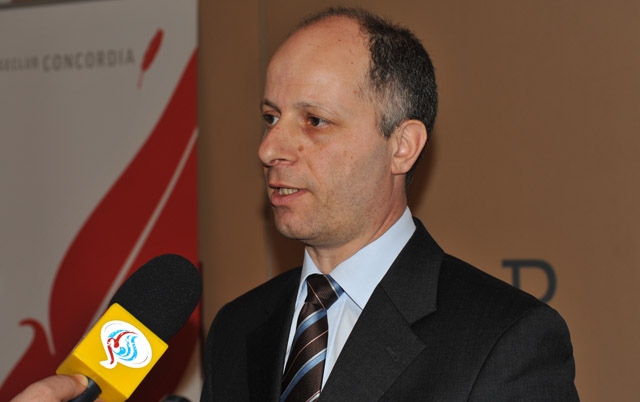
Mr. Maher Nasser, the director of the United Nations Press office (UNIS).

Yesterday several speeches were delivered at the UN on the occasion of International Day of Solidarity with the Palestinian People. The ceremony was held on Monday Nov. 29 2010 at the UN Office in Vienna. A special message from United Nations Secretary-General Ban Ki-moon was read in Arabic by Mr. Maher Nasser, the director of the United Nations Press office (UNIS) and who is Palestinian, on behalf of Yury Fedotov, the UN director in Vienna, who was not at the event because of being out of the city.

The formal ceremony included opening remarks and a statement by the Chairperson on behalf of the Committee on the Exercise of the Inalienable Rights of the Palestinian People, a special statements delivered by the Host Country of Austria, the Non-Aligned Movement, the League of Arab States and the republic of Iran.

It was very clear that many Arab Ambassadors did not attend the Palestinian solidarity event, except Ambassador. Dr. Mikhail Wehbe, the representative of the League of Arab States. Present were the Ambassadors of Syria, Oman, Yemen, the Islamic of Republic of Iran, consuls from Jordan, Syria, Iraq, Egypt, Qatar, Oman and Lebanon. From the non-Arab countries, few ambassadors attended the event. Present were the Ambassador of Chile, a Mexican representative and also representatives of a few more countries, and the representatives of organizations like of CTBTO, OFID, OPEC and some well-known Palestinian faces who represent ONLY Fatah.

Earlier during the same event, at 12:45 in the rotonda of the VIC, an event organized by the Permanent Observer Mission of Palestine in cooperation with UNOV, featuring a reading of “The Gaza Monologues” by Angela Waldegg was held. Bashir Mirzo, a Syrian musician, played Oud.


At 16:00, the formal session started in conference room M3. Excerpts from a speech by the United Nations Secretary-General, which was read by Mr. Nasser: “Every year on the International Day of Solidarity with the Palestinian People, we reflect on the situation of the Palestinians and consider what more we can do for peace. Two timelines reach a critical point in 2011.


First, Palestinian President Abbas and Israeli Prime Minister Netanyahu have pledged to seek a framework agreement on permanent status by September. Second, the Palestinian Authority is on track to complete its two-year agenda of readiness for statehood by August.

At its meeting in September 2010, the Quartet stated that an agreement can be reached in the timeframe set out by the leaders themselves, and that the Palestinian Authority, if it maintains its current performance in institution-building and the delivery of public services, is well-positioned for the establishment of a State at any point in the near future.

Yet few Palestinians are optimistic that anything decisive will be achieved next year, or even at all. Looking at the situation on the ground, I understand this despair. Soon after direct talks on final status began in September, they were undermined by the expiry of Israel’s commendable settlement moratorium. Construction of hundreds of new units throughout the West Bank commenced, and new approvals for settlements in East Jerusalem were given. This development is a serious blow to the credibility of the political process. The obligation remains on Israel to meet its responsibilities under international law and the Roadmap to freeze settlement activity.

Ambassadors of Syria to Austria.

It is also true that few Israelis seem hopeful that peace can be achieved soon, and I am sensitive to Israel’s security concerns. But I ask all Israelis to look with fresh eyes at the indisputable emergence of a reliable security partner on the ground, and the continued commitment of President Abbas to Israel’s right to live in peace and security, and to his rejection of violence and terrorism. I also remind everyone of the promise of the Arab Peace Initiative that a two-State solution and comprehensive Israeli-Arab peace would be followed by the establishment of normal relations between Israel and all Arab States.

I commend the steps taken during the past year to improve conditions on the ground. However, much more is needed. The Palestinian Authority must continue to roll out the institutions of statehood, combat terrorist attacks and curb incitement. Meanwhile, it is both Israel’s interest and its duty to begin rolling back the measures of occupation, particularly with respect to movement, access and security actions.

I remain very concerned about conditions in Gaza. I express appreciation for the modification of Israel’s policy and the approval of a substantial number of United Nations projects. But this can only be a first step. Full implementation of Security Council resolution 1860 should follow. Israel needs to enable broader civilian reconstruction, free movement of persons and the export of goods, and to facilitate the swift implementation of projects. Rocket fire from Gaza must stop. A prisoner exchange, the extension of de facto calm and progress on Palestinian reconciliation are also key steps.

From the left: Dr. Zuheir Al-Wazeer, Dr. Nabil Sha'ath, Monther Meria.

An overwhelming international consensus exists on the need to end the occupation that began in 1967, address the fundamental security concerns of both parties, find a solution to the refugee issue and see Jerusalem emerge from negotiation as the capital of two States. I challenge the two leaders to show statesmanship and political courage in reaching a historic peace. The international community, for its part, must be ready to assume its own responsibilities for peace.

Let the year ahead be the one in which we realize, finally, a just and lasting peace in the Middle East based on Security Council resolutions 242, 338, 1397, 1515 and 1850, previous agreements, the Madrid framework, the Road Map and the Arab Peace Initiative. I will do everything in my power to support these efforts.

The Zionist Mentality

Ambassador Ali Asghar Soltanieh, Permanent Representative of the Islamic Republic of Iran, delivered a sensible speech on the occasion of the “International Day of Solidarity with the Palestinian People” in which he addressed and described the Zionist state of Israel correctly. He said: “The continuous Middle East crisis is originating from inattention and silence of the international community vis-à-vis the issue of occupation of the Palestinian territories, ignorance of basic human rights of the homeless people of this territory and continuous violation of internationally recognized norms and principles by the Zionism regime. The Israeli policy and conduct committing crimes such as massacre of thousands of innocent Palestinian children and women, targeted assassination, arrest of Palestinians including minors and women and keeping them in dreadful conditions in prisons and detention camps, siege of Palestinian regions, illegal settlement, destruction of houses and infrastructures, and construction of the apartheid wall are obvious examples of state-terrorism and racism”.

He added: “Less than two years ago, a horrific human tragedy took place in the Gaza Strip which resulted in the strangulation and slaughter of innocent and defenseless people, especially women and children, by using intentionally prohibited weapons such as phosphorus and depleted uranium. Those barbaric crimes, once again, challenged the credibility of the international community and undermined the most basic values for which the civilized world stands. The United Nations have recognized the atrocity of the Zionist regime in Gaza as war crime. Regretfully the siege of Gaza, the largest prison in the history, is still continued and innocent Palestinians are struggling to survive. The international community has to take serious steps to stop such crimes and humanitarian massacres”.

Soltanieh said that that the problem of the Middle East is not shortage of peace plans but the main problem is lack of recognition of the main root cause of the crisis: Zionist mentality and inaction vis-à-vis violation of the international law and the United Nations Charter by the Israeli regime. As the Secretary General of the United Nations in his message on this occasion stated, the Zionist regime, despite of its responsibilities under international law, has commenced construction of hundreds of new units throughout the West Bank and has given new approvals for settlements in East Jerusalem. Such measures clearly indicate once again that the regime neither respects international law nor heeds even to the advice of its alliance and supporters. The measures taken by the Zionist regime for continuous expansion and occupation of Palestinian territory and expelling its genuine inhabitants from their homeland is an obvious example of racism.”

Soltanieh exposed the Zionist regime saying that it has always tried to introduce external factors and regional countries as barriers towards peace and stability in the region. As a matter of fact, the regime resorts to this policy so as to export its crisis abroad. Some western countries, the United States in particular, have merely highlighted the security of the Zionist regime at the cost of insecurity of Palestinians and deprivation of benefiting minimum standard of peaceful living. They should note that this is a source of instability, insecurity and confrontation in the Middle East. The emphasis of the Israeli regime on the existence of a Jewish state is as re-emergence of an apartheid mentality which was finally removed after years of struggle and international condemnation.

Soltanieh asked: How can any civilized individual ever accept or even understand that a group of people, presumably followers of a religion, from different parts of the world, will occupy a homeland of another group of people living in peace for thousands of years, under the pretext that say 3 thousand years ago, their ancestors have called that area as “Promised land” thus they consider a right for themselves to occupy Palestine, massacre innocent Palestinians and establish a Jewish State by constructing buildings on their dead bodies and graves. Such buildings based on injustice and crimes against humanity are not stable and soon would collapse.

This is a shameful and dark chapter of our recent history. If peace loving people of the world would not protest actively in removing this ugly spot in the region, such a mentality will then become precedence, others might follow suit, and therefore the world would face anarchy and bloodshed. The above mentioned atrocities and aggression, along with nuclear weapons capabilities of the Israeli regime will surely threaten the security of countries in the Middle East and the world at large.
Therefore, the international community must not only categorically condemn but promptly destroy the root cause of such crimes against humanity, Zionist mentality, once for ever as it did by wiping out the “Apartheid mentality”, getting the world rid of such an inhumane danger. It requires global mobilization of all peace loving people of the world against the occupying regime of Palestine, the Zionist regime of Israel, and its guardians.

He ended his speech saying: “based on the above historical background and principles I have to reiterate the fact that the issue of occupation of Palestine is not only the concern of brotherly Arab countries, and over a billion of Muslims, but concern of the people of the whole world. Therefore, any attempt to make temporarily selectively peace agreements with selective countries in the region dooms to total failure, as we have witnessed during past decades.

The Islamic Republic of Iran is of the strong belief that the only pragmatic ultimate solution for a sustainable peace and stability in Palestine is through full restoration of the rights of the Palestinian People including return of all refugees to their homeland and a democratic mechanism, a referendum, through which all inhabitants of occupied Palestine, composed of Muslims, Jews, Christians, as well as the Palestinians driven out of their homeland, would have the possibility to determine their future in a democratic and peaceful manner.”


Possibly related posts (automatically generated):

  1. From judden sanden Hello Ms.Kawther If “Palestinian” is really a nation then you’d probably [...]...
  2. Regards to Venezuela Which Expelled the Israeli Ambassador The Ministry of the Foreign Affairs of Venezuela stated that on Tuesday night, 6 January 2009, the Venezuelan government expelled...
  3. Call for creation of UN War Crimes Commission The International Progress Organization, headed by Dr. Hans Koechler, sent me the statement below War on Gaza: Call for creation...
  4. A Holocaust Survivor Writes to Obama and Olmert —– Original Message —– From: Eva S. Moseley To: Prime.Minister’sOffice [at] it [dot] pmo [dot] gov [dot] il Sent: Thursday,...
  5. Petition for Israel War Crimes Tribunal A petition forwarded to me by Dr. Tammam Kelani, the president of Arab-Austrian Federation of Doctors and Pharmacists, follows below....

Sunday, March 28, 2010

Questions at The UN About Ending the Occupation of Palestine

Questions at The UN About Ending the Occupation of Palestine

See more pictures

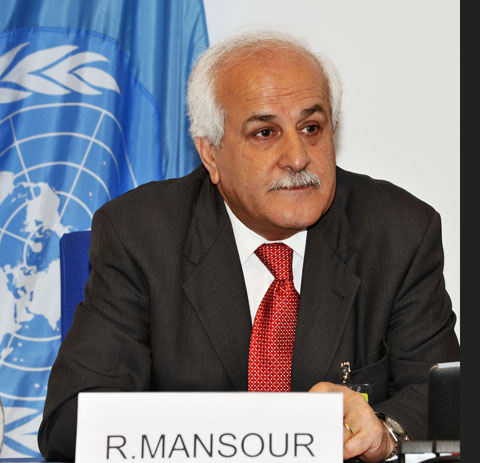
The following question were delivered on March 25 2010 during the UNIS Press briefing on the Seminar on Assistance to the Palestinian People organized by the Committee on the Exercise of the Inalienable Rights of the Palestinian People from 24-25 March 2010 at the United Nations office at Vienna. The speakers at the UNIS conference were Zahir Tanin, Ambassador of Afghanistan to the UN in New York, and Riyad Mansour, the Ambassador (Permanent Observer) of Palestine to the United Nations in New York, and head of the delegation of the committee. Mr. Maher Nasser, director of UNIS, was the conference moderator. The questions were directed to Ambassadors Tanin and Mansour. The conference was attended by some Journalists and the team of UNIS press office.

[use Open Image in New Window to see pictures enlarged in full]

From the right, Ambassador Riyad Mansour, Maher Nasser, and Dr. Ali Al-Jirbawi.

Israel was essentially created by the UN on Palestinian land. During the last 6 decades, the UN and the international community have given Israel everything, and tolerated from Israel every single abuse and transgression of international laws to which all other nations submit most of the time. As a result, Israel has become a problem not only for Palestinians, but it has become a problem for the international community , a bully which is now abusing and perverting the role of the UN in order to legitimize wars of aggression against perceived political opponents.

Question: In view of this, is it not time to change the attitude against them and start serious international discussions towards expelling Israel from the UN, or applying even stronger sanctions?

Response to my question from Ambassador Tanin:
“The United Nations has always been in the support of the Palestinians case, as we know from the resolutions from the General Assembly, the resolutions of the Security Council, the Palestinians plight has always been in the center of the focus of the United Nations. Of course, the history of how Israel was created is a long debate, as ambassador Mansur has mentioned, there are a window of opportunity for different sort of engagement of the United Nations, and there is more better understanding of the issue as we know after Gaza’s attack last year, and the UN has been engaged increasingly in issues that are vital for peace in the middle east and the Palestinian people in the future”. “click on the picture to make it bigger”

Ambassador Tanin added that “I think the UN is an embodiment of the collective will of the nations, the UN is not a separate power, so if we see how the UN is acting and working, we have to look into how the collective will is working. The collective will of 192 countries, collective will of legal small powers and all nations, so there is a wider argument among the members of the United Nations in supporting the cause of Palestine and also the creation of the Jewish State”.

Palestinian Ambassador Mansour said: “It is true that the maybe the UN can resort to practical measures in order to implement the many resolutions adopted in the Security Council and in the General Assembly because Israel is refusing to abide by each obligation under the chapter as a member of the UN in implementing these resolutions”. He added: “we can understand the frustrations of our people and their friends in seeing hundreds of resolutions adopted in the General Assembly and dozens adopted in the Security Council and they see Israel is not complying with many of these resolutions”.

“So that there is always is a ground for trying to push the UN and it’s institutions and it’s collective will in a direction of trying to deal with Israel not as business as usual. In this connection we are also telling our friends in Europe and you are also in Europe (meaning me) to speak to the governments in Europe including the government here (meaning Austria) where you are located. In each day say also the same things.”

Ambassador Mansour said: “In Europe there are decorations in the positions of the council of the foreign ministers, they always say the right things and they ask Israel to stop building settlements because they are illegal, they are asking them to stop doing what they are doing in Jerusalem because it is illegal and it is also very dangerous because they are pushing the envelop in the direction of the religious confrontation.

They are asking them to stop settlement activities, they are asking them remove the checkpoints, to open our institutions in east Jerusalem, and to lift the blockade against Gaza, but Israel is not listening. So therefore also with our friends in Europe who we met as a committee delegation in the foreign ministry and we spoke with as friends in a frank manner that these good words that you say are not sufficient, because Israel is not listening. You have to resort to practical measures that make Israel listen, and we can’t tell Europe what to do, they have many things that they can do.”

Ambassador Mansour gave examples how the European friends could deal with Israel in response to their ignorance to their demands: “For example, instead of upgrading the relationship with Israel while they are doing these things and not listening to you, may be you should not do that. Another example, Europe is importing goods from Israel, things that are made in the settlements. You should not import them. These are just examples of practical things that could be done and raising them with them, and for those who are as excited and eager like you could help us in this issue. You could help us in raising these issues with the government where you are and other governments of the Europeans countries.”

During the introductory session, the creation of a bank was mentioned, which would give credit to businesses in the West Bank.
Question: Is it not strange to first destroy the economy of the West Bank and then “help” these ruined people by submitting them to usury?
Who will benefit from this project: the businesses subject to usury, or a small clique in Ramallah and their jewish friends?

Response of Ambassador Mansour: “Our people live under occupation, and living under the occupation should not mean that we have to make their life more miserable so that they don’t have relationship with the occupation, because we have schools, we spend money in schools, we import things for schools, we do all these things through the processes with the occupying power. If we import things and equipment for schools for construction, building, for doing everything which that has to do in our daily life of our people including banks, we do it with coordination with the occupation.

For example if need to import a gallon of gasoline to Gaza to help our people to run the generator of electricity we coordinate with the occupying authority. Is this collaboration with the occupation, is it in the interest of our people or against our people to have gasoline to go to Gaza, to have electricity running, to run the hospitals, to look after our kids and to allow our people to be educated? So the fact that we live under the occupation, there are certain things that we are forced to deal with for the interest of our people.

Of course we are waiting for the day that the occupation will not be with us so that we will be in total control of everything related to our people. But in the meantime it is our responsibility, our duty to do everything possible to make life as reasonable as possible while we are living under the occupation. That is why we want to lift the siege, but siege from whom, we have six crossing points between Israel and Gaza. We want these to be open to allow trucks of construction material which come from Ashdod or from Haifa; this is where we import things, to go to Gaza so that we can construct Gaza.

Are we supposed not to do that, and to keep Gaza in the misery as it is? It is an irresponsible thing to do while we are struggling against the occupation, to end the occupation, to try to make the life of our people as reasonable as it could be, and that is within this contacts opening the bank for the benefits of our people and for economic development of our people under the occupation is a step in the right direction is not in the opposite.”

In response to a question by another attendant about when the conflict would end in Palestine, Ambassador Mansour said: “the conflict has already lasted longer than it should be, and that the Israeli occupation of Palestine was the longest occupation in contemporary history. He said that it was our collective responsibility to end the occupation as soon as possible and that the Palestinian Authority had declared that it should be ended within the span of two years from last August 2009. The plan to end the occupation by building the infrastructure of the State would lead to the birth of the State of Palestine, he said. The plan had been endorsed by the quartet of US, Russia, EU and UN in the declaration which they adopted in Moscow this month and there seemed to be collective consensus that it should be implemented.

Ambassador Mansour answered to the question about the best way to get Israel to end its occupation. He said that the international community should bring Israel into compliance. However, he said, if Israel was not going to listen to the international community which was demanding an end to the occupation, stopping settlements because they were illegal, withdrawing from the occupied territory, allowing the Palestinian State to be born, stop doing what they were doing in Jerusalem, lifting the blockade in Gaza, and allowing reconstruction in Gaza to begin, then other practical measures would need to be taken.

He added that Israel should not be allowed to be above international law. We would like to see Israel complying, but if they don’t then it would be the responsibility of all of us to resort to practical measures to force them to come into compliance and there was no other way around it.


Possibly related posts (automatically generated):

  1. Human Rights: Nails in the Coffin of Israel The Jewish State of Israel considers itself above the laws and has imposed a blockade on any criticism against its...
  2. Petition for Israel War Crimes Tribunal A petition forwarded to me by Dr. Tammam Kelani, the president of Arab-Austrian Federation of Doctors and Pharmacists, follows below....
  3. Israel Criticized Sharply at the UN in Vienna Note: I will publish the other speeches given during the event in follow-up articles. See more photos Tuesday, 1 December...
  4. The UN Must End Israel War Crimes Following the activities of the “Annual Observance of the International Day of Solidarity with the Palestinian People” which was held...
  5. Israeli Regime Revives the Apartheid Mentality See more pictures “The emphasis of the Israeli regime on the existence of a Jewish state is the re-emergence of...

Monday, March 8, 2010

Tackling the Threat of Drugs

Tackling the Threat of Drugs

See more photos

At the United Nations, M-Building, Room M2 at Vienna International Centre (VIC) there were three big blue posters suspended with a sign of UNODC “Making the world suffer from drugs, crime, and terrorism”. A press conference about “Tackling the threat of drugs” was held on Monday 8 March 2010. The conference was attended by a group of journalists; among them were some Arab journalists. Mr. Antonio Maria Costa, director of the UNODC and the Iranian Ambassador Ali Asghar Soltanieh, Chairman of Commission on Narcotic Drugs, were the speakers during the conference and Mr. Maher Nasser, Director of UNIS in Vienna was the moderator of the session.

[use Open Image in New Window to see pictures enlarged in full]

From right to left Mr. Maher Nasser, UNIS director, Mr. Antonio Maria Costa, UNODC director, Ambassador Ali Asghar Soltanieh.

“Drugs are a threat to health, development and international security” were the issues which Mr. Costa and Ambassador Soltanieh briefed shortly during the press conference. The same issues will be discussed between 8 -12 March at the 53rd session of the Commission on Narcotic Drugs (CND) meeting in Vienna. The 53rd session will also focus on effective ways of raising awareness about the risks of abusing drugs, including cannabis; improving the understanding of drug addiction as a chronic health disorder; and the importance of research and data collection for raising awareness of the world drug problem.

Mr. Antonio Maria Costa, UNODC director.

Mr. Costa warned that failure to control drugs will unleash a health disaster in the developing world, and he warned of the growing security threat posed by drugs. He said “the stakes are high: few issues have received as much attention as drug trafficking in the Security Council over the past few months”. He added that “it seems to be forgotten by people in rich countries calling for loosening of drug controls. Why condemn the third world, already ravaged by so many tragedies, to the neo-colonialism of drug dependence?”

Ambassador Ali Asghar Soltanieh.

Both of Mr. Costa and Ambassador Soltanieh answered the questions of the journalists. It was clear that most of journalists who attended the conference were interested in asking the Ambassador Soltanieh questions not related to the issue of drugs. He cleverly avoided answering these questions, saying that his participation in the press conference was as the chairman of commission on Narcotic Drugs. He demanded that the journalists ask questions related to the drugs issue.

At the end of the press conference, the UNIS team distributed the press release, which is quoted below.


8 March 2010
UNODC Warns of Drug “Health Disaster” in the Developing World

VIENNA, 8 March (UN Information Service) – In his address to the 53rd session of the Commission on Narcotic Drugs (CND), which takes place this week in Vienna, the Executive Director of the United Nations Office on Drugs and Crime, Antonio Maria Costa, warned that failure to control drugs will unleash a health disaster in the developing world.

“The developing world lacks the treatment facilities and law enforcement to control drugs,” said the head of UNODC. “This seems to have been forgotten by people in rich countries calling for loosening of drug controls. Why condemn the Third World, already ravaged by so many tragedies, to the neo-colonialism of drug dependence?” said the head of UNODC. He identified a number of warning signs: increasing use of heroin in East Africa, cocaine in West Africa, and synthetic drugs in the Middle East and South East Asia.

Referring to health as “the first principle of drug control”, Mr. Costa said that drug addiction is a treatable condition, but warned that inequality within and between states marginalizes poor people who lack access to treatment. “While rich addicts go to posh clinics, poor addicts are being pushed into the gutters or to jail,” he said. UNODC is working with the World Health Organization to achieve universal access to drug treatment, and with UNAIDS to prevent the spread of HIV among injecting addicts.

The UN’s drug control chief said: “We must not only stop the harm caused by drugs: let’s unleash the capacity of drugs to do good.” He reminded the Commission that this seemingly radical idea goes back to the roots of drug control: the preamble of the Single Convention (1961) recognizes that “the medical use of narcotic drugs continues to be indispensible for the relief of pain and suffering”. He appealed to Member States to overcome cultural and socio-economic factors “that deny a Nigerian suffering from AIDS or a Mexican cancer patient the morphine offered to Italian or American counterparts”.

He also appealed for greater respect for human rights. “Around the world, millions of people (including children) caught taking drugs are sent to jail, not to treatment. In some countries, drug treatment amounts to cruel, degrading punishment – the equivalent of torture. People are sentenced to death for drug-related offences, or gunned down by extra-judicial squads,” said Mr. Costa. “As human beings, as well as members of the community of civilized nations, we have a shared responsibility to put an end to this. People who use drugs, or are behind bars, have not lost their humanity or their human rights.”

The head of UNODC warned of the growing security threat posed by drugs. “The stakes are high: few issues have received as much attention as drug trafficking in the Security Council over the past few months,” said Mr. Costa. “Unless Member States deal effectively with the menace posed by organized crime, their security – even their sovereignty – will be under threat, and there will be renewed calls to dump the UN drug conventions that critics claim are the cause of the crime problem,” he said. He stressed the need for greater attention to security, justice and development in vulnerable regions – a process which UNODC is supporting in the Balkans, Central and West Asia, Mesoamerica, and East and West Africa.

In this, his eighth and final Session of the CND, Mr. Costa spoke with pride about how UNODC “has assisted Member States to make drug policy more responsive to the needs of those most seriously affected, along the whole chain of the drug industry: from poor farmers that cultivate it, to desperate addicts who consume it, as well as those caught in the cross-fire.” He said: “In the process, we have helped make the debate less dogmatic, gathered evidence to enrich policy, and provided assistance to reduce vulnerability. We have persistently struggled to quash the sterile debate between those who dream of a world free of drugs, and those who aspire to a world of free drugs.”

However, he warned about complacency, and lack of resources, both for drug control and for UNODC. He described the Office’s current funding level as “untenable”.

For more information on the CND and the complete text of Mr. Costa’s speech, visit the UNODC website at www.unodc.org.


Possibly related posts (automatically generated):

  1. UNRWA: 60 Anniversary of the Palestinian Misery During a press conference held Wednesday, July 1 2009 at the office of OPEC in Vienna, the Director-General of the...
  2. OPEC Press Conference Update & Correction 12/2009: I had opportunity to speak with Dr. Suleiman Al-Herbish personally about the contents of this article....
  3. How Do the PA Ambassadors Represent Palestine? How does the Palestinian National Authority explain the tragic conditions and the administrative corruption of it’s embassy in Austria? Which...
  4. Women and Date-Rape Drugs See more pictures here Do you think that open borders between the European countries have contributed in one way...

Wednesday, February 24, 2010

Women and Date-Rape Drugs

Women and Date-Rape Drugs

See more pictures here

  • Do you think that open borders between the European countries have contributed in one way or other to the marketing of drugs and the free movement of drug dealers?
  • During the years of your work in the field of drug control, have you been able to find out who are the people or groups behind the drug trade?
  • Is the drug trade is a political and economic problem, or is it an indication of the deterioration of the political and economical conditions in countries where drug trade is most active?
[click on pictures to see enlarged in full]

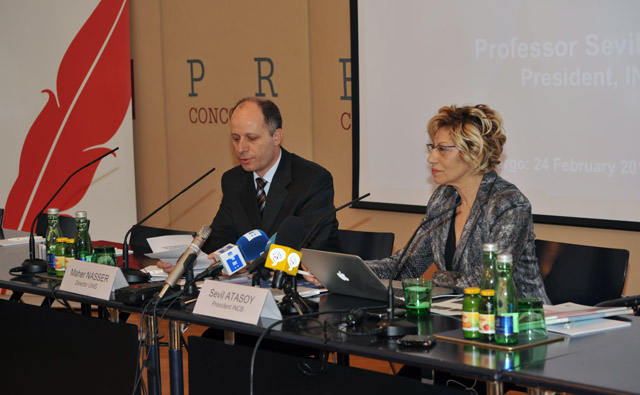
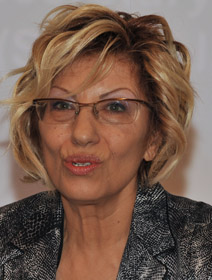
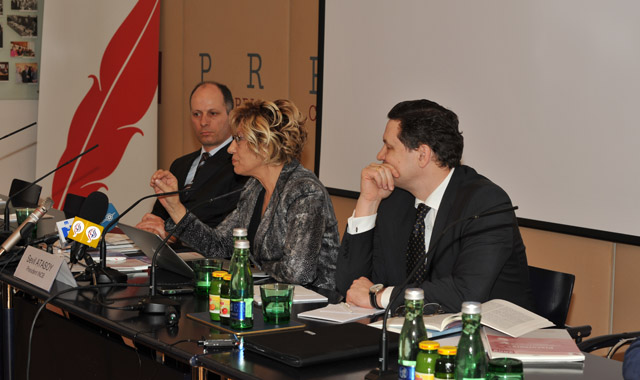
I asked these questions during the presentation of the “International Narcotics Control Board 2009 Annual Report” held at Presseclub Concordia in Vienna on 24 February 2010. The conference was organized by the UNIS Information Service in a number of major cities around the world. In Vienna, many journalists attended the Press conference. Prof. Sevil Atasoy, President of the International Narcotics Control Board (INCB) presented the report. Maher Nasser, director of UNIS, briefed the attendants shortly while opening the session.

Prof. Atasoy answered my question saying that the root of the drug problem is that the human beings sometimes need a tool to confront the problems of life. “Human beings have always been using something, for example a plant to chew. The issue is that we must reduce this demand. Therefore we must say that it’s enough to reduce this need for drugs. We can’t say that drugs are an economic problem. We can’t say that it is a problem of open borders. Everywhere, persons can have access to some of this material, and we must teach the people how to cope with stress and life without using drugs. The NGOs should teach people how to cope with life”.
Prof. Atasoy warned during her presentation that the use of so called “date-rape drugs” is on the rise. The INCB report raises the alarm about new psychoactive substances which are easier to obtain and under less stringent international controls.

The UNIS office released a statement by the executive director of the United Nations Office on Drugs and Crime (UNODC), Antonio Maria Costa, who said during a debate in the Security Council on global threats against international peace and security: “We must break the vicious circle between insecurity and under-development”. Costa also stated that “instability attracts crime, and crime deepens instability”, and he added “in a chain reaction, humanitarian crises follow, development is stalled, and peacekeepers are deployed”.

The report of UNIS in which they summarize the INCB annual report and the UNODC warnings is below.

INCB Warns of an Increase in the Use of Date-Rape Drugs

VIENNA, 24 February UNIS – The “date-rape drug” phenomenon is evolving rapidly, as sexual abusers attempt to circumvent more rigorous drug controls by using substances not restricted by the international drug conventions. Stricter control measures by governments, in close cooperation with the pharmaceutical industry, have been effective as reports about the misuse of Flunitrazepam have become rare. This benzodiazepine sold under the brand name Rohypnol was once so commonly misused for sexual assault that it was called the “date-rape drug”. In its Report, INCB calls on all governments to implement the pertinent Resolution 52/8 from March 2009 of the Commission on Narcotic Drugs to combat the misuse of pharmaceutical products to commit sexual assault as soon as possible and to be vigilant about the worrying increase in “date-rape drug” abuse.

Prevention of Drug Abuse

Society has to give urgent attention to preventing drug abuse, the Vienna-based International Narcotics Control Board said, underlining the need for more actions and commitment. Measures to prevent and reduce drug abuse by people who are either not using or not seriously involved with drugs – so-called primary prevention – are the focus of the first chapter of the Report.

“Preventing drug abuse is a crucial area of demand reduction. Primary prevention encompasses measures taken to prevent and reduce drug use in populations that are either not using or not seriously involved with drugs,” said INCB President, Professor Sevil Atasoy. “There is good reason for society to give concerted attention to preventing drug abuse. Even a single early drug using experience can result in serious consequences, such as unintentional injury, overdose or arrest.”

The Report calls on governments to re-establish the place of primary prevention alongside secondary prevention as well as on policy makers to establish a clear focal point for primary prevention. As primary prevention by governments alone will not suffice, there needs to be collaboration with non-governmental organizations (NGOs) and others.

INCB President Atasoy says: “Partnerships with civil society need to be forged at all levels, locally, nationally and internationally to ensure scarce resources are applied as efficiently as possible and to increase effectiveness in reducing the prevalence of drug use.” With limited resources, governments should pay attention to both young people who are not using or occasionally using drugs and to those using drugs frequently, underlines the Report.

Growing Problem of Prescription Drug Abuse

The Report says that abuse of prescription drugs has become a major concern in some countries. A greater number of people are abusing such drugs, even than those abusing heroin, cocaine and MDMA (“ecstasy”) put together in some countries. High profile celebrity deaths have shed light on the dangers of prescription drug abuse in 2009. Abuse of such drugs has been spreading over the world in recent years and INCB is calling for more awareness of this ‘hidden’ problem.

Prescription drug abuse needs to be tackled urgently in order to stop its further spreading and to prevent more fatal incidents amongst celebrities and others. The INCB recommends governments to either prohibit or closely control the sales of internationally controlled substances by Internet pharmacies and telephone call centers, in order to close down the illicit supply channels.

New Processes, Routes and Substances Used by Criminal Networks to Manufacture Drugs

Highly organized and powerful criminal networks are using new processes, routes and substances to keep drug manufacturing operations alive, warns the INCB. In the face of stricter controls of chemicals, traffickers are finding new ways to fuel their illegal exploits and are still able to obtain the chemicals they need from legal trade channels.

The demand for methamphetamine precursors has had serious repercussions throughout the Americas, where some governments are making major efforts to free their countries from the grip of powerful criminal organizations. As the Report indicates, the power of such networks is linked to the vast wealth generated by illicit drug manufacture, particularly of methamphetamine.

INCB is helping governments to efficiently exchange data on trade, diversions and seizures. Together with the INCB online system for pre-export notifications, the international collaborative initiatives and operations have resulted in more effective monitoring of suspicious transactions and the identification of trafficking trends and networks. Improved exchange of intelligence information has yielded significant results in targeting the diversion of chemicals.

Hundred Years of Drug Control, Major Landmark in International Cooperation

The year 2009 marked a century of multilateral drug control efforts which started when the International Opium Commission was convened in Shanghai, China, in February 1909. International drug control has evolved considerably over hundred years. A series of multilateral drug control agreements were concluded, leading up to the adoption of the three international drug control treaties that are the current framework for action in international drug control. To pay tribute to the achievements in international drug control, a special section of the Annual Report of the INCB is devoted to the commemoration of the convening of the International Opium Commission, which was held on 26 and 27 February 2009 in Shanghai, China.

At this landmark event, Professor Hamid Ghodse, then INCB President, recalled the spirit of the original Shanghai Conference, which met when the opium trade was very lucrative, generating millions of dollars in revenues. The challenges that the international community faces were important such as the under-utilization of narcotic drugs for medical purposes, Professor Ghodse said, adding that “Governments and the international community as a whole have to find a way to tackle them, bearing in mind the principles of shared responsibility, the sovereignty of nations, the territorial integrity of States and the need to address the world drug problem in a balanced and integrated manner.”

Regional Highlights

The Report highlights major trends in drug abuse and trafficking, region by region, around the globe. After years of increasing cocaine trafficking from South America through West Africa to Europe and to a lesser extent to North America, there was a decline in seizures of cocaine since 2008 and no large seizure in 2009 at all. However, smuggling remains a serious problem and contributes to increasing drug abuse in West Africa.


Drug trafficking has become a major security threat in Central America and the Caribbean and has an impact on the increasing drug abuse and homicides linked to organized crime. While measures taken by the Mexican Government, including the deployment of military troops, have resulted in the disruption of drug trafficking operations throughout North America, organized criminal groups have expanded their control over drug trafficking operations throughout the continent. Mexican drug cartels have expanded their control to cover the entire supply chain for illicit drugs, from shipment from South America to distribution in the United States. In South America, the total potential manufacture of cocaine of the region decreased and constitutes the lowest output since 2003, due to a significant decrease in Colombia.

After tremendous progress in East and South-East Asia in the past, countries in the region faced setbacks in reducing illicit opium poppy cultivation in 2008. Trafficking in methamphetamine and illicit manufacture of MDMA (“ecstasy”) also increased. Seizures of amphetamine-type stimulants in South Asia show that trafficking in the substances may be increasing in the region. India has emerged as one of the main sources of drugs sold through illegal Internet pharmacies, where orders placed abroad are dispatched to buyers using courier and postal services, which have became a common means of smuggling drugs abroad. After peaking in 2007, illicit cultivation of opium poppy and the illicit production of opium in West Asia decreased in 2008 and 2009.

A decline in the abuse of cannabis and cocaine has been observed in the United Kingdom and Spain. The abuse of cocaine is stable or declining in Austria, Germany and Switzerland, but increasing in France and Ireland. Likewise, the abuse of amphetamines and MDMA (“ecstasy”) is stabilizing or decreasing in Europe. In Denmark, Spain and, to a limited extent in the United Kingdom, drug users are replacing those drugs with cocaine. Europe remains the largest market for cannabis resin. Spain accounts for the largest total amount of global seizures of cannabis resin.

The demand for MDMA (“ecstasy”) in Australia has increased in recent years. The smuggling of pharmaceutical preparations containing pseudoephedrine into New Zealand has been rising significantly. In spite of closer regional cooperation to address drug control issues, the low rate of accession by States in Oceania to the international drug control treaties and the geographical proximity of the region to illicit drug manufacturing in South-East Asia make the region more vulnerable to drug trafficking.

Organized Crime Deepens Humanitarian Crises, Warns UNODC

VIENNA, 24 February (UN Information Service) – “We must break the vicious circle between insecurity and under development,” said the Executive Director of the United Nations Office on Drugs and Crime (UNODC), Antonio Maria Costa, at a debate in the Security Council today on global threats against international peace and security. “Instability attracts crime, and crime deepens instability,” said Mr. Costa. “In a chain reaction, humanitarian crises follow, development is stalled, and peacekeepers are deployed,” said Mr. Costa. To illustrate the problem, UNODC issued a report on Crime and Instability: case studies of transnational threats. The report focuses in particular on the impact of drug flows (cocaine and heroin), as well as piracy around the Horn of Africa, and minerals smuggling in Central Africa.

To reduce vulnerability to trans-national threats, Mr. Costa underlined the need for development and security: “But we cannot just throw money or troops at this problem, we also need law enforcement.” He underlined the need for States to make more effective use of the United Nations Convention against Transnational Organized Crime which was adopted a decade ago. Parties to the treaty, also known as the Palermo Convention, will meet this October in Vienna to review implementation.

Mr. Costa called for more intelligence-sharing and vigilance to fill the “black holes” where criminals operate with impunity: “There are many blank spots on our radar screens and our ignorance about what goes on has deadly consequences,” he warned. He highlighted the recent discovery of a fleet of cargo planes bringing cocaine into West Africa and the Sahel. “What is shocking is that most major discoveries of illicit activity are being made by accident,” said Mr. Costa.

Mr. Costa said that a change in attitude is essential in order to tackle transnational threats. “It is time to regard intelligence-sharing as a way of strengthening sovereignty, not surrendering it,” said the head of UNODC. “When police stop at borders while criminals cross them freely, sovereignty is already breached – it is surrendered to those who break the law,” he said. He therefore called for regional networks to monitor flows, share intelligence and carry out joint operations.

Since criminals are motivated by money, the way to increase their risks and reduce their benefits is to go after their assets. Mr. Costa therefore urged Member States to strengthen measures against corruption and money-laundering. To illustrate the massive profits made by crime he said: “One line of cocaine snorted in Europe kills one square metre of Andean rain forest, and buys 100 rounds of AK-47 ammunition in West Africa. Multiply this by 850 tons of cocaine per year and you see that is a bigger mismatch than David versus Goliath.”

Because of the cross-cutting nature of organized crime, Mr. Costa called for a system-wide response, like putting criminal justice into the mainstream of all relevant UN operations, and holding periodic debates on the threat posed by organized crime to stability.

A Presidential statement issued during the debate made a number of recommendations on how to strengthen the response of Member States and the United Nations to transnational threats.


Possibly related posts (automatically generated):

  1. The TIPH and Israeli Crimes in Hebron On December 8, 2007 I wrote to Karl-Henrik Sjursen, head of the TIPH Mission, to his Secretary, his Deputy, to...
  2. Call for creation of UN War Crimes Commission The International Progress Organization, headed by Dr. Hans Koechler, sent me the statement below War on Gaza: Call for creation...
  3. Honor Killings In Palestine Last Saturday 16 May 2009, Halimeh Ahmad Al-Sheikh from Qalqilyah was found dead near the Atara checkpoint north of Ramallah....
  4. UN Employees Disrespect UN Resolutions Boycott Ahava Dead Sea Cosmetics Today I received the latest news sent to me by the women in black in...
  5. The UN Must End Israel War Crimes Following the activities of the “Annual Observance of the International Day of Solidarity with the Palestinian People” which was held...