Palestine Cry

The Truth of God and Our Lord Jesus Christ

Special Palestine Cry Blog articles: The Catholic Creed: The meaning of the Pasch of Christians.

JESUS CHRIST IS THE ONLY WAY AND TRUTH AND LIFE - NO ONE COMES TO THE FATHER EXCEPT BY HIM.

For as it was not possible that the man who had once for all been conquered, and who had been destroyed through disobedience, could reform himself, and obtain the prize of victory; and as it was also impossible that he could attain to salvation who had fallen under the power of sin,-the Son effected both these things, being the Word of God, descending from the Father, becoming incarnate, stooping low, even to death, and consummating the arranged plan of our salvation, upon whom [Paul], exhorting us unhesitatingly to believe, again says, "Who shall ascend into heaven? that is, to bring down Christ; or who shall descend into the deep? that is, to liberate Christ again from the dead." Then he continues, "If thou shall confess with thy mouth the Lord Jesus, and shalt believe in thine heart that God hath raised Him from the dead, thou shall be saved." And he renders the reason why the Son of God did these things, saying, "For to this end Christ both lived, and died, and revived, that He might rule over the living and the dead." And again, writing to the Corinthians, he declares, "But we preach Christ Jesus crucified; "and adds, "The cup of blessing which we bless, is it not the communion of the blood of Christ? " - St. Irenaeus, Against Heresies, Book III, Chapter XVIII, Section 2.

The Crucifixion of the Lord Jesus Christ, Mary and John and the women at the foot of the Cross

Matthew 27:45 Now from the sixth hour, there was darkness over all the earth, until the ninth hour.

Origen tell us this darkness was only in Palestine, and the neighbouring countries: for as to the words, over the whole earth, or over the whole land, we find one kingdom or empire, by a common way of speaking, called the whole earth, or the whole world. As to the cause of the obscuration of the sun; and secondly, as to the extent of its darkness. Origen tells us that the darkness was partial, and confined to Judea and the neighbouring countries, as the darkness of Egypt was only perceived in that country, and not in Gessen, where the children of Israel were. Saint Jerome tells us that the obscurity was caused by the rays of the sun being suddenly withdrawn by divine power, as was the case in Egypt. The darkness in Egypt during the Passover of Moses was due to God's protection withdrawn from that land at that time. The darkness when Christ was Crucified for us is the judgement of God upon His Son Jesus Christ, in our place. For Jesus Christ knew NO sin. He never sinned, nor could He ever.

The meaning of the Pasch of Christians.

The Book of Wisdom, Chapter 17, describes the devils and demons thrown back upon the Egyptians when the Israelites under Moses were brought out of Egypt by God for God’s purposes (to prepare a place for the Crucifixion of Our Lord for the Redemption of the whole world of those who are saved). In the same way the same false gods and goddesses that the Egyptians served and which in so doing were the reason the Egyptians sacrificed their sons and daughters to the devils and demons behind the false gods/goddesses were the spirits that killed the Egyptian children that perished when the Israelites were brought out of Egypt. God does not murder children, period. The angel of death which destroyed in Egypt was one of the fallen spirits. God did not cause any of the fallen spirits to hurt anyone. God allowed the fallen spirits to do what it is their nature do to when He brought the Israelites out of the gates of hell which was Egypt. The children below the age of reason that died went to be with God for eternity, they will be resurrected with the just at the Second Coming of Christ. This principle of God allowing the innocent to be afflicted along with guilty finds its ultimate fulfillment in Christ’s singular and only salvific Kenosis. Jesus Christ committed no sin, not ever nor could He, and was and is and only could be utterly and absolutely and completely innocent of any and all wrongdoing and sin by His very nature as the Holy and True God. The guiltless sacrificed by His own will for the guilty. Even when the innocent are afflicted by the actions and evils instigated by the fallen spirits in the world, the innocent are not possessed by those fallen spirits. The principle of all being afflicted by the evil set loose upon the world for its unrepentant sin will occur when the universal plagues are let loose upon the world. See Apocalypse 16

The principle of our always, for our part, protecting children is given us by Our Lord and Saviour Jesus Christ in the Gospel of Matthew, Chapter 18

1 At *that hour the disciples came to Jesus, saying: Who, thinkest thou, is the greater in the kingdom of heaven?

2 *And Jesus calling unto him a little child, set him in the midst of them,

3 And said: Amen I say unto you, *unless you be converted, and become as little children, you shall not enter into the kingdom of heaven.

4 Whosoever therefore shall humble himself as this little child, he is the greater in the kingdom of heaven.

5 And he that shall receive one such little child in my name, receiveth me.

10 Take heed that you despise not one of these little ones: for I say to you, *that their angels in heaven always see the face of my Father who is in heaven.

The principle of our ONLY worshipping the True God, the Father and the Son Jesus Christ and the Holy Spirit is given first in the historical truth of the Garden of Eden when Christ, who is the Tree of Life commands the first man and his wife, Adam and Eve to not have anything to do with the tree of the knowledge of good and evil which is Satan, the first fallen angel, nor with any of the fallen angels with Satan. Assisi of Babylon/Vatican/Rome is absolute and complete violation of that principle and is the Great Apostasy in full blown Satanic evil. Have nothing to do with the Vatican or suffer its eternal damnation in hell with it. The devil and demon worshipping pagans and the perfidious deicidal Jews are not ever any part of the Salvific action of Christ upon Golgotha/Calvary. Individual pagans and Jews if they repent of their not confessing Jesus Christ as the Immortal Son of God become flesh for our sake and sacrificed for our salvation and who confess publicly their sin of devil and demon worshipping and perfidy and deicide and who beg the Lord of all, the Lord God, the Father and the Son Jesus Christ and the Holy Spirit for forgiveness of their horrid and abominable sins, can and will be forgiven if they do so now in this life and will enter into the only path of salvation there is as dictated by God Himself. The Church, all the faithful – there is no other meaning acceptable to God for the word Church, is commanded by God to not have anything to do with the Apostasy.

Book of Wisdom, Chapter 17

1 For thy judgments, O Lord, are great, and thy words cannot be expressed: therefore undisciplined souls have erred.

2 For while the wicked thought to be able to have dominion over the holy nation, they themselves being fettered with the bonds of darkness, and a long night, shut up in their houses, lay there exiled from the eternal providence.

3 And while they thought to lie hid in their obscure sins, they were scattered under a dark veil of forgetfulness, being horribly afraid and troubled with exceeding great astonishment.

4 For neither did the den that held them, keep them from fear: for noises coming down troubled them, and sad visions appearing to them, affrighted them.

5 And no power of fire could give them light, neither could the bright flames of the stars enlighten that horrible night.

6 But there appeared to them a sudden fire, very dreadful: and being struck with the fear of that face, which was not seen, they thought the things which they saw to be worse:

7 And the delusions of their magic art were put down, and their boasting of wisdom was reproachfully rebuked.

8 For they who promised to drive away fears and troubles from a sick soul, were sick themselves of a fear worthy to be laughed at.

9 For though no terrible thing disturbed them: yet being scared with the passing by of beasts, and hissing of serpents, they died for fear: and denying that they saw the air, which could by no means be avoided.

10 For whereas wickedness is fearful, it beareth witness of its condemnation: for a troubled conscience always forecasteth grievous things.

11 For fear is nothing else but a yielding up of the succours from thought.

12 And while there is less expectation from within, the greater doth it count the ignorance of that cause which bringeth the torment.

13 But they that during that night, in which nothing could be done, and which came upon them from the lowest and deepest hell, slept the same sleep.

14 Were sometimes molested with the fear of monsters, sometimes fainted away, their soul failing them: for a sudden and unlooked for fear was come upon them.

15 Moreover if any of them had fallen down, he was kept shut up in prison without irons.

16 For if any one were a husbandman, or a shepherd, or a labourer in the field, and was suddenly overtaken, he endured a necessity from which he could not fly.

17 For they were all bound together with one chain of darkness. Whether it were a whistling wind, or the melodious voice of birds, among the spreading branches of trees, or a fall of water running down with violence,

18 Or the mighty noise of stones tumbling down, or the running that could not be seen of beasts playing together, or the roaring voice of wild beasts, or a rebounding echo from the highest mountains: these things made them to swoon for fear.

19 For the whole world was enlightened with a clear light, and none were hindered in their labours.

20 But over them only was spread a heavy night, an image of that darkness which was to come upon them. But they were to themselves more grievous than the darkness.

The Catholic Creed: The Final Trial: Traditional Catholic Prayers: Baptism

Showing posts with label Human Rights. Show all posts

Monday, May 12, 2014

Europa & Palestine News « Europa & Middle East News

Europa & Palestine News « Europa & Middle East News

Letter to President Abbas: The Ball Is Now In The Court Of Palestine
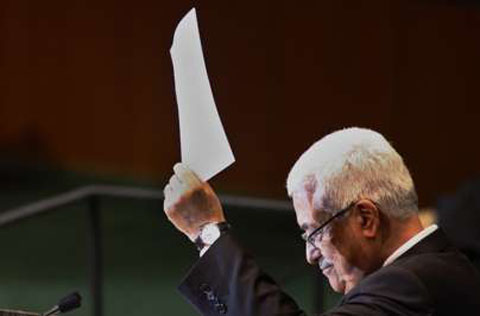
Palestinian Authority president Mahmoud Abbas holds up a letter to United Nations Secretary General Ban Ki-Moon requesting Palestinian statehood at the 66th United Nations General Assembly at U.N. headquarters in New YorkDear President Abbas,
We, the undersigned Palestinian and international human rights organizations, write to urge you to ensure that Palestine pursues the jurisdiction of the International Criminal Court (ICC) by promptly acceding to the Rome Statute and/or filing a further declaration accepting the Court’s jurisdiction over crimes committed on Palestinian territory from 1 July 2002.
Taking such steps could ensure access to international justice for victims of war crimes and crimes against humanity committed on Palestinian territories, and would send an important message that such crimes cannot be committed with impunity.
As you know, following the UN General Assembly’s decision in November 2012 to upgrade Palestine’s status to “non-member observer state”, the ICC Office of the Prosecutor stated that the decision “does not cure the legal invalidity of [Palestine's] 2009 declaration” which accepted the ICC’s jurisdiction over acts committed on its territory since 1 July 2002, and that “at this stage, the Office has no legal basis to open a new preliminary examination.”
The Office stated that it was, therefore, not in a position to consider allegations of serious crimes committed in Palestine without further steps by your government. On this basis, the current ICC Prosecutor, Fatou Bensouda, has said that “the ball is now in the court of Palestine” to seek the court’s jurisdiction.
We understand the pressure that Palestine is under from Israel and the United States not to pursue the jurisdiction of the ICC, whether during or after the current US-sponsored negotiations with Israel. We are aware that even countries such as France, the United Kingdom, Italy, and Canada, which are states parties to the ICC treaty and purport to seek its universal ratification, have, at times, opposed Palestine seeking access to the ICC.
We oppose these efforts to politicize justice for victims of serious crimes under international law, and urge you to resist them. Justice is an important end in its own right, preserving the rights of victims and affected communities regardless of the uncertain prospects for peace. The commission of war crimes with impunity has regularly undermined the peace process. A credible prosecution threat would help to advance the cause of peace.
Palestine’s accession in April to 20 international treaties and conventions was a significant and positive step, obliging the Palestinian government to respect, protect, and fulfill human rights, and requiring Palestinian forces to abide by international rules on armed conflict. Accession to the Rome Statute would be a vital further step towards protecting human rights by ensuring that the ICC can step in to address impunity when domestic authorities are genuinely unable or unwilling to do so.
Seeking the ICC’s jurisdiction over serious crimes committed on Palestinian territory should therefore be seen as an apolitical step towards ending impunity and could help deter future abuses.
The ICC represents an important tool for justice and effective remedies for victims. We urge you to seize it without any further delay.
Sincerely,
Sahar Francis, Executive Director
Addameer Prisoner Support and Human Rights Association
Khalil Abu Shammala, Executive Director
Al Dameer Association for Human Rights
Shawan Jabarin, General Director
Al-Haq
Issam Younis, General Director
Al Mezan Center for Human Rights
Munir Nuseibah, Director
Al-Quds University Human Rights Clinic
Salil Shetty, Secretary General
Amnesty International
Nidal Azza, Director
Badil Resource Center for Palestinian Residency and Refugee Rights
Rifat Kassis, Director
Defense for Children International – Palestine
Shawqi Issa, Director
Ensan Center for Human Rights and Democracy
Ken Roth, Executive Director
Human Rights Watch
Helmi al-Araj, General Director
Hurryyat Centre for Defense of Liberties and Civil Rights
Said Benarbia, Director, Middle East and North Africa Programme
International Commission of Jurists
Karim Lahidji, President
International Federation for Human Rights (FIDH)
Issam Aruri, Director
Jerusalem Legal Aid and Human Rights Center
Raji Sourani, Director
Palestinian Center for Human Rights
Iyad Barghouti, Director
Ramallah Center for Human Rights Studies
Maha Abu Dayyeh, General Director
Women’s Centre for Legal Aid and Counselling


Saturday, May 3, 2014

Europa & Palestine News « Europa & Middle East News

Europa & Palestine News « Europa & Middle East News


Palestine Adopts UN Treaties to End Torture and Discrimination

DSC_7390

From today, the State of Palestine is bound by international human rights standards, having brought into force five treaties, with two others coming into effect in July.
The treaties include the Convention on the Rights of Persons with Disabilities, the Convention on the Elimination of All Forms of Discrimination against Women and the Convention on the Rights of the Child.
The Optional Protocol to this last convention will come into force in May.
Rupert Colville, spokesperson for the UN High Commissioner for Human Rights, says that this is a significant step towards enhancing the promotion and protection of human rights in Palestine.
“Palestine is now bound, as of today, for five treaties and, by July 2nd, seven treaties covering many major issues. And they will therefore, like other states, now be very closely scrutinised in whether they implement those treaties. Those treaties are hard law and therefore it gives a lot of extra ammunition to civil society organizations, the media, the UN and many others to help Palestine ensure that the human rights of Palestinians in the occupied territories, in the West Bank, in Gaza, are upheld.” (34″)
In a region where countries have a high number of reservations to human rights treaties, Palestine’s accession to the treaties and protocol is unusual in that it came without a single reservation. UN Radio, Geneva.
الامم المتحدة تعلن انضمام فلسطين الى 5 اتفاقيات حول حقوق الانسان
انضمت فلسطين، اليوم الجمعة، الى 5 اتفاقيات للامم المتحدة حول حقوق الانسان من بينها اتفاقيات ضد التعذيب ولحقوق الطفل، على ما اعلن متحدث باسم الامم المتحدة
واعلن المتحدث باسم المفوضية العليا للامم المتحدة روبرت كولفيل في لقاء صحافي في جنيف، ان اتفاقيات الامم المتحدة هذه هي ضد التعذيب، والغاء التمييز العرقي، والغاء جميع انواع التمييز ضد المرأة، ولحماية حقوق المعوقين، وحقوق الطفل
من جهة اخرى، افاد المتحدث ان انضمام فلسطين الى البروتوكول الاختياري التابع لاتفاقية الامم المتحدة لحقوق الطفل بخصوص ضلوع الاطفال في النزاعات المسلحة سيسري في 7 ايار (مايو) الجاري، فيما يسري انضمامها الى معاهدتي الامم المتحدة للحقوق المدنية والسياسية وللحقوق الاقتصادية والاجتماعية والثقافية في 2 تموز (يوليو) المقبل
وصرح كولفيل ان “الانضمام الى 7 اتفاقيات اساسية في مجال حقوق الانسان وبروتوكول محوري خطوة مهمة الى الامام في تعزيز حماية حقوق الانسان في فلسطين”
وفتح حصول فلسطين على وضع “دولة مراقب” في تشرين الثاني (نوفمبر) 2012 المجال امام انضمامها الى مختلف الاتفاقيات والمعاهدات الدولية
وفي 10 نيسان (ابريل) الماضي، اعلنت الامم المتحدة انها اعتبرت ان طلبات الفلسطينيين للانضمام الى 13 اتفاقية او معاهدة دولية تابعة للامم المتحدة تتلاءم والاليات الدولية. ورفع ممثل فلسطين في الامم المتحدة رياض منصور هذه الطلبات الى الامانة العامة للامم المتحدة في 2 نيسان (ابريل) الماضي.

Monday, December 16, 2013

Europa & Palestine News « Europa & Middle East News

Europa & Palestine News « Europa & Middle East News

Catastrophe in Gaza, World Silent and Blind

5Darkness, shortage of fuel, flooding, hunger. Two Palestinians were killed and thousands evacuated to shelters while international community is blind and keeps silence like nothing is happening.
During the last two days thousands of Gazans were evacuated from their homes because of the flooding caused by the storm “Alexa” that invaded the Middle East and has covered it with snow, rain and hail. 
Chris Gunness, The UNRWA spokesperson, has described the Gaza Strip on Sunday, Dec. 15 2013 as a “disaster area”. He called on the international community to send relief for the Gazans and to lift the Israeli blockade for human reasons.
He said: “large areas near the refugee camp of Jabalia in the northern Gaza Strip have become a “lake of up to two meters depth of sink waters engulfing and surrounding the homes of thousands of people.”
Gaza also lives in continuous darkness due the cut of electricity because of the shortage of fuel. Over the last few years, the Gaza Strip has largely relied on the fuel coming in from Egypt through the cross-border smuggling tunnels under Rafah. Egypt has demolished hundreds of smuggling tunnels earlier this year. The Gaza Strip uses about 120 megawatts of electricity purchased from Israel and about 27 megawatts from Egypt.
According to UNRWA, “Everything stops,” says Daulat. She doesn’t just mean the refrigerator, the washing machine and other devices; this Palestine refugee mother means daily life in her neighbourhood of Shajaiya. “Electricity outages paralyze our entire life,” she explains. Since the Gaza Power Plant stopped operating, on 1 November, she’s had to change her entire routine: “I sleep when the electricity is off, and I wake up when it’s on.”  9Power outages are something that Gaza has dealt with for years. Israel’s restrictions on the amount of fuel Gaza could import, together with supply from Egypt not always being reliable, meant regular cuts for homes and businesses, hospitals, schools and even basic infrastructure. 

But after several years, the shortages have finally grown so severe that the plant can no longer operate at all. Blackouts now last for an average of 16 hours a day. With the essentials of daily life compressed into only a few hours, it is no wonder that Gaza and its residents – young and old, women, men and children alike – are tense and anxious. 

For mothers like Daulat, the loss of power has upended their entire routine. For students like her daughter, 17-year-old Khitam, it means a threat to her future as well. She is in her last year of secondary school. “This is crucial for my future,” Khitam says. “I am afraid of how these outages will affect my studies and my achievement.”

The family can’t afford a generator or an emergency light, so Khitam has no option but to study by the light of candles or mobile phones. But candles have their own risks, Khitam adds. “Once, my mother woke up because she smelled smoke – the candle had fallen down on the mattress.” 

They were able to extinguish the fire quickly, but now, Daulat stays up until everyone else has gone to bed, to make sure she blows out the candle. And then, until morning, there is darkness. Khitam explains that getting up at night means stumbling over furniture or running into walls; her brother, afraid of going to the bathroom in the dark, has been wetting the bed. 

Khitam’s mother asks only that her daughter’s teachers consider the conditions under which the children of Gaza must study and try to learn. But Khitam asks the other question: “How long will this continue?”


Sunday, November 17, 2013

Europa & Palestine News « Europa & Middle East News

Europa & Palestine News « Europa & Middle East News

Fire Deaths in Gaza Strip Due to Electricity Cuts

The shortage in electricity and fuel has reached a crisis point in the Gaza Strip. The electricity cuts have exacerbated Gaza’s already-deteriorated humanitarian conditions and human rights situation. The electricity cuts have directly effect on the supply of food and medicine to population.
  • Since the beginning of 2012, 16 Palestinians have died from burns with an additional 9 people injured.
  • Power cuts hinder access to basic human rights.
  • Service sectors must be kept out of political disagreements
elerctricityِAl-Mizan for human rights reported – In the evening of Friday, 1 November, 2013, officials from the Gaza Strip’s electric power plant announced that the plant would cease operations due to the exhaustion of fuel supplies. The plant supplies Gaza with 40% of its electricity with the balance coming from Israel and Egypt. The available supply in Gaza generally reaches approximately 210 megawatts, while the need is over 350 megawatts.
With the suspension of the electricity plant, the available supply is now 150 megawatts. As a result, the last two weeks in Gaza have seen a further, critical decline in electricity supplies. The electricity cuts have steadily increased now lasting between 12 and 18 hours per day, with the cuts largely covering daylight hours. The current electricity schedule gives each of Gaza’s five districts a cycle of 6 hours of electricity followed by 12 hours without.
Along with the negative psychological impact of electricity cuts on the people of Gaza the cuts have also led to the deaths of 16 people since the beginning of 2012, including fourteen children. Of the nine people who sustained burn injuries, five were children.

The electricity cuts additionally have serious impacts on access to basic human rights and service sectors in Gaza. The black outs prevent people from realizing their right to health as the medical services, including dialysis centers, surgical operating rooms, intensive care units, and blood banks, all rely on electricity supplies. The sewage treatment plants and residential water mains equally require electricity to run.
The municipalities now turn on the water pumps only at specific times, which are not coordinated with the hours of electrical supply. As a result, water may not reach homes in certain areas for hours and sometimes days on end. The lack of water in homes impacts negatively on family life, public sanitation and has consequences for the environment overall. As follows, the electricity cuts impact on the right to education as schools also require the services that electricity supplies.
The Al Mezan Center for Human Rights emphasizes the necessity of keeping basic service sectors out of the current political disagreement and dually reiterates its previous calls for the provision of the electricity plant’s much needed fuel.
Al Mezan reiterates its condemnation of the Israeli siege imposed on the Gaza Strip, which hinders the population’s access to basic goods and services and warns of the possibility of a further, critical decline if fuel is not supplied and access to services and institutions is not provided.

Sunday, August 18, 2013

Europa & Palestine News « Europa & Middle East News

Europa & Palestine News « Europa & Middle East News


Egypt’s Disastrous Bloodshed Requires Urgent Impartial Investigation

Concern Grows For Stability In Egypt After Clashes Leave Many Dead And InjuredAmnesty International – There must be a full and impartial investigation into the violent dispersal of sit-in protests in Cairo this week, where security forces used unwarranted lethal force and broke promises to allow the wounded to exit safely, Amnesty International said today on the basis of its research on the ground.
Unprecedented levels of violence have left more than 600 dead around Egypt. The Ministry of Interior reported 43 fatal casualties among security forces. The death toll is expected to climb further as bodies are transferred to official hospitals and morgues.
“Based on the initial testimonies and other evidence we’ve gathered, there seems to be little doubt the security forces have been acting with blatant disregard for human life, and full investigations that are both impartial and independent are urgently needed,” said Philip Luther, Middle East and North Africa Programme Director at Amnesty International.
Concern Grows For Stability In Egypt After Clashes Leave Many Dead And Injured“While some protesters used violence, the authorities’ response was grossly disproportionate, seemingly not differentiating between violent and non-violent protesters. Bystanders were also caught-up in the violence.
“Security forces resorted to lethal force when it was not strictly necessary to protect lives or prevent serious injury – this is a clear violation of international law and standards. Previous promises to use graduated force when dispersing the sit-ins and provide ample warning and safe exits were quickly broken.”
On 14 and 15 August, Amnesty International researchers visited numerous hospitals and field hospitals in Cairo, as well as the city’s Zeinhum morgue and a mosque temporarily housing dozens of the dead. They documented scores of deaths, and eyewitness reports from medical staff who described how many of the injured and dead had sustained bullet wounds to the upper body.
Concern Grows For Stability In Egypt After Clashes Leave Many Dead And Injured“There were dozens of dead bodies and hundreds of injured people. They mostly sustained live ammunition wounds to the upper part of the body,” a doctor told Amnesty International.
A medical student described how Rabaa al-Adawiya hospital had to be evacuated after security forces entered the building amid heavy tear gas fire, and its first floor was set alight:
“The security forces were attacking the hospital. The doctors ordered us to close the curtains and windows to avoid the tear gas. I saw snipers on the roofs of buildings near the hospital, they were dressed in black. Then another doctor told us that the security forces got into the first floor. … . One security officer hit me with the rifle-butt on my back and pushed me towards the stairs. I got out of the hospital. The security forces then told us to take the bodies and patients. The first floor was on fire.”

Other eyewitnesses reported that the heavy gunfire outside the hospital prevented the safe exit of the wounded, and led to the death of a hospital security guard.
A nurse at a field hospital at the Rabaa al-Adawiya sit-in told the organization how men in black uniforms threatened her at gunpoint:
“There was a gun pointing at me through the window. There were three men, two in black uniforms and one in civilian dress. The civilian screamed at me telling me to open the door, and asking if we had weapons inside… I pleaded with them that there were only injured and dead inside.”

Amnesty International is calling for UN experts – especially the Special Rapporteur on extrajudicial, summary or arbitrary executions – to be given access to the country to investigate the circumstances of the violence and the pattern of excessive and unwarranted lethal force used by the Egyptian authorities since the “25 January Revolution”.
Given the Egyptian authorities’ poor track record in holding members of the security forces accountable for using excessive, and unwarranted, lethal force against protesters since the “25 January Revolution”, Amnesty International is concerned about the ability of the Public Prosecution to conduct full, impartial and independent investigations.  
      
Background
As of Friday morning, Egypt’s Health Ministry reported 638 deaths across Egypt. Of these, 288 were in the Nasr City neighbourhood, the site of the main pro-Morsi sit-in at Rabaa al-Adawiya Square. This makes it the bloodiest single incident since the outbreak of the “25 January Revolution” more than two years ago.
By contrast, during the 18 days of the “25 January Revolution” in 2011, a total of 846 people were killed, according to official statistics.
The dispersal followed repeated threats by the Egyptian authorities to remove pro-Morsi protesters described as “terrorists” endangering “national security”. The smaller Nahda sit-in by Cairo University was cleared relatively quickly, while the operation to disperse the Rabaa al-Adawiya sit-in took about 10 hours of protracted clashes.  
Around Cairo, three media workers were among the dead, and to Amnesty International’s knowledge, at least three female protesters and one child were killed on 14 August. Clashes were reported in Giza and numerous other neighbourhoods across Egypt.
Members of the armed forces denied Amnesty International access to the Ta’min al-Sihi Hospital, which reportedly received 52 corpses of those killed in the clashes, including at least one woman. It also dealt with more than 200 injuries – at least half of which required the injured to be hospitalized for treatment.
Workers at Cairo’s Zeinhum morgue told Amnesty International that by 10 am on Thursday, 108 autopsies had been carried out, and the facility was overflowing with corpses.
On 15 August, Amnesty International researchers visited the Iman Mosque, which was converted into a makeshift morgue after family members brought in relatives killed in the Rabaa al-Adawiya sit-in, as well as some of those evacuated from Rabaa al-Adawiya hospital.
At the time of the visit, there were 98 dead bodies inside, among them eight charred corpses – it is unknown whether they were burnt alive or after dying. Lists with names of 265 people had been hung on the mosque’s walls. Volunteers said that two more unidentified bodies had been brought in.
Egypt’s Minister of Interior justified the security forces’ conduct, claiming that protesters used violence, and that 43 members of the security forces, including 18 officers, were killed across the country, with more than 200 injured. He claimed that the security forces provided warnings, and only used teargas until fired upon by pro-Morsi protesters.
Particularly following the dispersals of the sit-ins, some Morsi supporters did use violence, including firearms, and launched attacks on the Giza Governorate building, police stations and security personnel. Police stations in Waraq and Kerdassa were attacked, with police officers captured, killed and beaten. In several instances, members of the security forces were captured and beaten, and one grieving relative told Amnesty International that her cousin, a police officer, was decapitated on 14 August in Giza.
Protesters at Rabaa al-Adawiya told Amnesty International that they used rocks and Molotov cocktails and set police vehicles alight in an attempt to prevent the dispersal.
Amnesty International also called on the Egyptian authorities to take immediate measures to improve security for Christians and other minorities amid an alarming rise in sectarian violence against Coptic Christians, seemingly in retaliation for their alleged support of the decision to oust Mohamed Morsi – including attacks on churches, businesses and homes in several governorates. The organization has documented previous instances where the security forces have failed to protect Coptic Christian communities from such attacks.

Friday, July 12, 2013

Europa & Palestine News « Europa & Middle East News

Israeli Soldiers Detain Palestinian Five-year-old In Hebron, Videos - Friday, July 12, 2013 - kawther.salam

Europa & Palestine News « Europa & Middle East News


Israeli Soldiers Detain Palestinian Five-year-old In Hebron, Videos

IDF arrest a child-1B’Tselem for Human Rights has written urgently to the Legal Adviser in the occupied Palestinian territories, demanding his response to a grave incident in which soldiers detained a five-year-old boy in Hebron for two hours, after he threw a stone. The soldiers threatened the child and his parents, handcuffed and blindfolded the father, and handed the boy over to the Palestinian Police. Detaining a child below the age of criminal responsibility, especially one so young, has no legal justification.
On Tuesday, 9 July 2013, at around 3:30 P.M., seven soldiers and an officer detained Wadi’ Maswadeh, who is five years and nine months old (his birthdate on his mother’s ID card: 24 September 2007) close to ‘Abed checkpoint, near the Tomb of the Patriarchs in Hebron, after he threw a stone. B’Tselem field researcher Manal al-Ja’bari, who was present at the scene, recorded the entire event on video.
After local residents who had gathered at the spot tried to intervene, the soldiers put the crying child into a jeep with another Palestinian resident and took him home. When they reached the house, the officer informed Wadi’s mother that he intended to hand him over to the Palestinian Police. The mother refused to let them take the child before his father, Karam, came home. About half an hour after Wadi’ was detained, Karam Maswadeh came home.
The officer informed Maswadeh that he was arresting his son in order to hand him over to the Palestinian Police. Meanwhile, Wadi’a had spent the entire time hiding behind a pile of mattresses in the house and crying. The parents made it clear to the officer that the child is five years old, but the officer insisted on taking him to the DCO and threatened them, saying that the army would arrest the father if they did not comply. The soldiers then made Karam and his son leave the house and walk to the army camp on a-Shuhada street.
Videos of the first part of the incident, recorded by B’Tselem’s field researcher Manal al-Ja’bari
“When I got home, I saw several soldiers standing at the entrance to my house. An officer came up to me and ordered me to get my son, Wadi’a. Before I got home, the soldiers had tried to persuade my wife to hand Wadi’a over, but she had refused to do it until I came back. The officer told me that he was going to arrest Wadi’a and hand him over to the Palestinian Coordination. I asked him: “Why arrest a five-year-old boy?” A soldier standing next to the officer showed me a stone and claimed that my son had thrown it, and that it had hit the car of a settler who was driving north, near ‘Abed checkpoint. I tried to persuade the officer not to take Wadi’ to the DCO, but he said that if I didn’t bring him, I’d be arrested. […] I went inside the house and got Wadi’, who was hiding there. He was crying.”
Wadi’ and his father were taken to the army base, where they were detained for half an hour. Then, the soldiers handcuffed and blindfolded Karam and walked him, in full public view, together with his son, to the Policeman’s checkpoint (56), where the soldiers detained them for another thirty minutes. At that point, a lieutenant colonel arrived whom the father, who speaks Hebrew, understood to be an Israeli coordination officer from the DCO. The officer questioned Wadi’ and asked him why he had thrown stones. He also reprimanded the soldiers for arresting the father and son in the presence of video cameras, and complained that “you’re harming our public image”. The officer made it clear to the soldiers that, when detainees are held with cameras around, they must be “treated nicely”. Then, one of the soldiers untied the father’s hands, removed his blindfold and gave him water. A few minutes later, an officer from the Palestinian DCO and several Palestinian policemen arrived. The soldiers handed Karam and Wadi’ Maswadeh over to them, and the two were taken to a Palestinian police station, where they were briefly questioned and released.
Vudeos of the second part of the incident, documented by a B’Tselem volunteer ‘Imad abu-Shamsiyeh:
The father and the son were detained at checkpoint near there house in the occupied city of Hebron
IDF Officer arrives: Video
Transfer to Palestinian Police
In her letter to the Legal Adviser to Judea and Samaria, B’Tselem Director Jessica Montell stated: “The footage clearly shows that this was not a mistake made by an individual soldier, but rather conduct that, to our alarm, was considered reasonable by all the military personnel involved, including senior officers. It is particularly troubling that none of them apparently thought any part of the incident wad problematic: not the fact that they scared a five-year-old boy out of his wits, nor threatening him and his parents to “hand him over” to the Palestinian Police, nor threatening to arrest the father on no legal grounds, nor handcuffing and blindfolding the father in front of his son.”.
Based on B’Tselem’s ongoing experience, there appears to be a procedure in which soldiers detain Palestinian minors suspected of stone throwing and transfer them to the Palestinian Police, at the Palestinian DCO. In the case at hand, the soldiers apparently acted according to that procedure, which does not, and cannot, have any legal grounds when the minor is below the age of criminal responsibility.
In the military judicial system in the West Bank, the age of criminal responsibility is 12, as in Israel. The legal meaning is that the security forces are not allowed to arrest or detain children under that age, even when they are suspected of having committed criminal offenses, and the authorities must deal with the law breaking in other ways. Indeed, B’Tselem has documented many incidents in which Israel minors under the age of criminal responsibility threw stones at Palestinians, and no measures were taken against them. Under the Convention on the Rights of the Child, which Israel signed, minors must be protected in criminal proceedings, especially when they are so young.
July 12th, 2013 | Tags:  | Category: ConventionHebronIDFIsraelOccupationPA,PalestineUNZionism